On 25 June, we visited the Van Rooi pig slaughterhouse in Helmond (NL) during a period of extreme heat. We wanted to see what measures had been taken to reduce heat stress and how long pigs had to remain in the trucks before they could be unloaded.
Canopy with misting systems and ventilation provides cooling
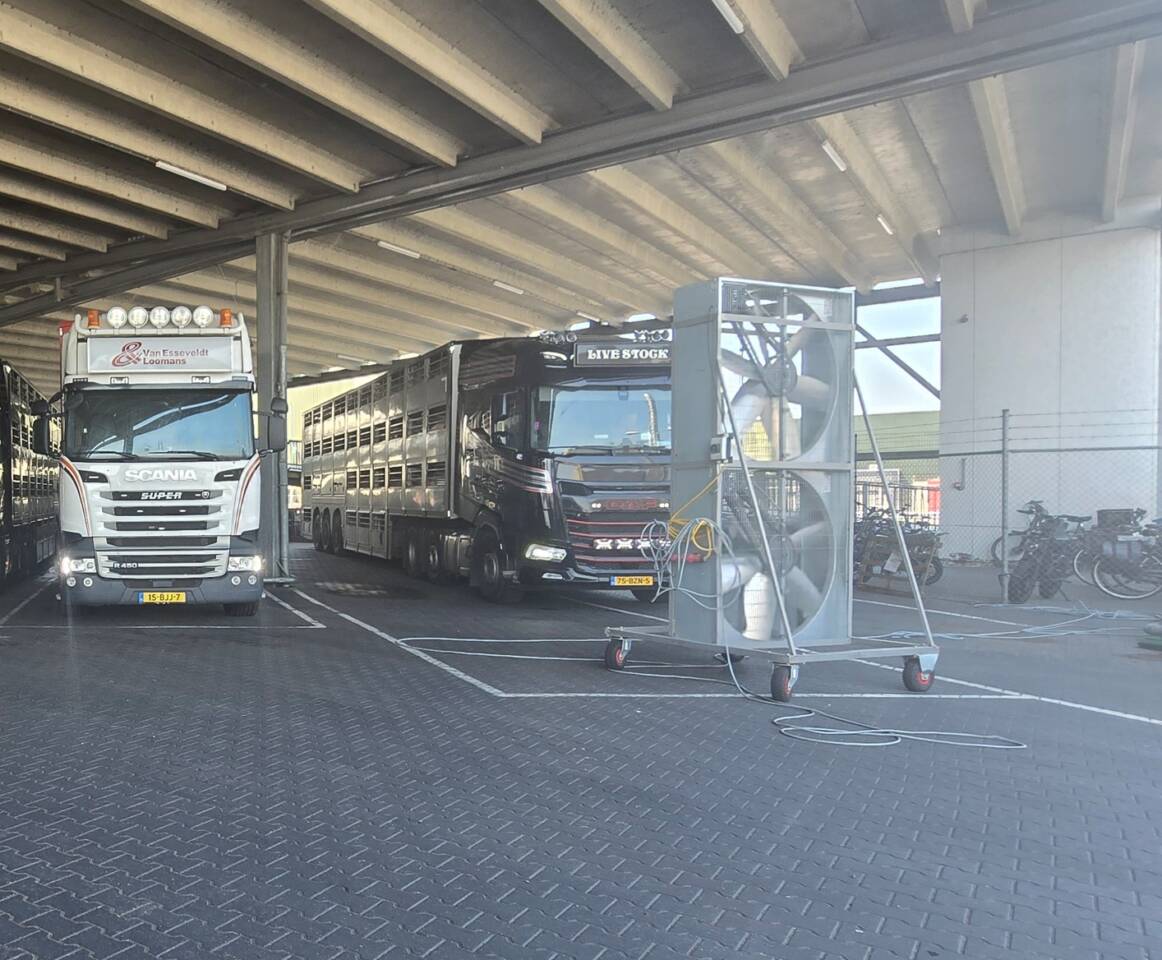
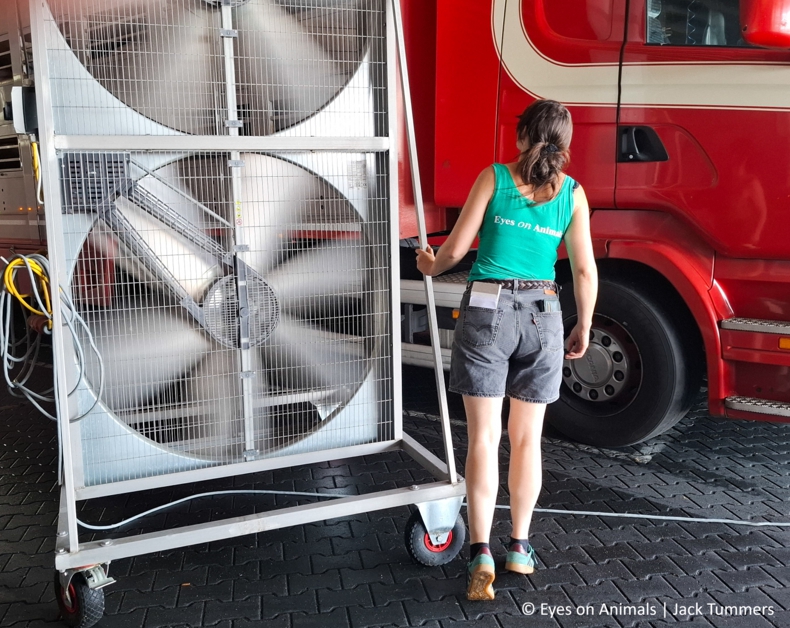
Van Rooi has a large canopy where livestock trucks wait before unloading. Misting systems have been installed on the ceiling. Following recommendations from Eyes on Animals, two large mobile fans were recently purchased. On 25 June, one of these fans was in use. Under the canopy, it was more than 5°C cooler (around 33°C) than in the full sun outside (38°C). This made a clear difference for the pigs, although temperatures under the canopy remained high.

Waiting times remain too long
Because temperatures later in the day were expected to exceed 35°C, slightly fewer pigs were slaughtered (10,000 instead of 11,500). However, to prevent pigs from being transported during the hottest part of the day, many more trucks arrived earlier in the day. As a result, around fifteen trucks were waiting under the canopy during our visit, and waiting times increased to 2.5 hours, with some trucks waiting considerably longer.
In our view, such long waiting times are unacceptable, especially during tropical temperatures. Despite the shade, fans and misting systems, many pigs still showed signs of heat stress, as temperatures under the canopy remained well above 30°C.
Loading density should be reduced further
The loading density of the trucks was lower than usual, typically one fewer pig per compartment. In our view, this was still too high, as many pigs still had to lie pressed closely against one another. In the few trucks where pigs were able to lie without resting against one another, noticeably less heat stress was observed.
Truck design remains a concern
Today we observed many livestock trucks with perforated side panels (mesh panels) as well as fully enclosed, forced-ventilated trucks. In our view, these designs can pose risks during periods of extreme heat. In trucks with perforated side panels, warm, humid air tends to remain trapped inside the compartments, while mist and cooling airflow reach the animals less effectively.
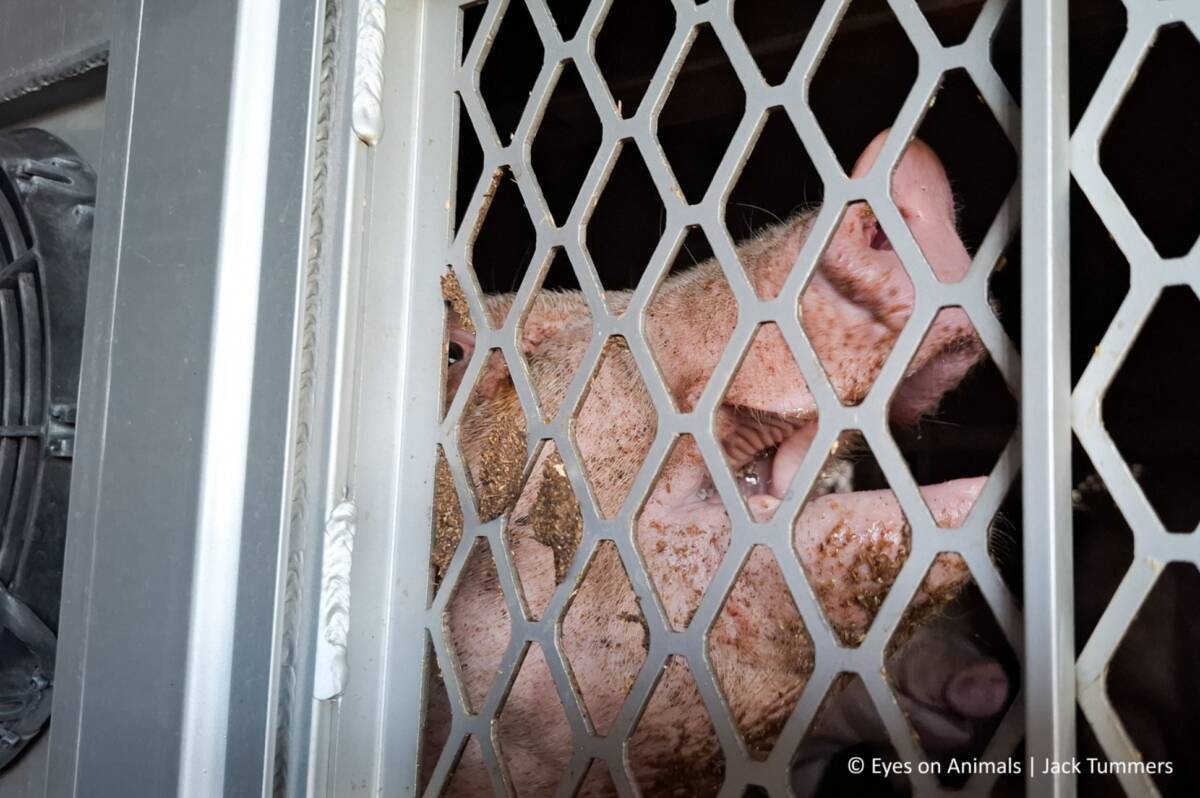

In the fully enclosed, cross-ventilated trucks, we also measured higher humidity levels, making it more difficult for pigs to lose body heat. Fortunately, the fully enclosed trucks we inspected that day were loaded at a relatively low stocking density, which appears to be crucial for preventing serious welfare problems.
According to Eyes on Animals, independent research is needed into livestock truck design and how different designs affect the climate inside the animal compartments.
In one truck that arrived during the afternoon, the heat stress was particularly severe. The pigs were literally trying to climb out of the truck. We immediately positioned a mobile fan next to the vehicle, after which the pigs visibly became calmer. At our request, the truck was given priority for unloading.

Recommendations
We appreciate that Van Rooi has invested in a canopy, misting systems and additional mobile fans, and we always feel welcome at their slaughterhouse. At the same time, this tropical day demonstrated that cooling measures alone are not enough and that long waiting times remain a major welfare concern.
If slaughterhouses shift deliveries to the early hours to avoid transport during the hottest part of the day, there is a risk that too many trucks will arrive within a short period of time. This leads to longer waiting times and increases the risk of heat stress. To prevent this, either fewer pigs should be slaughtered on very hot days or the capacity for unloading and lairage should be increased.
Finally, we recommended appointing a dedicated staff member on hot days to monitor the welfare of animals waiting in trucks, so that immediate action can be taken when necessary. We also recommended keeping both mobile fans in operation throughout hot days and investing in several additional units.