• Skip to primary navigation
  • Skip to main content
  • Skip to primary sidebar
  • Skip to footer
  • EYES ON ANIMALS – Watching out for their Welfare
  • English
  • Nederlands
  • Deutsch

Eyes on Animals

Watching out for their Welfare

  • Facebook
  • Instagram
  • Twitter
  • YouTube
DONATE
  • About us
    • What we do
    • Our team
    • Key Figures
    • Our Vision
    • Contact
  • News
    • Latest news
    • Good news
    • Bad news
    • Featured news
    • Newsletter
  • Inspections
    • Farms
    • Markets
    • Transports
    • Slaughterhouses
    • Special projects
    • Other
  • Training
    • Police
    • Truck drivers
    • Poultry-catchers
    • Slaughter personnel
    • Training Material
    • Request a training
  • Industry Tips
    • Animal transport
      • Cattle
      • Pigs
      • Poultry
    • Slaughterhouses
      • Cattle
      • Pigs
      • Poultry
      • Ritual slaughter
    • Educational videos
  • Publications
    • In the media
      • Print
      • Television
      • Radio
      • Videos
    • Newsletters
    • Special reports
    • Training Material
    • Annual reviews
  • Help us
Home » Our inspections » Visit to laying hen slaughterhouse in Flanders

Visit to laying hen slaughterhouse in Flanders

June 23, 2025

Today, we paid a visit to a large slaughterhouse in Flanders, where laying hens from the Netherlands, France, Germany and Belgium are processed. Our aim was to observe the measures in place to prevent heat stress and to raise concerns about the containers in which part of the hens are transported. After a productive discussion, we were given access to observe the lairage, stunning, and bleeding areas. Below, we summarise our key observations and conclusions.

Excellent lairage: strong ventilation and pad-cooling
Hens often have to wait several hours before slaughter. Thanks to pad-cooling, powerful wall-integrated extraction fans, and darkened skylights, the temperature inside the lairage remained comfortably cool – several degrees lower than outside. The cool air was extracted from the lairage and blown out of the building. On the other side of this wall, a canopy had been installed to channel the cooler air through any waiting trucks. However, the slaughterhouse indicated that trucks are rarely left waiting outside, especially not during hot days. In the vehicles present during our visit (all inside the lairage), we observed no signs of heat stress. In our view, this lairage sets a strong example for other slaughterhouses.

The dark lairage with pad cooling and wall-integrated fans                 
The canopy where wall-integrated fans channel the cooler lairage air through occasionally waiting trucks

Transfer to the stunner: quiet and low-stress
The crates were fully automatically destacked and conveyed to the CO₂ stunner. This process generated minimal noise or movement. The hall was completely dark, with only dim blue lighting. The hens remained calm throughout and showed little to no signs of stress.

CO₂ stunning
The hens were stunned using gradually increasing concentrations of CO₂ while still inside the crates, avoiding physical handling by staff and thereby significantly reducing stress. The viewing windows were somewhat fogged or dirty, making it difficult to assess the stunning process in detail. As far as we could see, there were no severe aversive reactions – though stress cannot be completely avoided when using CO₂, an inherently aversive gas. The slaughterhouse promised to consider cleaning or replacing the windows for better visibility. According to staff, CO₂ levels are adjusted per flock.

Concerns about containers
Part of the laying hens arrive in containers instead of crates. Eyes on Animals is concerned about these systems, as their drawers are very low and deep. During inspections, we’ve observed that hens must be thrown in horizontally to reach the back. Since hens naturally flap and move during such stressful handling, collisions with the edges of the drawers are highly likely.

Laying hens – who are much more active than top-heavy broilers – often attempt to move forward again in an effort to escape the drawer. They then have to be pushed back into a drawer that offers very limited headspace, which increases the risk of stress and impact injuries. Due to the large drawer openings, limited headspace, and the birds’ natural escape instinct, it is also difficult to keep them inside and to close the drawers without the risk of trapping body parts. These concerns have also been reported to us by poultry catchers.

The slaughterhouse pointed out that containers do allow for better visibility of the birds (for welfare checks) and better ventilation in the lairage, since they can be offloaded and spread out. Crates, by contrast, often remain stacked on trucks, where airflow and visibility – particularly in the middle stacks – are more restricted. While we acknowledge these advantages, we believe the container design nevertheless urgently needs to be improved to reduce stress and injury during loading. Potential solutions include higher drawers and partitions to help prevent escape behaviour. Positive experiences have already been reported with the use of partitions >>

Positive: fewer toe injuries
A promising development is that the slaughterhouse has introduced new drawers with rounded inner edges, which help prevent toe entrapments. The older versions are gradually being phased out.

Top side of the new drawer, with rounded and closed corners to prevent toe entrapment

We thank the slaughterhouse for their openness and trust. We greatly appreciated the opportunity to observe the full process and to exchange ideas about potential improvements. We were impressed by the steps already taken to reduce animal stress – it is clear that much thought has gone into the system. We hope the slaughterhouse will also be willing to re-evaluate the container design in light of our visit.

  • share 
  • share 
  • share 
  • save 
  • email 

Filed Under: Our inspections, slaughterhouses Tagged With: animal welfare improvements, slaughterhouse design, slaughterhouses

Primary Sidebar

Search

Featured

Regional slaughterhouses are disappearing — and animals are paying the price

Across the Netherlands, regional slaughterhouses are disappearing at an alarming pace. Not because … [Read More...] about Regional slaughterhouses are disappearing — and animals are paying the price

Featured

Injured sows at Lunteren assembly centre: NVWA investigation ruled inadequate

January 29, 2026

The Dutch Trade and Industry Appeals Tribunal (College van Beroep voor het Bedrijfsleven, CBb) has … [Read More...] about Injured sows at Lunteren assembly centre: NVWA investigation ruled inadequate

Our most recent newsletter

Dear friends,

Last night, just before bed, my phone beeped with this message from a Dutch dairy farmer: “We immediately started keeping the calves with the cows after returning from your conference!”

Read more…

Subscribe to our newsletter

Subscribe

* indicates required

Eyes on Animals op X

eyes_on_animals Eyes on Animals @eyes_on_animals ·
14 Apr

🐖 Eyes in Animals is ‘On the Road Again’. Following piglets, on the way to Croatia for slaughter. Poor animals… #pigs #Piglets #animaltransport

Reply on Twitter 2043973474914271353 Retweet on Twitter 2043973474914271353 2 Like on Twitter 2043973474914271353 9 Twitter 2043973474914271353
eyes_on_animals Eyes on Animals @eyes_on_animals ·
12 Apr

🇲🇳 EonA was invited to give a special presentation on farm-animal welfare at a conference in Mongolia. We talked about the importance of stunning prior to slaughter and what other measures can be taken to reduce suffering during transport. #animaltransport #slaughter #slacht

Reply on Twitter 2043302126089015442 Retweet on Twitter 2043302126089015442 1 Like on Twitter 2043302126089015442 3 Twitter 2043302126089015442
philip_ciwf Philip Lymbery @philip_ciwf ·
11 Apr

“There is no fundamental difference between man and animals in their ability to feel pleasure and pain, happiness, and misery”
Charles Darwin

#KindnessToAllKinds
#EndFactoryFarming
@CIWF_Global

Reply on Twitter 2042851254418694288 Retweet on Twitter 2042851254418694288 429 Like on Twitter 2042851254418694288 1116 Twitter 2042851254418694288
Load More...

ANBI

Latest news

Meat printer prints plant based meat

NOS-news: The meat printer

October 13, 2022

Veggie burger

Vox: Plant-based meat is better for the planet

November 18, 2021

All Future Vision news

Footer

Donate with Paypal

Paypal Eyes on Animals
One-time donation:
Monthly donation:

Reading Material

  • In the Media
  • Newsletters
  • Special EonA reports
  • Legislative texts
  • ANBI

Our Amsterdam Office

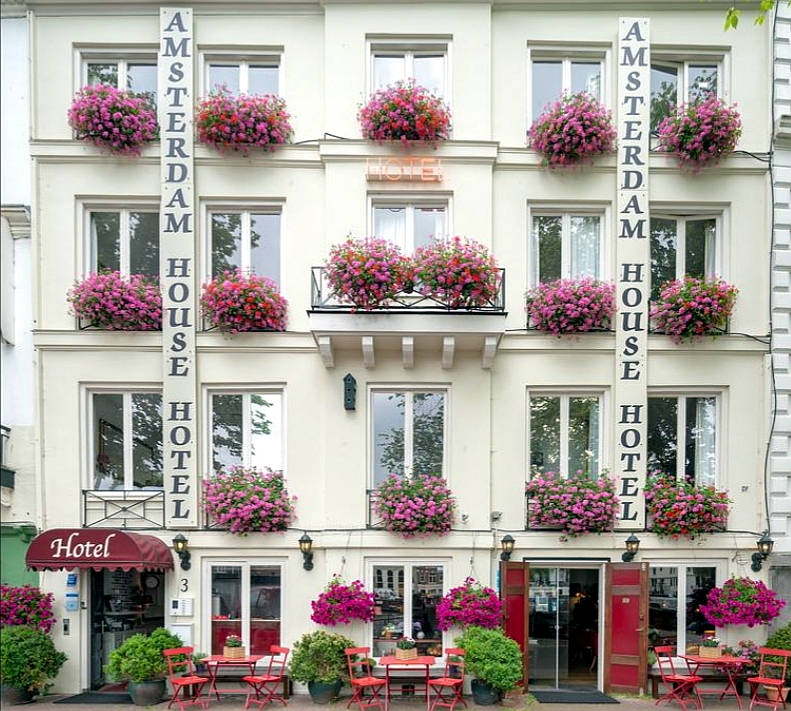
Amsterdam House Hotel
Eyes on Animals main office is in downtown Amsterdam, at the Amsterdam House Hotel. The generous and warm-hearted hotel owner donated to Eyes on Animals, free of charge, a beautiful room where our inspectors can work, hold meetings and store their material.

Copyright © 2026 · Eyes on Animals | Website by Webkompaan