Across the Netherlands, regional slaughterhouses are disappearing at an alarming pace. Not because they are unnecessary, but because they can no longer survive financially. And while that might sound like good news coming from an animal welfare organization, the reality is the opposite.
The Netherlands is the world’s second-largest exporter of agricultural products, after the United States. That includes vast numbers of live animals. At the Vion slaughterhouse in Boxtel alone, around 100,000 pigs are killed every week. On farms, these pigs are carefully selected for weight and uniformity so that their pork chops fit neatly into supermarket trays and high-tech slaughter lines can run without interruption.
But not every animal fits this highly optimized system.
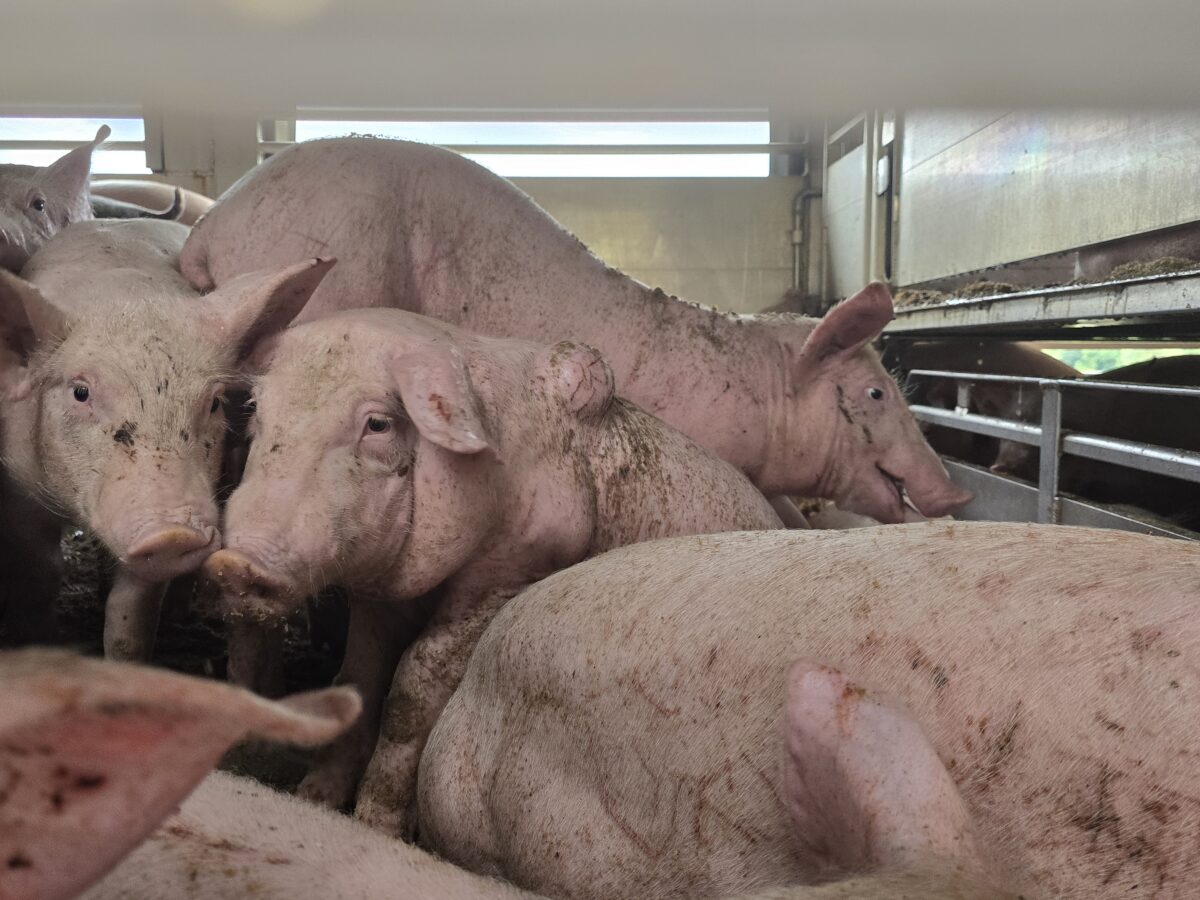
Some pigs fall behind due to illness or injury. Others have hernias, abscesses, bitten tails or damaged ears. These are the animals that large industrial slaughterhouses often refuse — the ones that do not meet the standardized model of efficiency.
Until recently, many of them were taken to smaller, regional slaughterhouses. And those are precisely the facilities that are now disappearing.
In recent years, inspection fees charged by the Dutch government authority (NVWA) have risen sharply. For some small slaughterhouses, these costs have tripled. In the north of the country, regional slaughterhouses have virtually vanished. In Brabant, several are on the brink of closure.
The current inspection system makes no distinction between plants slaughtering tens of thousands of animals per day and facilities handling only a few hundred. Large industrial companies can spread inspection costs across massive volumes. Small regional operators cannot. The result is predictable: small slaughterhouses close, large ones expand.
This policy does more than encourage further industrialization. It also pushes vulnerable animals onto longer journeys, simply because there is no longer a slaughterhouse nearby.
Dairy cows from the northern Netherlands that once travelled less than 30 minutes to slaughter are now often transported for four hours or more to slaughterhouses in the south or across the border, as our own inspections have shown. Thousands of piglets with physical abnormalities are exported every week to slaughterhouses in Croatia, Spain and Portugal, enduring journeys of 16 hours or more — only to be killed at the end of their exhausting journey. If current policies continue, surplus male goat kids and dairy-calves may face the same fate.
The disappearance of regional slaughterhouses is not a natural development. It is the result of policy choices.
We are not calling for less oversight — quite the opposite. But inspection fees must be fair and proportionate. If smaller slaughterhouses are priced out of existence, animals — especially the most vulnerable — are the ones who suffer.
It may seem unusual for an animal protection organization to defend slaughterhouses. Yet every animal deserves a decent end — particularly after a life that was often far from easy.
This opinion article was published in the Dutch newspapers BN DeStem and Algemeen Dagblad.