• Skip to primary navigation
  • Skip to main content
  • Skip to primary sidebar
  • Skip to footer
  • EYES ON ANIMALS – Watching out for their Welfare
  • Englisch
  • Holländisch
  • Deutsch

Eyes on Animals

Watching out for their Welfare

  • Facebook
  • Instagram
  • Twitter
  • YouTube
SPENDEN
  • Über uns
    • Was wir tun
    • Unser Team
    • Kennzahlen
    • Kontakt
  • Neuigkeiten
    • Letzte Neuigkeiten
    • Gute Nachrichten
    • Schlechte Nachrichten
    • Abonnieren Sie unseren Newsletter
  • Inspektionen
    • Landwirtschaftliche Betriebe
    • Märkte und Sammelstationen
    • Transporte
    • Schlachthäuser
    • Projekte
    • Veterinärinspektoren
    • Sonstige
  • Schulungen
    • Polizei
    • LKW-Fahrer
    • Schlachthofmitarbeiter
    • Geflügelfänger
    • Trainingsmaterial
    • Schulungsanfrage
  • Industrietips
    • Transport
      • Rinder
      • Schweine
      • Geflügel
    • Schlachtung
      • Rinder
      • Schweine
      • Geflügel
      • Rituelle Schlachtung
    • Schulungsfilme
  • Publikationen
    • In den Medien
      • Presse
      • Fernsehen
      • Radio
      • Videos
    • Newsletters (Englisch)
    • Spezialberichte
    • Trainingsmaterial
    • Geschäftsberichte
  • Helfen
Home » Featured news » Improving broiler catching and loading: Eyes on Animals presents to the Better Chicken Business Network

Improving broiler catching and loading: Eyes on Animals presents to the Better Chicken Business Network

1. August 2026

Weeks of good stockmanship can be undone in just a few hours of rough catching and loading. Catching and loading are among the most stressful moments in a broiler chicken’s life. But rough or high-speed handling not only causes fear, pain and injuries among the birds, it also results in significant financial losses.

Eyes on Animals recently shared its experiences with broiler catching and loading with the Better Chicken Business Network (BCBN). Drawing on years of inspections, practical work with catching crews and training, we discussed where things most often go wrong – and what can be done differently.

Watch our full presentation for the Better Chicken Business Network below, with practical examples, videos and our experiences with different catching and loading methods.

High catching speeds and container design

One of the biggest problems is speed. During conventional manual catching, several chickens are commonly caught at once by a single leg, carried upside down and placed or thrown into transport containers. The birds often struggle and flap during the process, increasing the risk of hitting each other or the containers. When this is done under intense time pressure, the risk of injuries – and the resulting financial losses – increases.

Poorly designed or damaged equipment also plays a role. During inspections, we see transport containers with drawers that offer too little headspace, increasing the risk of birds hitting the edges during loading. Slippery floors make it difficult for birds to maintain their balance during transport, while damaged containers can make safe loading unnecessarily difficult, sometimes even impossible. We also still see birds being loaded that are clearly not fit for transport, particularly broilers with serious leg problems.

Good catching requires skilled professionals

Improving catching is not only about the chickens. Catchers often work long night shifts, carrying out extremely demanding physical work at high speed. Injuries among catching crews and the use of painkillers have been reported. Continual work under these conditions can also contribute to compassion fatigue. If we want people to handle animals better, we need working conditions that make good handling possible.

Chicken catching should no longer be treated as unskilled labor, but as a skilled profession requiring training, knowledge of chicken behavior and welfare, and good handling skills – and deserving both respect and fair pay.

Catchers who understand how chickens perceive sound, movement, light and vibrations can avoid unnecessary disturbance and keep birds calmer. Calmer birds are not only less stressed – they are also easier to catch.

Keeping birds in their natural upright position

Birds are also less stressed when they can remain in their natural upright position, which is one of the reasons Eyes on Animals started working with catching companies and farmers in the Netherlands and Germany to introduce upright catching. During our presentation, we compared audio recordings from conventional catching with recordings made while chickens were caught upright. The difference was striking: far fewer panic and distress sounds could be heard. Scientific research has also shown that keeping birds upright can reduce stress and catching-related injuries.

Hand-catching chickens upright does take more time. But that is also part of why it works: the birds are handled more calmly and carefully. To compensate for the extra time needed, we recommend working with more catchers, although we are fully aware that this is not easy to achieve in every country. Well-managed mechanical catching also has the potential to provide a more humane method of catching and loading, provided that equipment, belt speed, container design and staff training are all properly managed.

Improving broiler catching requires investment in people, equipment, training and time. But poor catching has a price too: injured birds, reduced meat quality, financial losses, injured workers and avoidable suffering.


Filed Under: Featured Tagged With: chicken transport, chicken-catching, live animal transports

Primary Sidebar

Search

Featured

Improving broiler catching and loading: Eyes on Animals presents to the Better Chicken Business Network

Weeks of good stockmanship can be undone in just a few hours of rough catching and loading. Catching … [Read More...] about Improving broiler catching and loading: Eyes on Animals presents to the Better Chicken Business Network

Featured

Our 2025 Annual Review is now available

1. Juli 2026

Read about how your support enabled Eyes on Animals' teams to work in the field throughout 2025. Our … [Read More...] about Our 2025 Annual Review is now available

Unser neuste Newsletter

Dear friends,

Last night, just before bed, my phone beeped with this message from a Dutch dairy farmer: “We immediately started keeping the calves with the cows after returning from your conference!”

Read more…

Erhalten Sie unseren englischen Newsletter

Subscribe

* indicates required

Eyes on Animals op X

eyes_on_animals Eyes on Animals @eyes_on_animals ·
10h

📌🐓 Nieuw op onze website: Beter vangen en laden van vleeskuikens: Eyes on Animals presenteert voor het ‘Better Chicken Business Network’ https://www.eyesonanimals.com/nl/improving-broiler-catching-and-loading-eyes-on-animals-presents-to-the-better-chicken-business-network/ #kippen

Auf Twitter antworten 2087495127149207828 Retweet auf Twitter 2087495127149207828 Auf Twitter liken 2087495127149207828 1 Twitter 2087495127149207828
eyes_on_animals Eyes on Animals @eyes_on_animals ·
10h

📌🙏🐓 Nieuw op onze website: Financiële steun voor project zieke, gewonde en verzwakte vogels https://www.eyesonanimals.com/nl/financial-support-for-project-on-sick-injured-and-weakened-birds/ #pluimvee

Auf Twitter antworten 2087494199901896960 Retweet auf Twitter 2087494199901896960 1 Auf Twitter liken 2087494199901896960 Twitter 2087494199901896960
eyes_on_animals Eyes on Animals @eyes_on_animals ·
11h

📌🐖 Nieuw op onze website: Bezoek aan slachterij Westfort in IJsselstein op warme zomerdag https://www.eyesonanimals.com/nl/visit-to-westfort-slaughterhouse-in-ijsselstein-nl-on-a-hot-summer-day/ #hittestress #varkens #veetransport #slacht

Auf Twitter antworten 2087482092435210556 Retweet auf Twitter 2087482092435210556 1 Auf Twitter liken 2087482092435210556 Twitter 2087482092435210556
Load More...

ANBI

Latest news

All Future Vision news

Footer

Donate with Paypal

Paypal Eyes on Animals
Beträge (einmalig):

Beträge (monatliche Spenden):

Lesestoff

  • In den Medien
  • Newsletters
  • Gesetzestexte
  • Spezialberichte
  • ANBI

Our Amsterdam Office

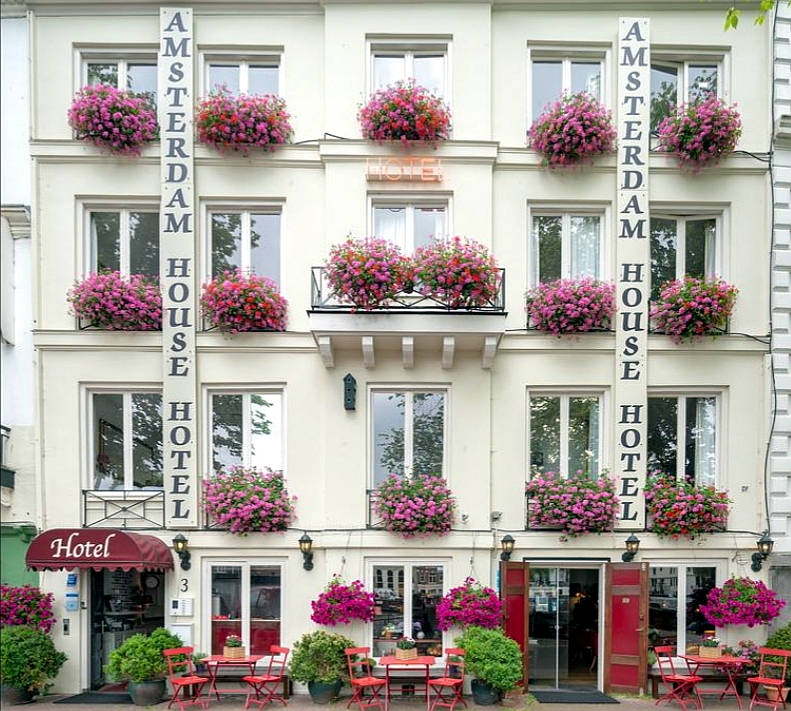
Amsterdam House Hotel
Das Büro von Eyes on Animals befindet sich im Amsterdam House Hotel direkt im Zentrum von Amsterdam. Die großzügige und warmherzige Hotelbetreiberin hat Eyes on Animals kostenfrei ein Zimmer zur Verfügung gestellt, in dem unsere Inspektoren arbeiten, Unterlagen unterbringen und Meetings abhalten können.

Copyright © 2026 · Eyes on Animals | Website by Webkompaan