Today, Eyes on Animals gave a presentation to official veterinarians from the Dutch Food and Consumer Product Safety Authority (NVWA), working at assembly centers and slaughterhouses. We shared our working methods, key findings, and areas that, in our view, require more attention, including:
- Vulnerable piglets on long journeys to slaughter
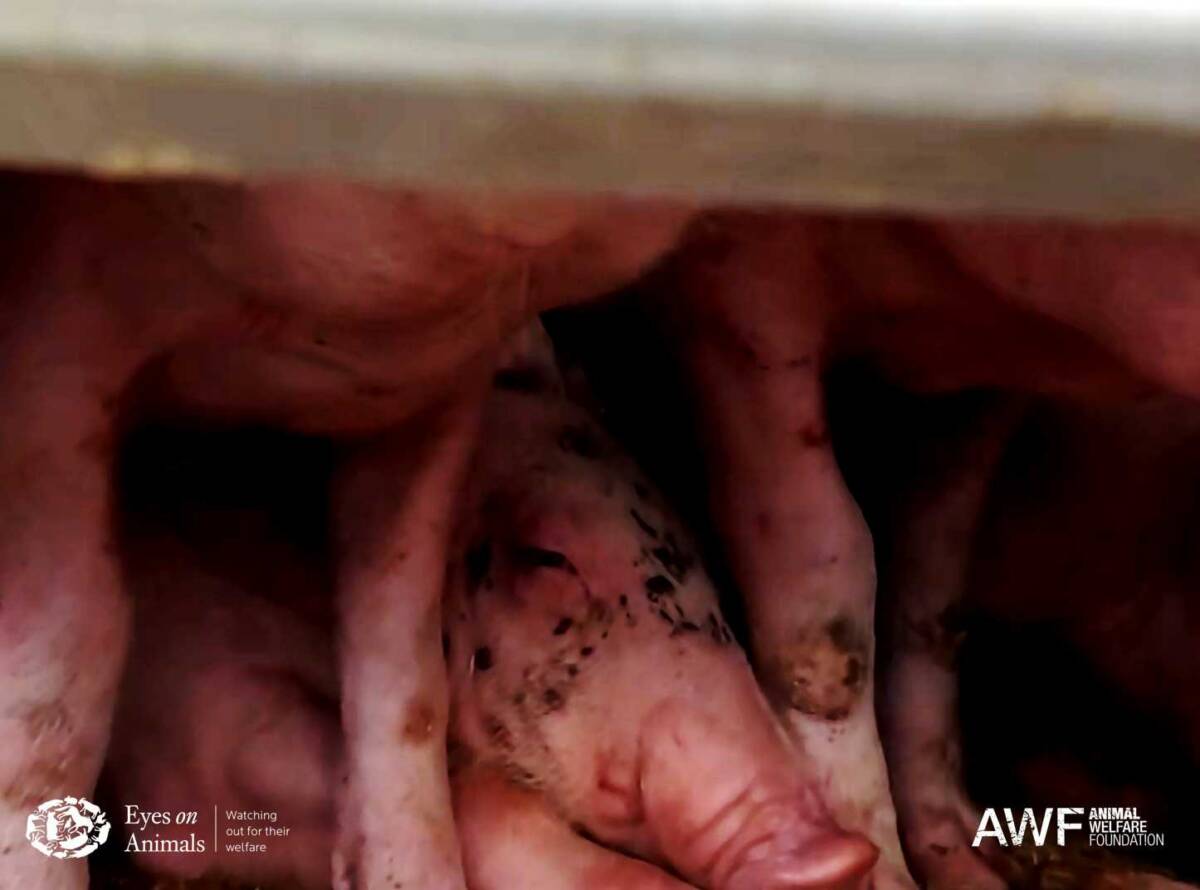
In the Netherlands, piglets with health issues such as hernias, infections, and bitten ears and tails, considered “lower quality” by the industry, are picked up from multiple farms, taken to assembly centers, and then transported 0.5–1.5 days later to slaughterhouses, often in distant countries such as Croatia and Spain. In our view, this trade in weaker and young animals is unacceptable. During these long journeys, we regularly observe welfare problems such as overcrowding, uneven distribution of piglets across compartments, prolonged periods without feed, animals unfit for transport, and long waiting times at slaughterhouses. - Young calves not receiving milk for prolonged periods
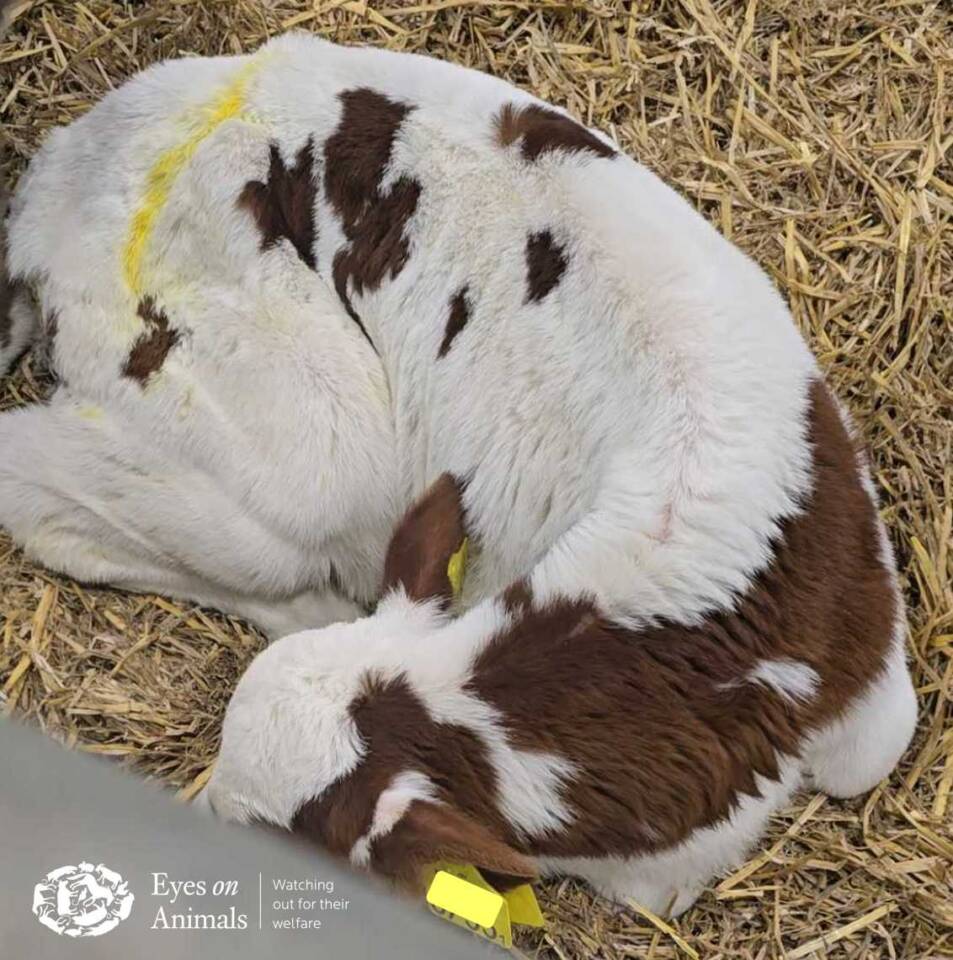
Calves traded via Dutch assembly centers are often given only electrolytes and no milk. Not providing milk to these calves is, in our view, in breach of the regulations. Electrolytes are not feed for calves. The sector argues that milk causes diarrhea at assembly centers, but in practice this is often due to calves drinking too quickly. Withholding milk from calves for such long periods is, in our view, unacceptable. - Long waiting times at slaughterhouses
Upon arrival at Dutch slaughterhouses, animals often have to wait for long periods in stationary trucks because there is simply no space to unload them immediately. The number of animals has increased over the years, while unloading and lairage capacity have not kept pace, particularly at large industrial slaughterhouses. This causes significant suffering, especially in warm weather, as heat builds up rapidly inside stationary livestock trucks. While waiting facilities at many locations have improved, following recommendations by Eyes on Animals (such as roofs, fans, and misting systems), waiting times remain a structural problem. - Closed livestock trucks – welfare risks
Animals are increasingly transported in closed, mechanically ventilated trucks. These are presented as “modern” and as a solution to heat stress, but in practice we often observe higher humidity levels inside these vehicles, which further increase the risk of heat stress. In addition, animals in these trucks are fully dependent on mechanical ventilation. In the event of malfunction or incorrect use, the consequences can be severe and, according to reliable sources, this happens regularly. Access doors are also often lacking, making inspection and intervention nearly impossible.
It was an open and constructive exchange with NVWA veterinarians about these bottlenecks, as well as the practical challenges NVWA veterinarians face.