• Skip to primary navigation
  • Skip to main content
  • Skip to primary sidebar
  • Skip to footer
  • EYES ON ANIMALS – Watching out for their Welfare
  • English
  • Dutch
  • German

Eyes on Animals

Watching out for their Welfare

  • Facebook
  • Instagram
  • Twitter
  • YouTube
DONATE
  • About us
    • What we do
    • Our team
    • Key Figures
    • Our Vision
    • Contact
  • News
    • Latest news
    • Good news
    • Bad news
    • Featured news
    • Newsletter
  • Inspections
    • Farms
    • Markets
    • Transports
    • Slaughterhouses
    • Special projects
    • Other
  • Training
    • Police
    • Truck drivers
    • Poultry-catchers
    • Slaughter personnel
    • Training Material
    • Request a training
  • Industry Tips
    • Animal transport
      • Cattle
      • Pigs
      • Poultry
    • Slaughterhouses
      • Cattle
      • Pigs
      • Poultry
      • Ritual slaughter
    • Educational videos
  • Publications
    • In the media
      • Print
      • Television
      • Radio
      • Videos
    • Newsletters
    • Special reports
    • Training Material
    • Annual reviews
  • Help us
Home » Our inspections » Eyes on Animals presents to official NVWA veterinarians

Eyes on Animals presents to official NVWA veterinarians

April 22, 2026

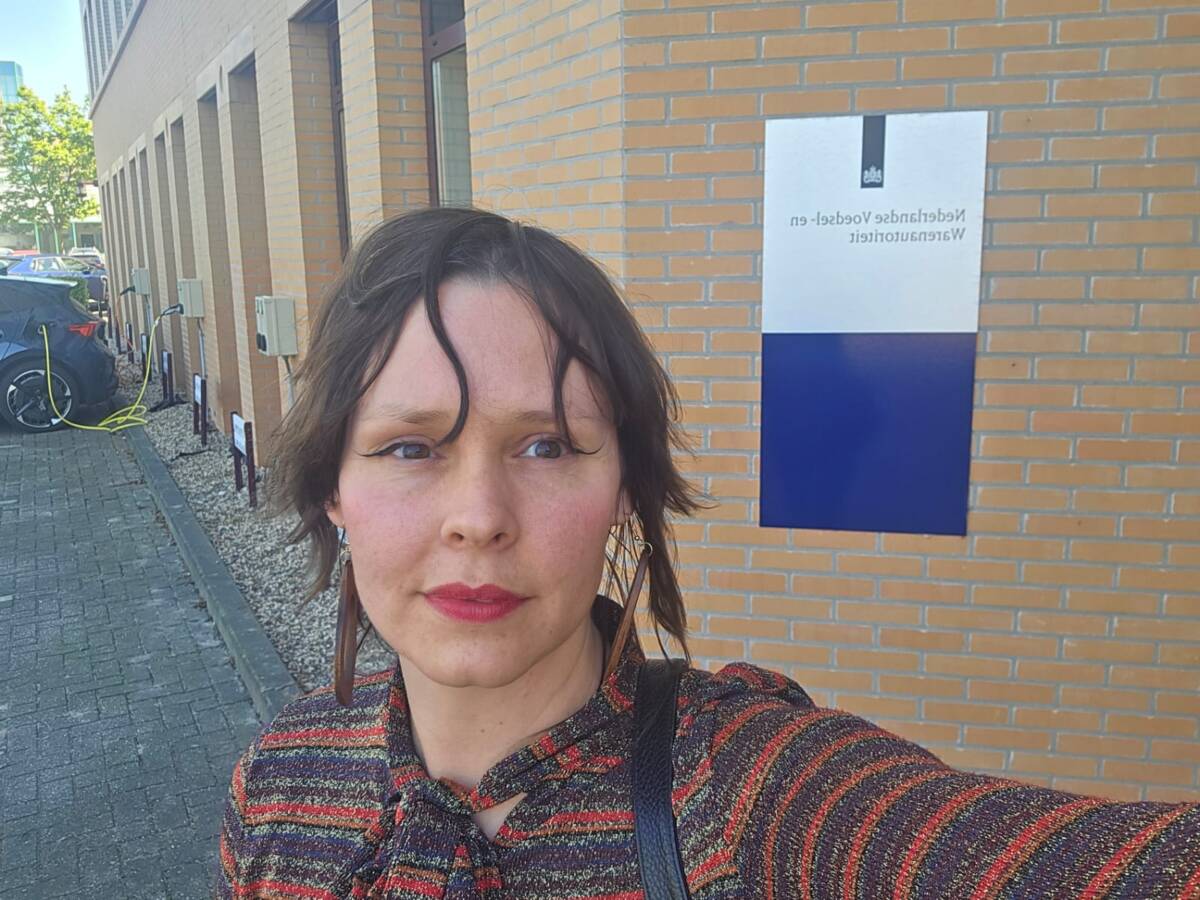
Today, Eyes on Animals gave a presentation to official veterinarians from the Dutch Food and Consumer Product Safety Authority (NVWA), working at assembly centers and slaughterhouses. We shared our working methods, key findings, and areas that, in our view, require more attention, including:

  1. Vulnerable piglets on long journeys to slaughter
    In the Netherlands, piglets with health issues such as hernias, infections, and bitten ears and tails, considered “lower quality” by the industry, are picked up from multiple farms, taken to assembly centers, and then transported 0.5–1.5 days later to slaughterhouses, often in distant countries such as Croatia and Spain. In our view, this trade in weaker and young animals is unacceptable. During these long journeys, we regularly observe welfare problems such as overcrowding, uneven distribution of piglets across compartments, prolonged periods without feed, animals unfit for transport, and long waiting times at slaughterhouses.
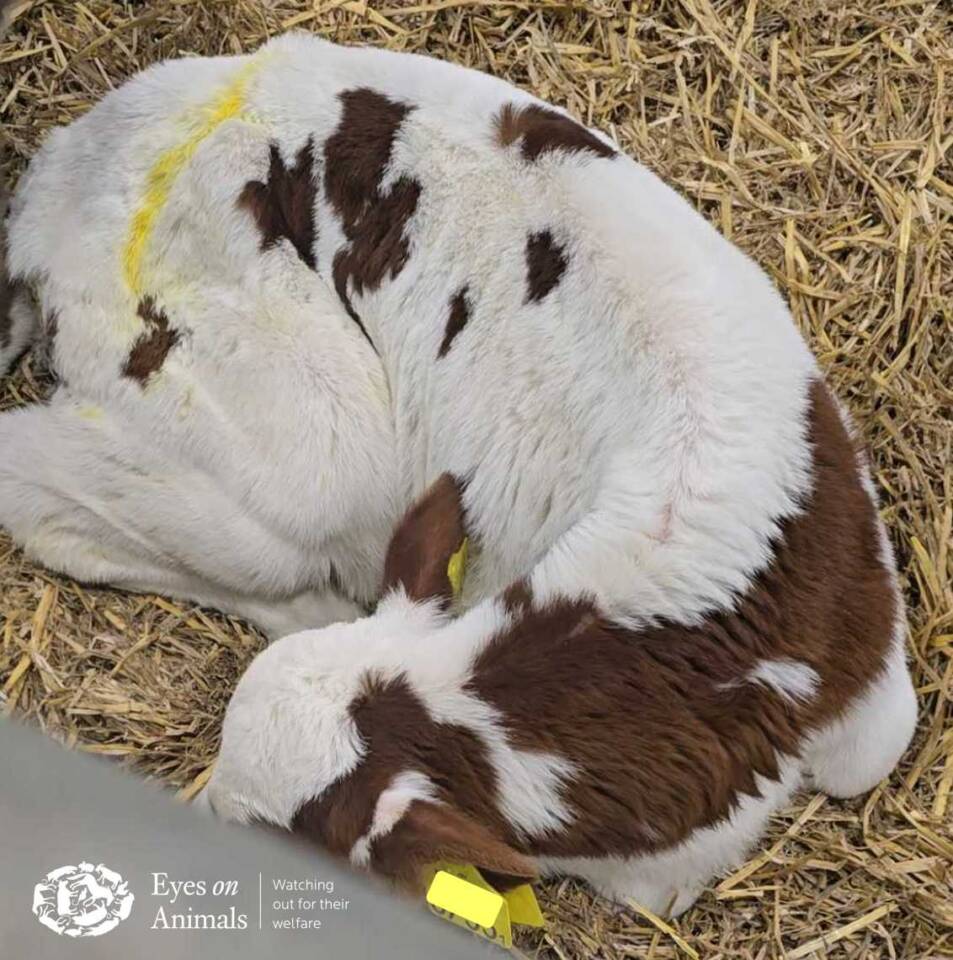
  2. Young calves not receiving milk for prolonged periods
    Calves traded via Dutch assembly centers are often given only electrolytes and no milk. Not providing milk to these calves is, in our view, in breach of the regulations. Electrolytes are not feed for calves. The sector argues that milk causes diarrhea at assembly centers, but in practice this is often due to calves drinking too quickly. Withholding milk from calves for such long periods is, in our view, unacceptable.
  3. Long waiting times at slaughterhouses
    Upon arrival at Dutch slaughterhouses, animals often have to wait for long periods in stationary trucks because there is simply no space to unload them immediately. The number of animals has increased over the years, while unloading and lairage capacity have not kept pace, particularly at large industrial slaughterhouses. This causes significant suffering, especially in warm weather, as heat builds up rapidly inside stationary livestock trucks. While waiting facilities at many locations have improved, following recommendations by Eyes on Animals (such as roofs, fans, and misting systems), waiting times remain a structural problem.
  4. Closed livestock trucks – welfare risks
    Animals are increasingly transported in closed, mechanically ventilated trucks. These are presented as “modern” and as a solution to heat stress, but in practice we often observe higher humidity levels inside these vehicles, which further increase the risk of heat stress. In addition, animals in these trucks are fully dependent on mechanical ventilation. In the event of malfunction or incorrect use, the consequences can be severe and, according to reliable sources, this happens regularly. Access doors are also often lacking, making inspection and intervention nearly impossible.

It was an open and constructive exchange with NVWA veterinarians about these bottlenecks, as well as the practical challenges NVWA veterinarians face.
Filed Under: Our inspections, transport Tagged With: animal transport, animal welfare improvements, live animal transports

Primary Sidebar

Search

Featured

Our 2025 Annual Review is now available

Read about how your support enabled Eyes on Animals' teams to work in the field throughout 2025. Our … [Read More...] about Our 2025 Annual Review is now available

Featured

Supporting “Eyes on Happy Pigs” — A New Educational Centre for Better Pig Welfare in the Netherlands

June 1, 2026

Eyes on Animals is pleased to support a promising new initiative in the Netherlands that aims to … [Read More...] about Supporting “Eyes on Happy Pigs” — A New Educational Centre for Better Pig Welfare in the Netherlands

Our most recent newsletter

Dear friends,

At Eyes on Animals, we believe real change for animals only happens through long-term focus and persistence. Since 2009, we have continuously investigated and exposed the fate of unwanted dairy calves in Europe.

Read more…

Subscribe to our newsletter

Subscribe

* indicates required

Eyes on Animals op X

eyes_on_animals Eyes on Animals @eyes_on_animals ·
22h

🥵🐖 Tijdens onze hittestress-inspecties zien we steeds vaker veewagens met geperforeerde zijwanden.
Onze metingen laten zien dat warme, vochtige lucht in deze wagens gemakkelijker blijft hangen, waardoor we meer hittestress waarnemen. Meer weten: lees verder op onze FB pagina.

Reply on Twitter 2074183936251449718 Retweet on Twitter 2074183936251449718 4 Like on Twitter 2074183936251449718 4 Twitter 2074183936251449718
eyes_on_animals Eyes on Animals @eyes_on_animals ·
4 Jul

RT @RTLnieuws: Undercoverbeelden tonen geweld tegen konijnen bij Nederlandse fokkers https://www.rtl.nl/nieuws/video/video/f4cceccd-af5b-409f-aa70-082c4e340d74/undercoverbeelden-tonen-geweld-tegen

Reply on Twitter 2073327959453090289 Retweet on Twitter 2073327959453090289 16 Like on Twitter 2073327959453090289 Twitter 2073327959453090289
eyes_on_animals Eyes on Animals @eyes_on_animals ·
3 Jul

🥵 Hitte zorgt voor sterke stijging meldingen dierenleed – Veearts https://veearts.nl/20260630/hitte-zorgt-voor-sterke-stijging-meldingen-dierenleed/#

Reply on Twitter 2073025062421016887 Retweet on Twitter 2073025062421016887 Like on Twitter 2073025062421016887 Twitter 2073025062421016887
Load More...

ANBI

Latest news

Meat printer prints plant based meat

NOS-news: The meat printer

October 13, 2022

Veggie burger

Vox: Plant-based meat is better for the planet

November 18, 2021

All Future Vision news

Footer

Donate with Paypal

Paypal Eyes on Animals
One-time donation:
Monthly donation:

Reading Material

  • In the Media
  • Newsletters
  • Special EonA reports
  • Legislative texts
  • ANBI

Our Amsterdam Office

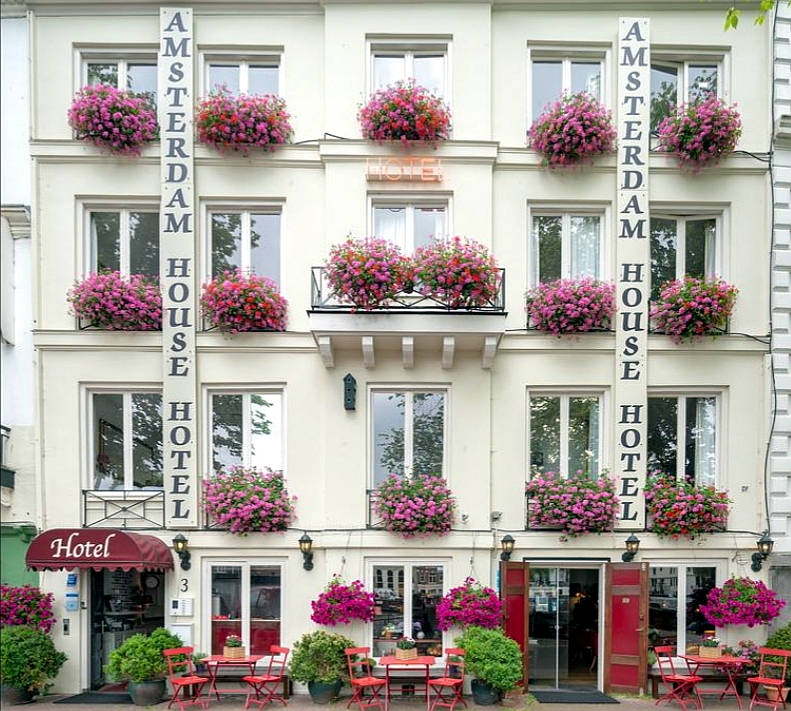
Amsterdam House Hotel
Eyes on Animals main office is in downtown Amsterdam, at the Amsterdam House Hotel. The generous and warm-hearted hotel owner donated to Eyes on Animals, free of charge, a beautiful room where our inspectors can work, hold meetings and store their material.

Copyright © 2026 · Eyes on Animals | Website by Webkompaan