Today we visited the VION slaughterhouse in Boxtel to see how the slaughterhouse and transport companies were responding to the extreme heat.
VION had implemented several measures to reduce heat stress. Around 9,500 pigs were slaughtered today instead of the usual 16,000, allowing all pigs to arrive before 12:00. This prevented transport during temperatures above 35°C, when a national transport ban applies.
Canopy provides significant cooling
VION has a large canopy with space for six livestock trucks. During our visit, it was around 6°C cooler under the canopy (29°C) than in the direct sun outside (35°C). Five large mobile fans were positioned between the two rows of trucks, while additional ceiling-mounted fans with misting systems provided further cooling. Together, these measures had a substantial cooling effect.

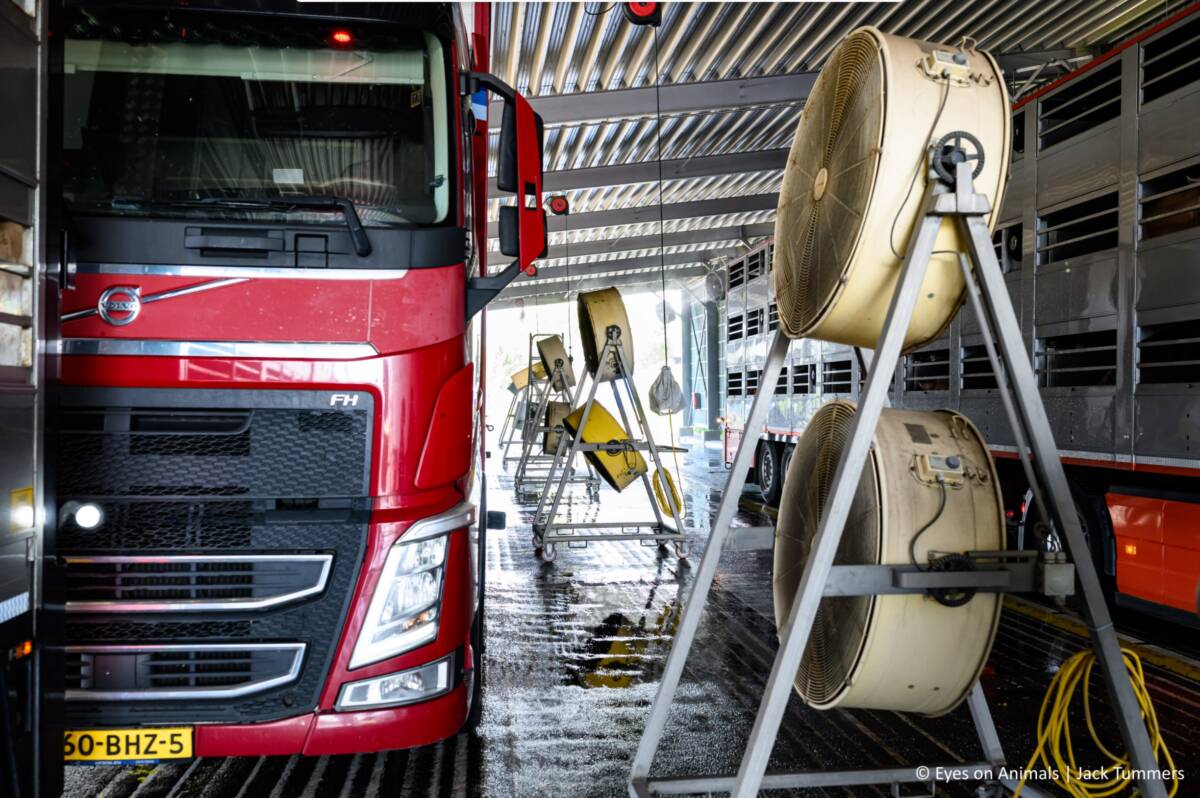

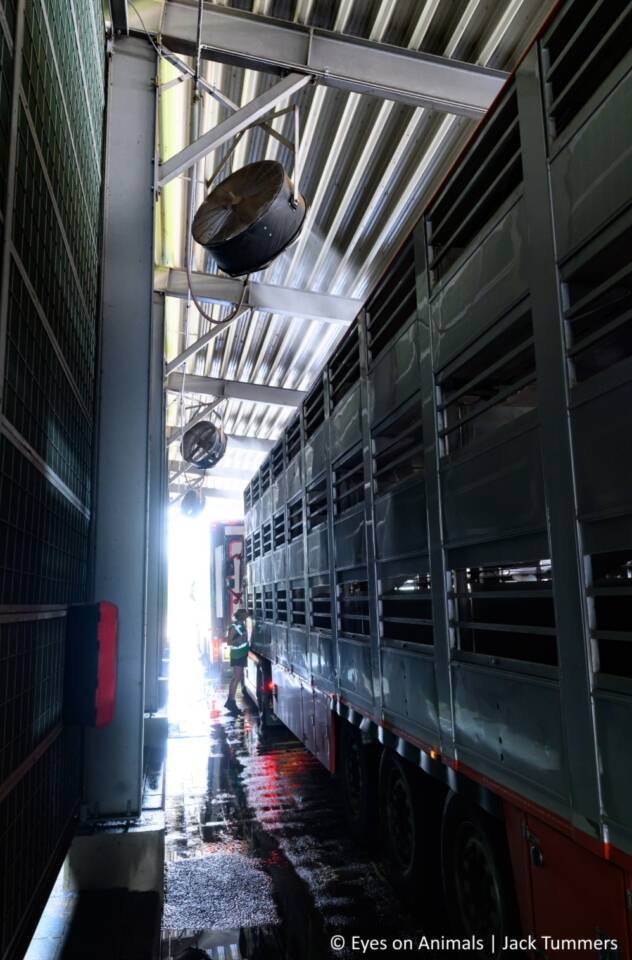
Our measurements showed that temperatures were a little higher on the inside of the canopy (road side) than on the outside (parking side). Ventilation appeared to be less effective there: the mobile fans were mainly directed at pigs on the upper deck, while the truck was parked relatively close to the wall, causing heat to accumulate. VION told us they will look into how this can be improved.
We are pleased that VION is open to further improving their canopy. With much of the summer still ahead, these improvements can make a real difference for many individuals in the coming weeks, while also helping to prepare for a future in which periods of extreme heat become increasingly common due to climate change.
Long waiting times remain a major concern
We observed livestock trucks driving around the VION site while waiting for a place under the canopy, indicating that there was not enough covered space for all arriving trucks. Waiting times – from arrival at the slaughterhouse until unloading – were long, ranging from around 1.5 to 2.5 hours.
In our view, this remains the biggest animal welfare concern. On hot days, it is unacceptable for animals to spend hours waiting in stationary trucks. It is unpleasant for the drivers as well. A canopy is not a solution to insufficient unloading and lairage capacity. Moreover, European legislation requires animals to be unloaded as soon as possible after arrival.
Spraying pigs with water
One particularly positive observation was that pigs were being sprayed with water using a hose. When combined with good ventilation, as was the case at VION in Boxtel, this is a very effective way of cooling pigs without allowing humidity to build up excessively.We saw a driver from Schuttert spraying his pigs while they were waiting, and a VION employee was also cooling pigs in this way.
Perforated truck side walls increase the risk of heat stress
We further noticed that many livestock trucks had perforated side panels. In these trucks, heat and humidity generated by the animals tend to become trapped more easily, increasing the risk of heat stress. Our temperature and humidity measurements confirmed this. Animals in these trucks also benefit less from the misting systems and additional ventilation provided under the canopy. We have similar concerns about fully enclosed, forced-ventilated trucks.
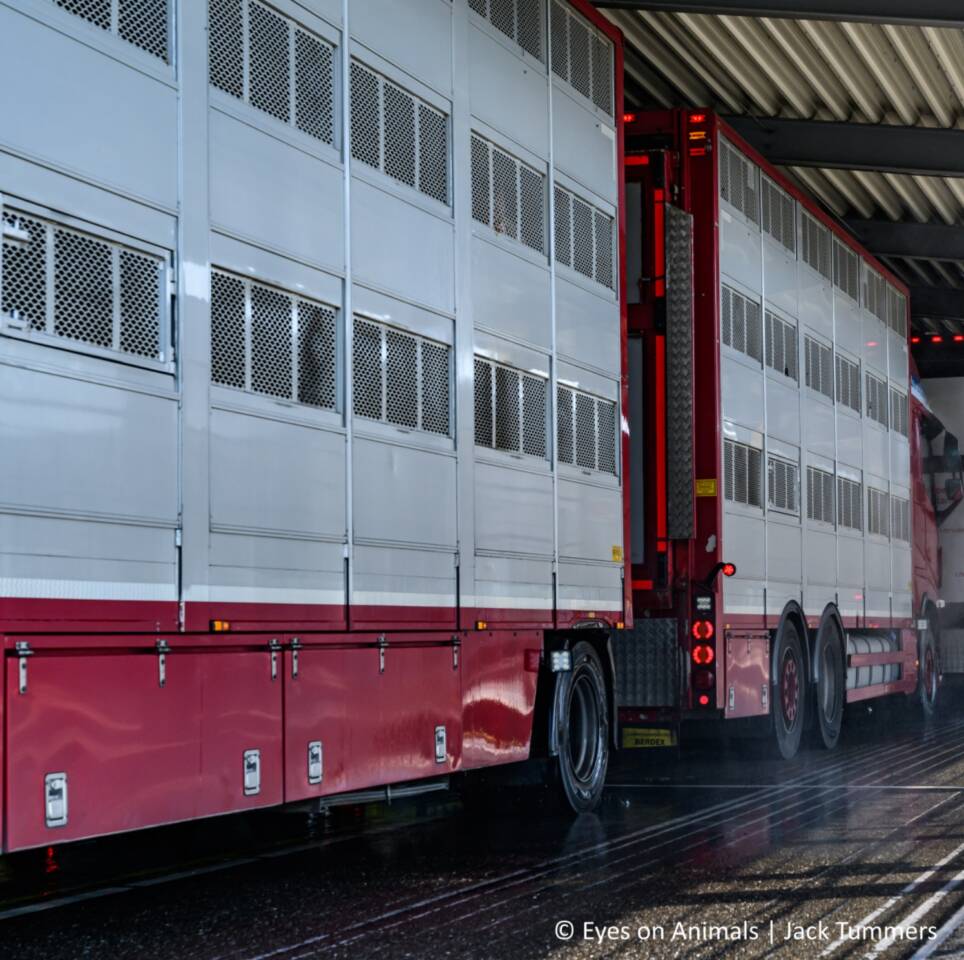
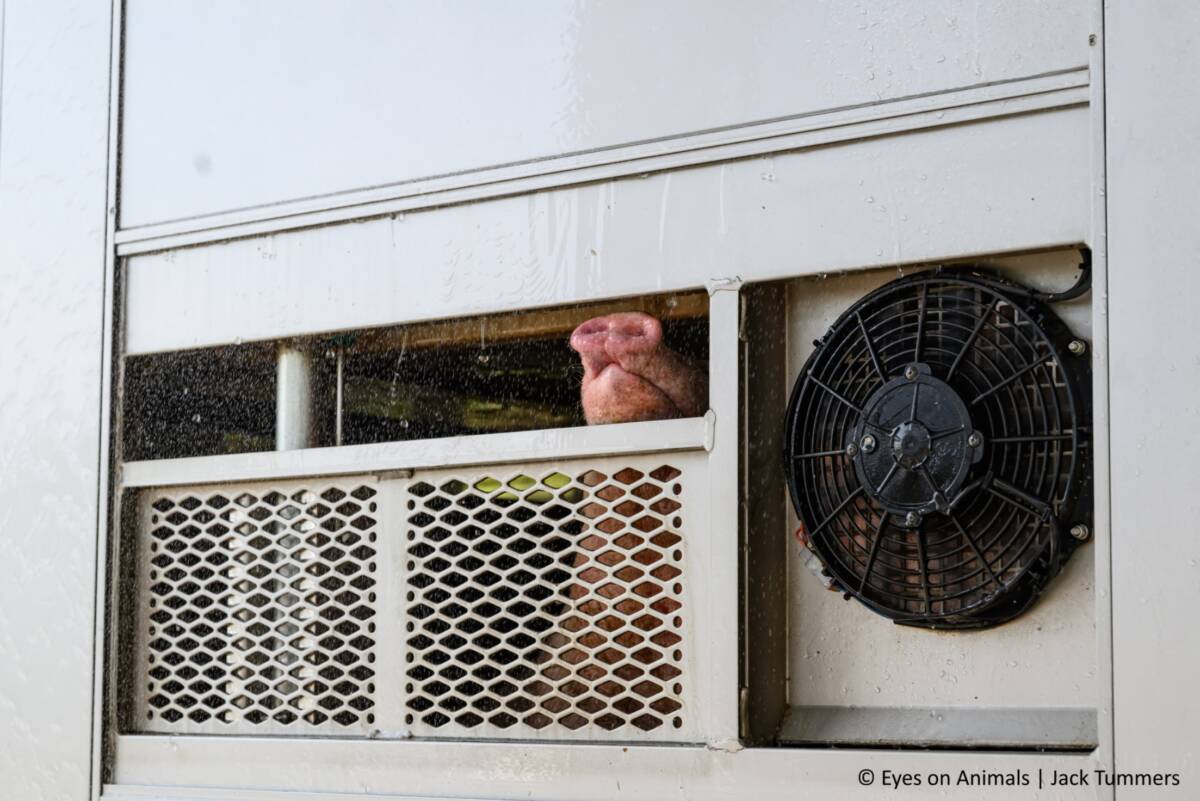
We believe independent research is urgently needed into livestock truck design and its impact on animal welfare. Truck designs that increase the risk of heat stress should be discouraged during the summer months.
Loading density reduced, but still too high
In accordance with the Dutch heat protocol, today’s trucks were loaded with 10–20% fewer pigs than normal, which generally meant 10 or 11 pigs per compartment. However, this was still not enough to allow all pigs to lie down without resting against one another, making it more difficult for them to cool themselves.In our view, loading density on hot days should be reduced by 25%. This would mean loading approximately 8–9 pigs per compartment. Although 10 pigs per compartment is still too many, it is considerably better than 11 and was associated with noticeably less heat stress.

Progress, but important improvements are still needed
Our visit showed that slaughterhouses and drivers are making genuine efforts to reduce heat stress. We greatly appreciate these measures, and they make a real difference for thousands of animals every day.
At the same time, important structural problems remain: long waiting times, stocking densities that are still too high, the absence of drinking water, and the continued use of perforated or fully enclosed livestock trucks that can increase the risk of heat stress.
There is still room for improvement, and we look forward to continuing the dialogue with the sector. Together, we can further reduce the welfare risks for animals during periods of extreme heat.