Heute besuchten wir den VION-Schlachthof in Boxtel, um zu beobachten, wie der Schlachthof und die Transportunternehmen auf die extreme Hitze reagierten.
VION hatte verschiedene Maßnahmen ergriffen, um Hitzestress zu reduzieren. An diesem Tag wurden etwa 9.500 Schweine geschlachtet statt der üblichen 16.000. Dadurch konnten alle Tiere vor 12:00 Uhr ankommen. So wurden Transporte bei Temperaturen über 35 °C vermieden, denn bei diesen Temperaturen gilt ein nationales Transportverbot.
Überdachung sorgt für deutliche Kühlung
VION verfügt über eine große Überdachung mit Platz für sechs Viehtransporter. Während unseres Besuchs war es unter der Überdachung etwa 6 °C kühler (29 °C) als in der direkten Sonne außerhalb (35 °C).Zwischen den beiden Reihen der Transportfahrzeuge waren fünf große mobile Ventilatoren aufgestellt. Zusätzlich sorgten an der Decke montierte Ventilatoren mit Vernebelungssystemen für weitere Kühlung. Zusammen hatten diese Maßnahmen einen erheblichen kühlenden Effekt.

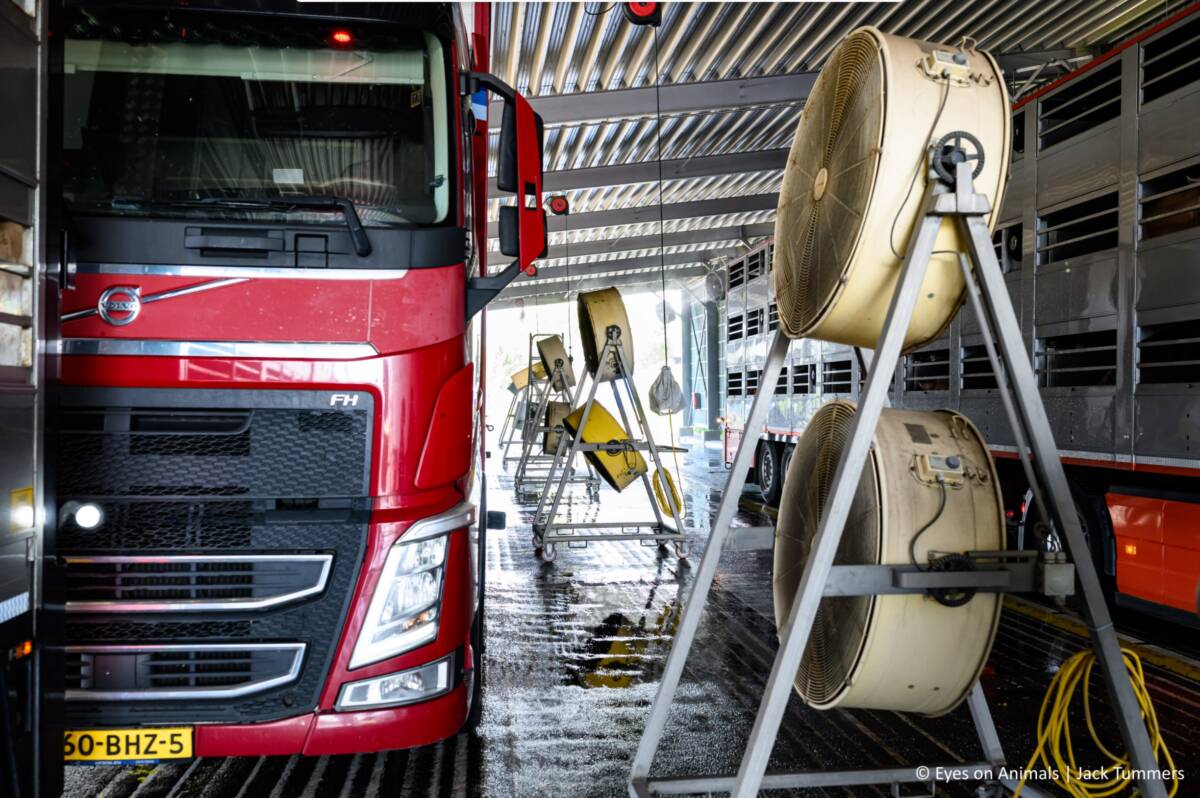

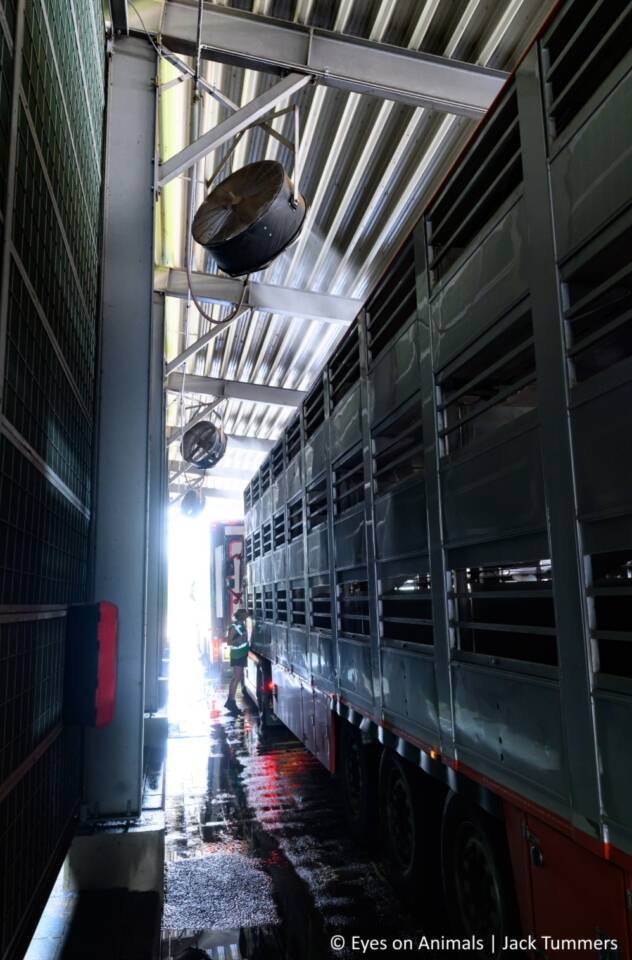
Unsere Messungen zeigten, dass die Temperaturen auf der Innenseite der Überdachung (Straßenseite) etwas höher waren als auf der Außenseite (Parkplatzseite). Dort schien die Belüftung weniger effektiv zu sein: Die mobilen Ventilatoren waren hauptsächlich auf die Schweine im Oberdeck gerichtet, während der Lkw relativ nahe an der Wand geparkt war, wodurch sich die Wärme staute. VION teilte uns mit, dass geprüft werde, wie diese Situation verbessert werden kann.
Wir freuen uns, dass VION offen für weitere Verbesserungen der Überdachung ist. Da ein großer Teil des Sommers noch bevorsteht, können solche Anpassungen in den kommenden Wochen für viele Tiere einen spürbaren Unterschied machen und gleichzeitig helfen, sich auf eine Zukunft vorzubereiten, in der extreme Hitzeperioden infolge des Klimawandels immer häufiger auftreten.
Lange Wartezeiten sind immer noch ein großes Problem
Wir beobachteten Viehtransporter, die auf dem Gelände von VION umherfuhren, während sie auf einen Platz unter der Überdachung warteten. Dies deutete darauf hin, dass nicht genügend überdachte Stellplätze für alle ankommenden Fahrzeuge vorhanden waren.
Die Wartezeiten – von der Ankunft am Schlachthof bis zur Entladung – waren lang und lagen zwischen etwa 1,5 und 2,5 Stunden.
Unserer Ansicht nach bleibt dies das größte Tierschutzproblem. An heißen Tagen ist es nicht akzeptabel, dass Tiere stundenlang in stehenden Transportfahrzeugen warten müssen. Auch für die Fahrer ist dies unangenehm. Eine Überdachung ist keine Lösung für unzureichende Kapazitäten beim Entladen und in den Warteställen. Zudem schreibt die europäische Gesetzgebung vor, dass Tiere nach ihrer Ankunft so schnell wie möglich entladen werden müssen.
Schweine mit Wasser besprühen
Eine besonders positive Beobachtung war, dass Schweine mit einem Wasserschlauch besprüht wurden. In Kombination mit einer guten Belüftung – wie sie bei VION in Boxtel vorhanden war – ist dies eine sehr wirksame Methode, Schweine zu kühlen, ohne dass die Luftfeuchtigkeit übermäßig ansteigt.
Wir beobachteten einen Fahrer des Unternehmens Schuttert, der seine Schweine während der Wartezeit mit Wasser besprühte. Auch ein Mitarbeiter von VION kühlte die Tiere auf diese Weise.
Perforierte Seitenwände erhöhen das Risiko von Hitzestress
Außerdem stellten wir fest, dass viele Viehtransporter über perforierte Seitenwände verfügten. In diesen Fahrzeugen staut sich die von den Tieren erzeugte Wärme und Feuchtigkeit tendenziell leichter, wodurch das Risiko von Hitzestress steigt. Unsere Temperatur- und Feuchtigkeitsmessungen bestätigten dies. Die Tiere in diesen Fahrzeugen profitieren außerdem weniger von den Vernebelungssystemen und der zusätzlichen Belüftung unter der Überdachung. Ähnliche Bedenken haben wir hinsichtlich vollständig geschlossener Fahrzeuge mit Zwangsbelüftung.
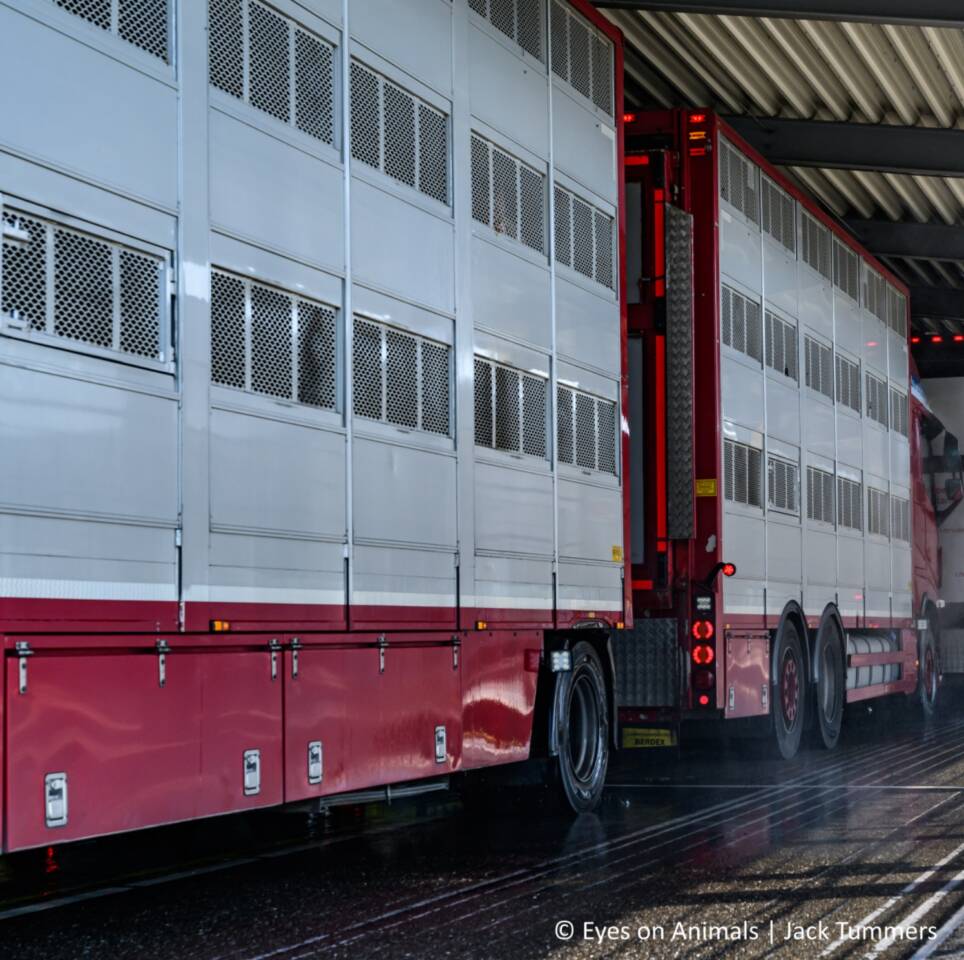
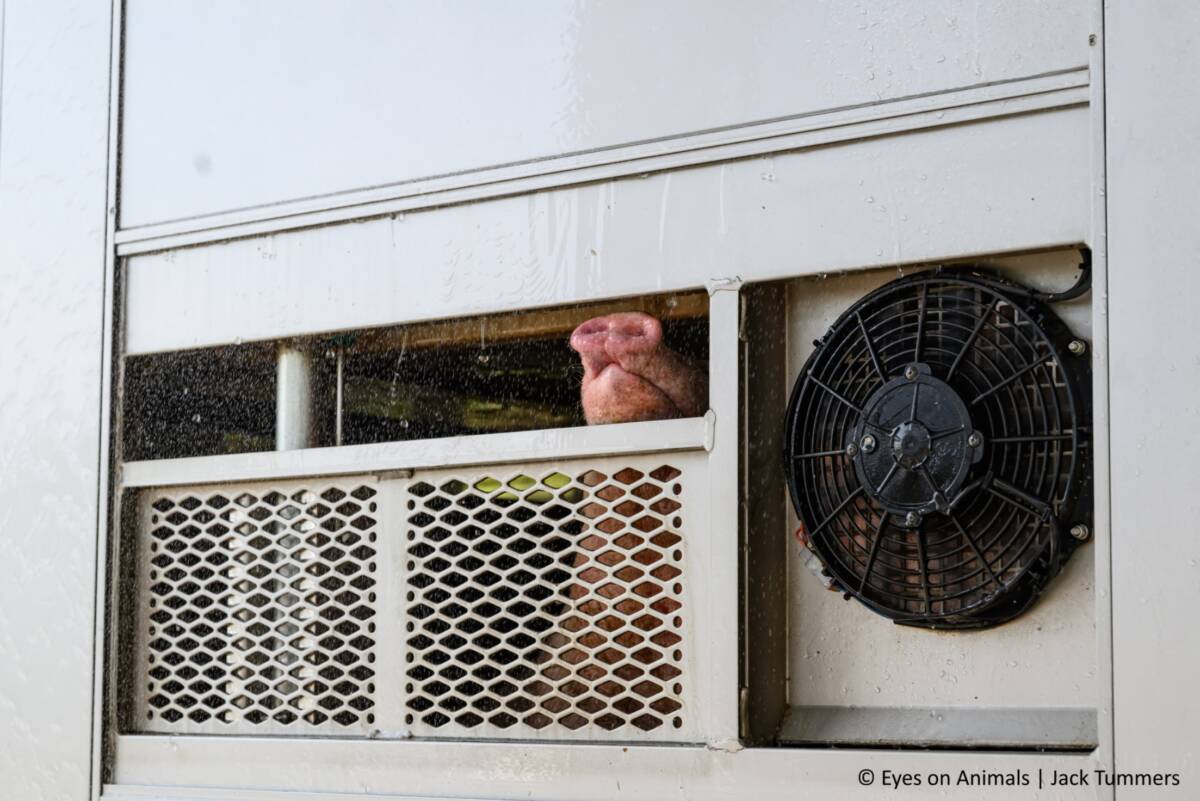
Wir sind der Auffassung, dass dringend unabhängige Untersuchungen zum Design von Viehtransportfahrzeugen und dessen Auswirkungen auf das Tierwohl erforderlich sind. Fahrzeugkonstruktionen, die das Risiko von Hitzestress erhöhen, sollten während der Sommermonate möglichst vermieden werden.
Besatzdichte reduziert, aber weiterhin zu hoch
Gemäß dem niederländischen Hitzeprotokoll wurden die Fahrzeuge an diesem Tag mit 10–20 % weniger Schweinen als üblich beladen. Dies bedeutete in der Regel 10 oder 11 Schweine pro Abteil.
Dennoch reichte dies nicht aus, damit alle Tiere liegen konnten, ohne sich gegenseitig zu berühren. Damit können sie sich selbst weniger abkühlen. Unserer Ansicht nach sollte die Besatzdichte an heißen Tagen um 25 % reduziert werden. Das würde bedeuten, dass pro Abteil etwa 8 bis 9 Schweine transportiert werden sollten. Obwohl auch 10 Schweine pro Abteil noch zu viele sind, ist dies deutlich besser als 11 Tiere und ging mit merklich geringerem Hitzestress einher.

Fortschritte, aber noch wichtige Verbesserungen erforderlich
Unser Besuch zeigte, dass Schlachthöfe und Fahrer ernsthafte Anstrengungen unternehmen, um Hitzestress zu verringern. Wir schätzen diese Maßnahmen sehr, und sie machen täglich für Tausende von Tieren einen echten Unterschied.
Gleichzeitig bestehen weiterhin wichtige strukturelle Probleme: lange Wartezeiten, weiterhin zu hohe Besatzdichten, fehlender Zugang zu Trinkwasser sowie die fortgesetzte Nutzung von Viehtransportern mit perforierten Seitenwänden oder vollständig geschlossenen Fahrzeugen, die das Risiko von Hitzestress erhöhen können.
Es gibt immer noch Verbesserungsmöglichkeiten, und wir freuen uns darauf, den Dialog mit der Branche fortzusetzen. Gemeinsam können wir die Risiken für das Wohlergehen der Tiere während extremer Hitzeperioden weiter verringern.