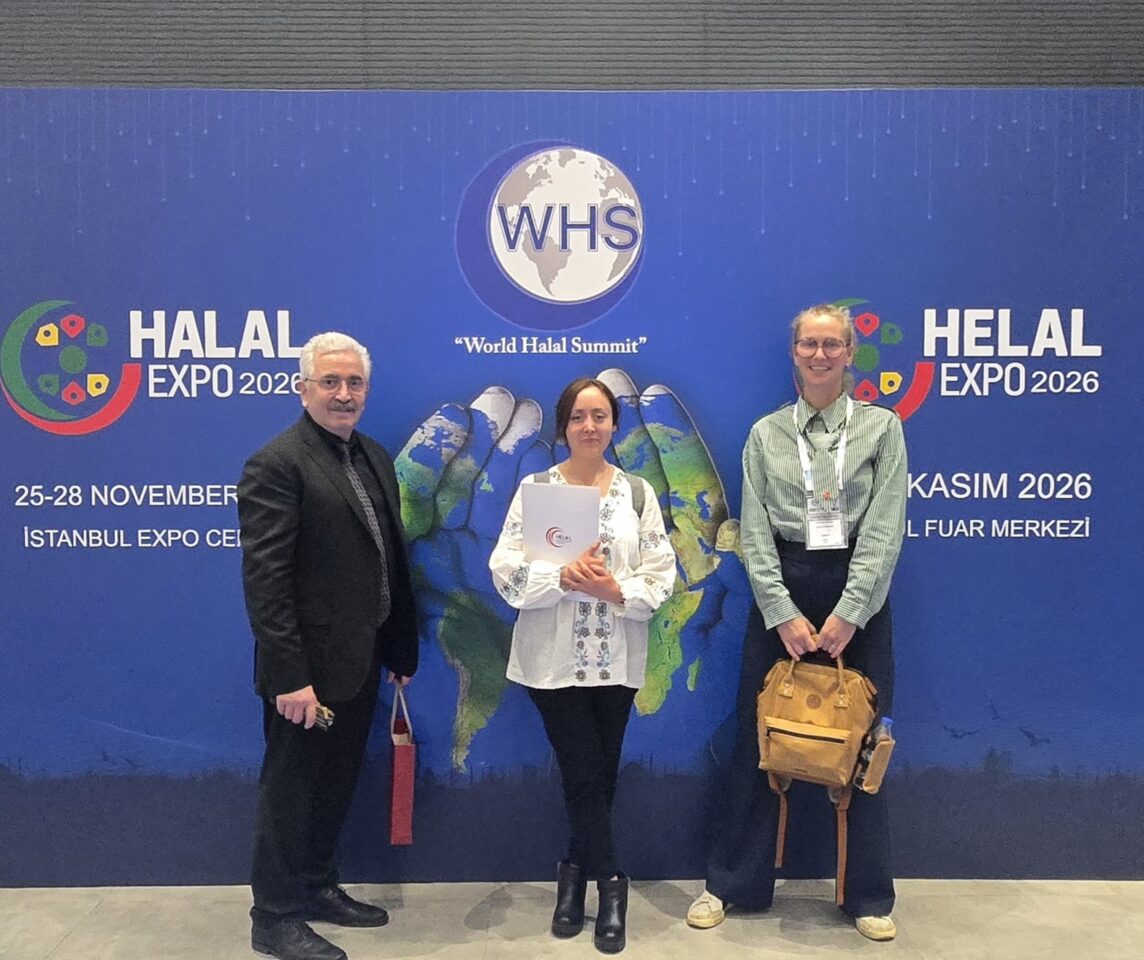
Eyes on Animals and Acısız Kesim attended the World Halal Summit in Istanbul to network with halal meat certifiers and raise concerns (one on one but also via the microphone during Q&A) about the ongoing animal suffering we continue to witness in Turkey and many other countries during slaughter. In the majority of halal-certified slaughterhouses in Islamic countries, cattle, sheep, goats, buffalo, camels and other species are slaughtered when fully conscious. Animals are often chained by one leg, tripped to the floor, hoisted, or forced onto their backs in rotational restraint boxes before having their throats cut. These practices cause extreme fear, pain, and distress.
In Turkey, only 16 out of more than 500 abattoirs offer the service to keep animals standing on all four legs and render them instantaneously unconscious using well-applied captive-bolt or electrical stunning before tripping, hoisting, rotating and throat cutting. Many Islamic slaughterhouses would like to use stunning but are reluctant to do so because stunning remains forbidden by SMIIC, the body overseeing halal standards for Turkey and 47 other Islamic countries.
We also attended a presentation by Dr. Awal Fuseini, a meat scientist and animal-welfare researcher with a PhD from the University of Bristol. Dr. Fuseini is well known for his work on humane slaughter and halal meat production, and we have previously collaborated with him on practical welfare improvements in Ghana and Turkey.
We met participants from all over the world. Many were opposed to stunning, often due to unfounded fears that it causes pain or damages meat quality. However, through open discussion and by showing scientific evidence and videos demonstrating correct stunning, many minds and hearts were opened. Learning from one another and sharing knowledge is a vital first step toward meaningful change.
Following these discussions, SMIIC invited us to continue the dialogue in January. We also distributed a letter to all participants introducing our organisations, explaining our work, and presenting practical recommendations on how animal suffering in Turkish and similar slaughterhouses can be radically reduced.