• Skip to primary navigation
  • Skip to main content
  • Skip to primary sidebar
  • Skip to footer
  • EYES ON ANIMALS – Watching out for their Welfare
  • English
  • Nederlands
  • Deutsch

Eyes on Animals

Watching out for their Welfare

  • Facebook
  • Instagram
  • Twitter
  • YouTube
SPENDEN
  • Über uns
    • Was wir tun
    • Unser Team
    • Kennzahlen
    • Kontakt
  • Neuigkeiten
    • Letzte Neuigkeiten
    • Gute Nachrichten
    • Schlechte Nachrichten
    • Abonnieren Sie unseren Newsletter
  • Inspektionen
    • Landwirtschaftliche Betriebe
    • Märkte und Sammelstationen
    • Transporte
    • Schlachthäuser
    • Projekte
    • Veterinärinspektoren
    • Sonstige
  • Schulungen
    • Polizei
    • LKW-Fahrer
    • Schlachthofmitarbeiter
    • Geflügelfänger
    • Trainingsmaterial
    • Schulungsanfrage
  • Industrietips
    • Transport
      • Rinder
      • Schweine
      • Geflügel
    • Schlachtung
      • Rinder
      • Schweine
      • Geflügel
      • Rituelle Schlachtung
    • Schulungsfilme
  • Publikationen
    • In den Medien
      • Presse
      • Fernsehen
      • Radio
      • Videos
    • Newsletters (Englisch)
    • Spezialberichte
    • Trainingsmaterial
    • Geschäftsberichte
  • Helfen
Home » Mitteilung » Visit to Leeuwarden livestock market: improvements visible, some concerns remain

Visit to Leeuwarden livestock market: improvements visible, some concerns remain

März 19, 2025

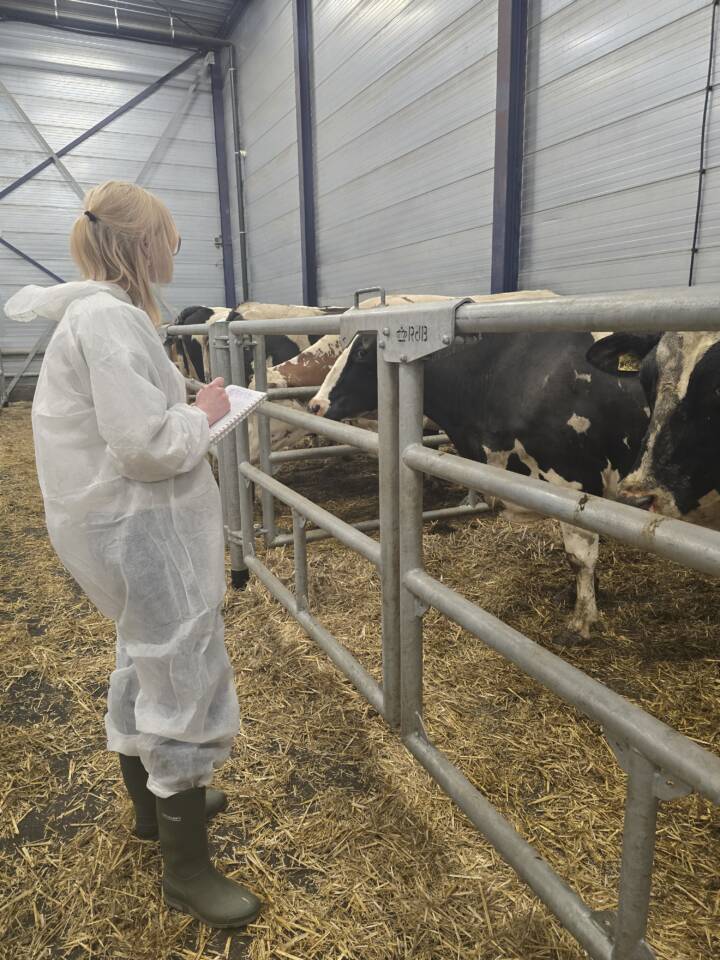
On 19 March, we paid an unannounced visit to the cattle market in Leeuwarden. The market management immediately made time to show us around.

The market appeared well organised: all cattle were housed in groups (except for the bulls), there was plenty of clean straw, the air was fresh, and water was available in every pen. Compared to a few years ago, the condition of the cows had clearly improved. We did not see any extremely emaciated or severely lame animals.

However, we did observe some cows that, in our view, should not have been sent to a market. They showed visible signs of pain, likely due to inflammation in their claws or joints. Some shifted their weight uneasily from one leg to another to relieve pressure on painful limbs; others frequently kept one leg lifted. Through the I&R system, we found that some of these cows were sent to a slaughterhouse in the far south of the Netherlands. We followed one of these transports: the truck left the market at 00:48 and the animals were not unloaded at the slaughterhouse until 05:35. The slaughterhouse management allowed to observe the unloading, which was done calmly. All cows walked off the truck without any help, although some did so with great caution.

In our view, animals with visible pain do not belong at a livestock market. For these animals, several hours at the market followed by a long journey in a moving truck is too taxing and poses serious welfare risks. We believe such animals should be humanely killed on the dairy farm or transported directly and carefully to a local slaughterhouse – without first going through a market.

Another concern is the lack of feed at the market. The period between the last feeding at the dairy farm and slaughter can easily exceed 24 hours. For high-yielding dairy cows with substantial energy needs, this is too long. During our visit, there was also a great deal of bellowing – possibly a sign of hunger. We recommended making hay available in every pen. This is a simple change that could immediately improve the welfare of many animals.

Despite these concerns, we want to acknowledge the important steps the market has already taken to improve animal welfare – such as group housing, plenty of straw, the exclusion of severely emaciated or lame animals, and good loading and unloading facilities. We truly appreciate these efforts. We are confident that the market management will also take our new recommendations seriously. These will be discussed at the next members’ meeting.

We also want to thank the managers of the slaughterhouse, who warmly welcomed us, allowed us to observe the unloading, and took the time to discuss how the welfare of dairy cattle during transport could be further improved.
  • teilen 
  • teilen 
  • teilen 
  • merken 
  • E-Mail 

Filed Under: Inspektionen, Märkte und Sammelstationen Tagged With: animal welfare improvements, cattle market, live animal transports

Primary Sidebar

Search

Featured

Export checks of young piglets for slaughter fall short: serious violations documented on transports from the Netherlands to Croatia

This summer, Eyes on Animals documented two long-distance transports of Dutch piglets to … [Read More...] about Export checks of young piglets for slaughter fall short: serious violations documented on transports from the Netherlands to Croatia

Featured

First International Conference on Poultry Catching and Loading

Oktober 23, 2025

Today, Eyes on Animals hosted the first international conference dedicated to poultry catching and … [Read More...] about First International Conference on Poultry Catching and Loading

Unser neuste Newsletter

Dear friends,

Thanks to your generous donations, we were able to follow two transports of piglets from the Netherlands to a slaughterhouse in Croatia.

Read more…

Erhalten Sie unseren englischen Newsletter

Subscribe

* indicates required

Eyes on Animals op Twitter

eyes_on_animals Eyes on Animals @eyes_on_animals ·
4 Dez.

This morning Eyes on Animals was interviewed by foreign TV about the welfare issues in a Dutch sector that still drags behind and does not offer a good life to its "factory-farmed" animals.
Details will be availabe once it is broadcasted.

Auf Twitter antworten 1996608735888683080 Retweet auf Twitter 1996608735888683080 1 Auf Twitter liken 1996608735888683080 4 Twitter 1996608735888683080
nunl NU.nl @nunl ·
4 Dez.

Gezondheidsraad adviseert om meer peulvruchten en minder vlees te eten

Auf Twitter antworten 1996541672872685889 Retweet auf Twitter 1996541672872685889 20 Auf Twitter liken 1996541672872685889 74 Twitter 1996541672872685889
dierbescherming Dierenbescherming @dierbescherming ·
4 Dez.

Dierenwelzijn verdient meer aandacht in de formatie. We zijn blij met de 'Inhoudelijke en ambitieuze agenda' van D66 en CDA, maar één cruciale pijler blijft onderbelicht: dierwaardigheid. Een integrale aanpak is nodig voor een duurzame landbouwtransitie: https://bit.ly/48Qga8L

Auf Twitter antworten 1996534217790910565 Retweet auf Twitter 1996534217790910565 6 Auf Twitter liken 1996534217790910565 9 Twitter 1996534217790910565
Load More...

ANBI

Latest news

All Future Vision news

Footer

Donate with Paypal

Paypal Eyes on Animals
Beträge (einmalig):

Beträge (monatliche Spenden):

Lesestoff

  • In den Medien
  • Newsletters
  • Gesetzestexte
  • Spezialberichte
  • ANBI

Our Amsterdam Office

Amsterdam House Hotel
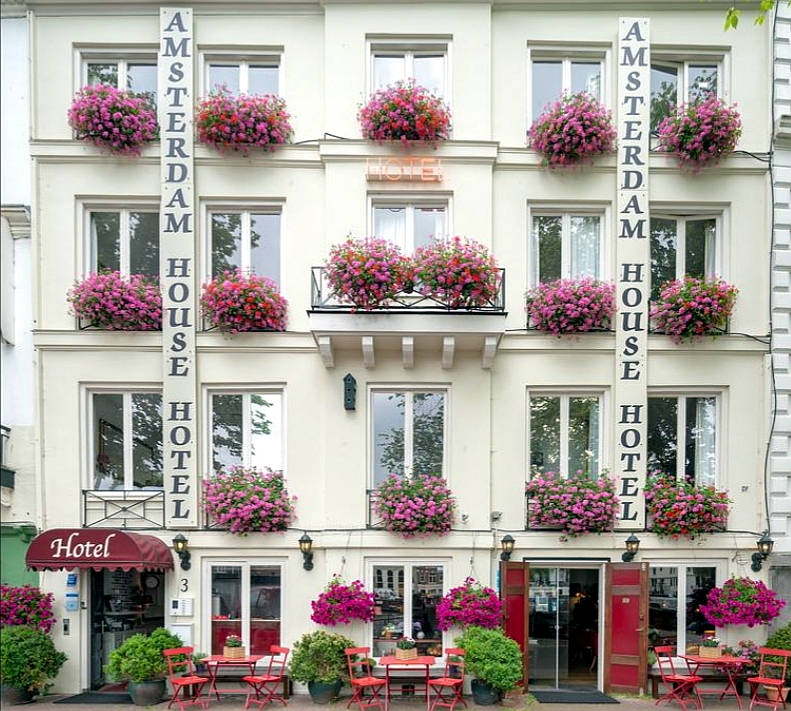
Das Büro von Eyes on Animals befindet sich im Amsterdam House Hotel direkt im Zentrum von Amsterdam. Die großzügige und warmherzige Hotelbetreiberin hat Eyes on Animals kostenfrei ein Zimmer zur Verfügung gestellt, in dem unsere Inspektoren arbeiten, Unterlagen unterbringen und Meetings abhalten können.

Copyright © 2025 · Eyes on Animals | Website by Webkompaan