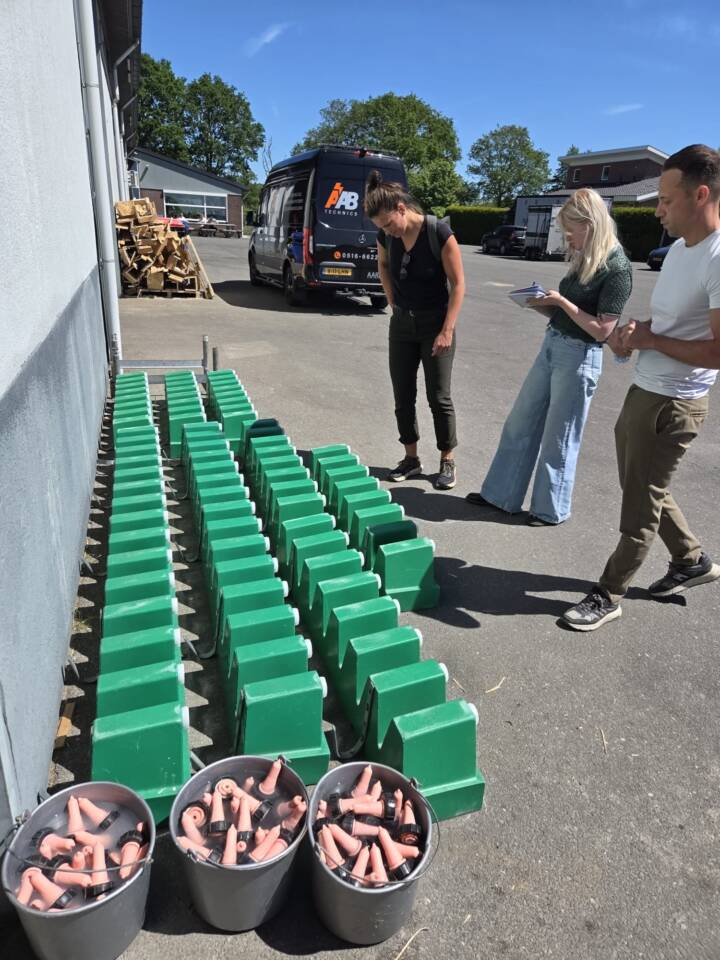
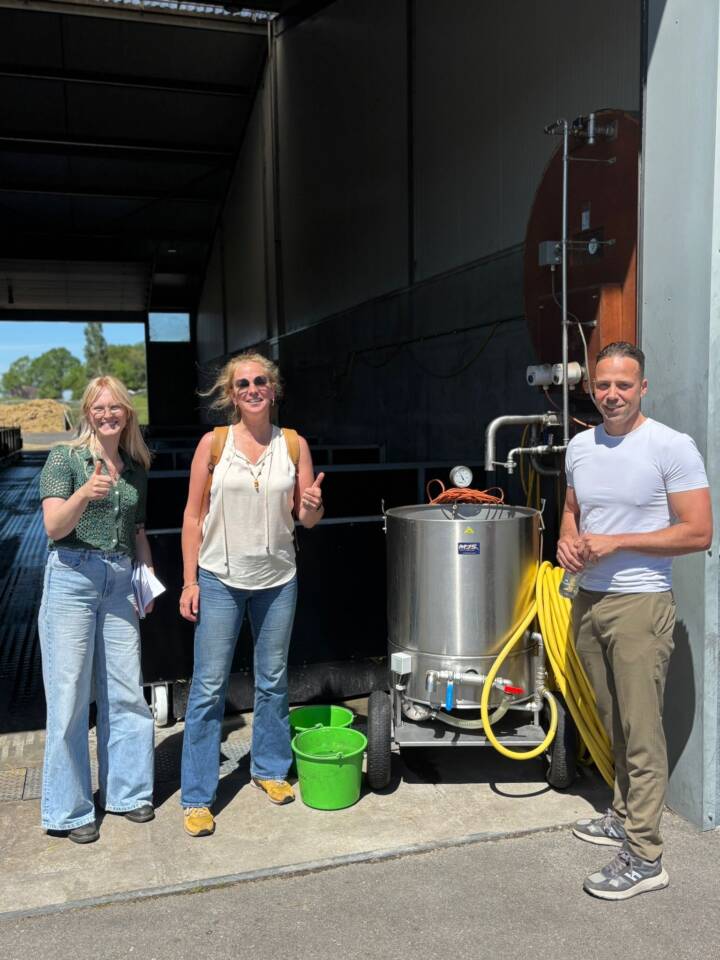
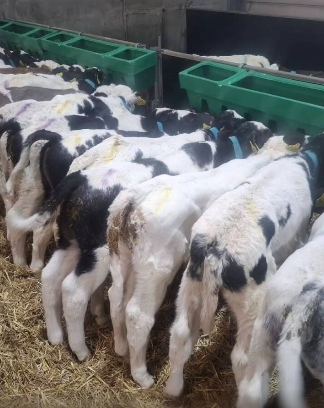
Good news. Last week we visited Wijntjes calf assembly center in Friesland, where young calves are actually provided with milk through teats during their stay. That may sound like common sense, but unfortunately it is still the exception rather than the rule. At most collection centres in the Netherlands, EonA discovered that calves are offered only electrolytes during long waiting periods and transport journeys, sometimes even going more than 24-hrs in the Netherlands without milk.
The debate around milk feeding and diarrhoea is often misunderstood. Milk itself does not cause diarrhoea. In fact, skipping milk meals and repeatedly replacing them with only water or electrolytes can disrupt normal gut function and increase the risk of digestive problems. Properly prepared milk, offered at the correct temperature, provides young calves with the nutrition amd satiation they need. Research also shows that well-fed calves are often healthier, grow better, and require less medication.
How milk is offered matters too. When calves can drink milk slowly through a teat with a controlled flow, the natural oesophageal groove reflex is activated, directing the milk efficiently to the abomasum (true stomach) for proper digestion.
Behavioural observations show that calves vocalize less after drinking milk compared to just electrolytes, which is consistent with satiety and reduced hunger-related behaviour. Calves that receive only electrolytes remain hungry, stressed and restless. Electrolytes can replace fluids and salts, but they do not provide the nutrients that young calves need and therefore do not relieve hunger in the same way that milk does.
This step was initiated by Denkavit, which has been actively informing traders and calf assembly centers about the importance of regularly feeding milk to young calves during transport and while housed at assembly centers. Eyes on Animals will continue checking on calf collection stations to insist they too provide milk to young calves. Change takes time, but examples like Wijntjes show that practical improvements are possible.