• Skip to primary navigation
  • Skip to main content
  • Skip to primary sidebar
  • Skip to footer
  • EYES ON ANIMALS – Watching out for their Welfare
  • English
  • Nederlands
  • Deutsch

Eyes on Animals

Watching out for their Welfare

  • Facebook
  • Instagram
  • Twitter
  • YouTube
SPENDEN
  • Über uns
    • Was wir tun
    • Unser Team
    • Kennzahlen
    • Kontakt
  • Neuigkeiten
    • Letzte Neuigkeiten
    • Gute Nachrichten
    • Schlechte Nachrichten
    • Abonnieren Sie unseren Newsletter
  • Inspektionen
    • Landwirtschaftliche Betriebe
    • Märkte und Sammelstationen
    • Transporte
    • Schlachthäuser
    • Projekte
    • Veterinärinspektoren
    • Sonstige
  • Schulungen
    • Polizei
    • LKW-Fahrer
    • Schlachthofmitarbeiter
    • Geflügelfänger
    • Trainingsmaterial
    • Schulungsanfrage
  • Industrietips
    • Transport
      • Rinder
      • Schweine
      • Geflügel
    • Schlachtung
      • Rinder
      • Schweine
      • Geflügel
      • Rituelle Schlachtung
    • Schulungsfilme
  • Publikationen
    • In den Medien
      • Presse
      • Fernsehen
      • Radio
      • Videos
    • Newsletters (Englisch)
    • Spezialberichte
    • Trainingsmaterial
    • Geschäftsberichte
  • Helfen
Home » Our inspections » Loading piglets at Van Rooi: reflecting together on how to reduce stress

Loading piglets at Van Rooi: reflecting together on how to reduce stress

Juni 16, 2025

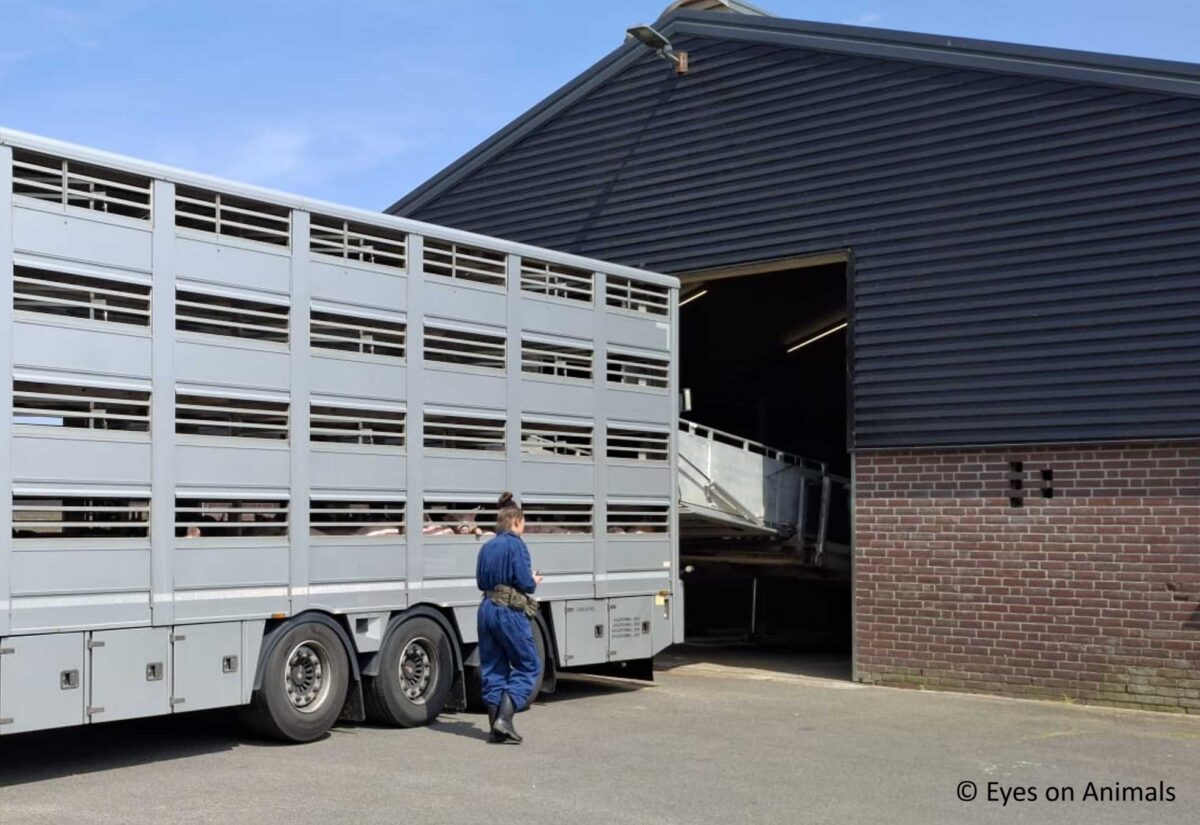
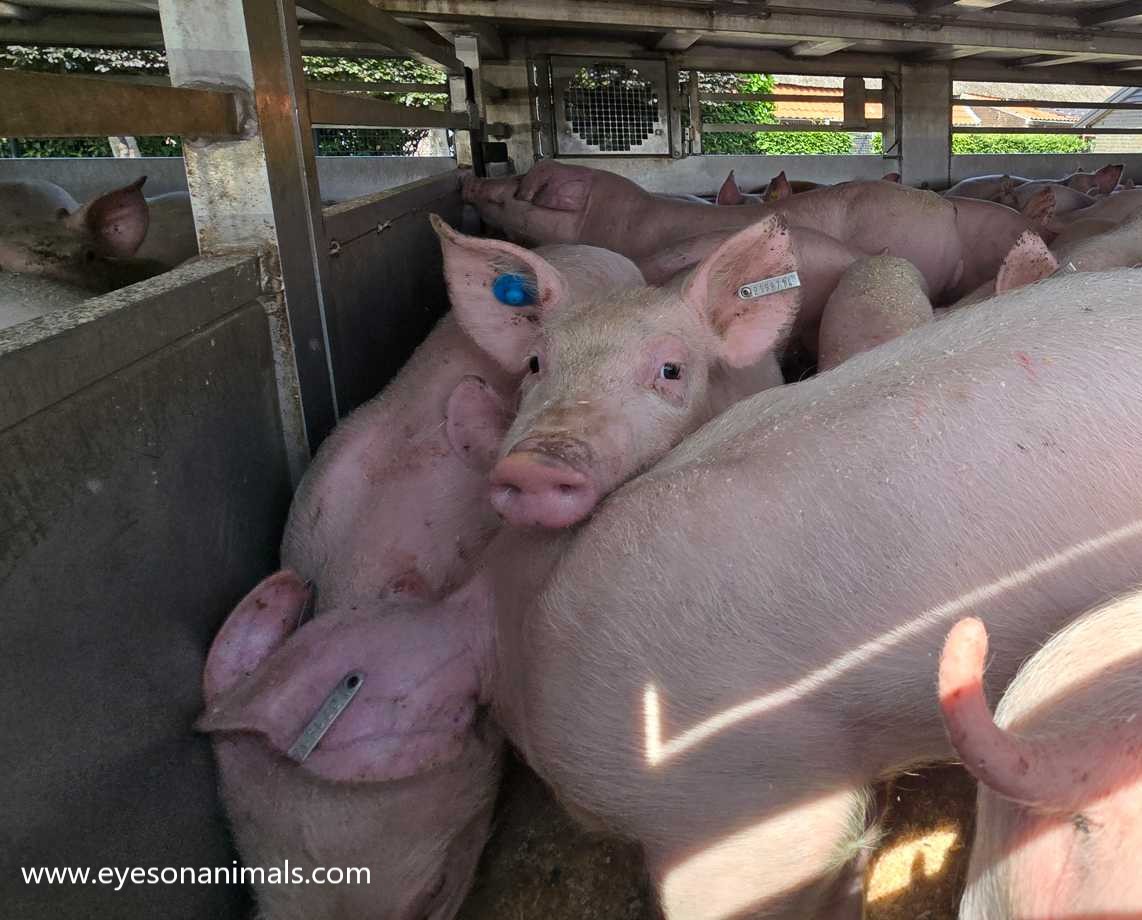
Today we observed the loading of piglets at the Van Rooi assembly centre in Lieshout. The piglets being loaded were surplus animals, selected for slaughter in Croatia due to issues such as bitten ears or umbilical hernias. Our aim was to gain insight into how ‘fitness for transport’ is assessed, and to explore ways to reduce stress during loading.

Herding and loading – a solid foundation, but room for improvement
The walking route from pen to truck was well designed: there were no sharp turns or dead ends, and all raceways had high, solid walls to prevent the animals from being startled. Sawdust had been spread along the entire route from pen to truck – a smart way to soften contrasts in the flooring, which piglets are particularly sensitive to due to their limited vision. Also positive: the animals were barely touched during handling.

Still, we observed areas where things could be improved. New groups of piglets were being moved forward while the previous group was still being loaded. As a result, the incoming piglets were exposed to a busy loading ramp full of people and noisy handling tools. They hesitated or turned back, and extra noise was needed to move them forward again.

We suggested testing the following adjustments:

  • Start herding the next group only once the ramp is empty and the previous group has been secured in their compartment
  • Avoid using rattlers or other loud handling tools , as they significantly increase stress levels.

We expect these changes to improve the flow and reduce stress – both for the animals and the staff. We also recommended installing a canopy over the loading area so that trucks can always be loaded in the shade.

We also advised installing a high, solid wall behind which the NVWA veterinarian can remain out of sight. This would allow the vet to assess the animals without being seen, helping to reduce stress. Several slaughterhouses already use this method successfully. Finally, we found that the distribution of piglets across the compartments was not optimal: two compartments were very full, while others offered sufficient space. In our view, this should be monitored more closely.

Long journeys for young, vulnerable animals
The official inspectors from the Dutch Food and Consumer Product Safety Authority (NVWA) now use the EURCAW guidelines to assess whether animals are fit for transport. We welcome this development, as it provides greater clarity about what is and isn’t acceptable. At the same time, we believe that vulnerable animals – such as surplus piglets, who are young and have (small) physical issues – should ideally be slaughtered locally, rather than being sent on long journeys for slaughter alone. We are also concerned that the continued closure of small abattoirs, partly due to the higher inspection costs imposed by the NVWA, will lead to even more animals being transported across borders for slaughter.

Working together on practical improvements
Although Eyes on Animals and the livestock industry do not always agree, we believe that by sharing knowledge and experiences, we can make meaningful progress in improving animal welfare. We look forward to jointly testing which changes truly make a difference in reducing stress during loading.

We thank Van Rooi and all staff present for their openness and their willingness to exchange ideas on improving animal welfare during the loading process.
  • teilen 
  • teilen 
  • teilen 
  • merken 
  • E-Mail 

Filed Under: Inspektionen, Transporte Tagged With: animal transport, animal welfare improvements, live animal transports

Primary Sidebar

Search

Featured

Export checks of young piglets for slaughter fall short: serious violations documented on transports from the Netherlands to Croatia

This summer, Eyes on Animals documented two long-distance transports of Dutch piglets to … [Read More...] about Export checks of young piglets for slaughter fall short: serious violations documented on transports from the Netherlands to Croatia

Featured

First International Conference on Poultry Catching and Loading

Oktober 23, 2025

Today, Eyes on Animals hosted the first international conference dedicated to poultry catching and … [Read More...] about First International Conference on Poultry Catching and Loading

Unser neuste Newsletter

Dear friends,

Thanks to your generous donations, we were able to follow two transports of piglets from the Netherlands to a slaughterhouse in Croatia.

Read more…

Erhalten Sie unseren englischen Newsletter

Subscribe

* indicates required

Eyes on Animals op Twitter

eyes_on_animals Eyes on Animals @eyes_on_animals ·
4 Dez.

This morning Eyes on Animals was interviewed by foreign TV about the welfare issues in a Dutch sector that still drags behind and does not offer a good life to its "factory-farmed" animals.
Details will be availabe once it is broadcasted.

Auf Twitter antworten 1996608735888683080 Retweet auf Twitter 1996608735888683080 1 Auf Twitter liken 1996608735888683080 4 Twitter 1996608735888683080
nunl NU.nl @nunl ·
4 Dez.

Gezondheidsraad adviseert om meer peulvruchten en minder vlees te eten

Auf Twitter antworten 1996541672872685889 Retweet auf Twitter 1996541672872685889 20 Auf Twitter liken 1996541672872685889 74 Twitter 1996541672872685889
dierbescherming Dierenbescherming @dierbescherming ·
4 Dez.

Dierenwelzijn verdient meer aandacht in de formatie. We zijn blij met de 'Inhoudelijke en ambitieuze agenda' van D66 en CDA, maar één cruciale pijler blijft onderbelicht: dierwaardigheid. Een integrale aanpak is nodig voor een duurzame landbouwtransitie: https://bit.ly/48Qga8L

Auf Twitter antworten 1996534217790910565 Retweet auf Twitter 1996534217790910565 6 Auf Twitter liken 1996534217790910565 9 Twitter 1996534217790910565
Load More...

ANBI

Latest news

All Future Vision news

Footer

Donate with Paypal

Paypal Eyes on Animals
Beträge (einmalig):

Beträge (monatliche Spenden):

Lesestoff

  • In den Medien
  • Newsletters
  • Gesetzestexte
  • Spezialberichte
  • ANBI

Our Amsterdam Office

Amsterdam House Hotel
Das Büro von Eyes on Animals befindet sich im Amsterdam House Hotel direkt im Zentrum von Amsterdam. Die großzügige und warmherzige Hotelbetreiberin hat Eyes on Animals kostenfrei ein Zimmer zur Verfügung gestellt, in dem unsere Inspektoren arbeiten, Unterlagen unterbringen und Meetings abhalten können.

Copyright © 2025 · Eyes on Animals | Website by Webkompaan