• Skip to primary navigation
  • Skip to main content
  • Skip to primary sidebar
  • Skip to footer
  • EYES ON ANIMALS – Watching out for their Welfare
  • English
  • Nederlands
  • Deutsch

Eyes on Animals

Watching out for their Welfare

  • Facebook
  • Instagram
  • Twitter
  • YouTube
DONATE
  • About us
    • What we do
    • Our team
    • Key Figures
    • Our Vision
    • Contact
  • News
    • Latest news
    • Good news
    • Bad news
    • Featured news
    • Subscribe to our newsletter
  • Inspections
    • Farms
    • Markets
    • Transports
    • Slaughterhouses
    • Special projects
    • Other
  • Training
    • Police
    • Truck drivers
    • Poultry-catchers
    • Slaughter personnel
    • Training Material
    • Request a training
  • Industry Tips
    • Animal transport
      • Cattle
      • Pigs
      • Poultry
    • Slaughterhouses
      • Cattle
      • Pigs
      • Poultry
      • Ritual slaughter
    • Educational videos
  • Publications
    • In the media
      • Print
      • Television
      • Radio
      • Videos
    • Newsletters
    • Special reports
    • Training Material
    • Annual reviews
  • Help us
Home » Our inspections » market » Visit of organic dairy farm near Barneveld, NL

Visit of organic dairy farm near Barneveld, NL

August 26, 2014

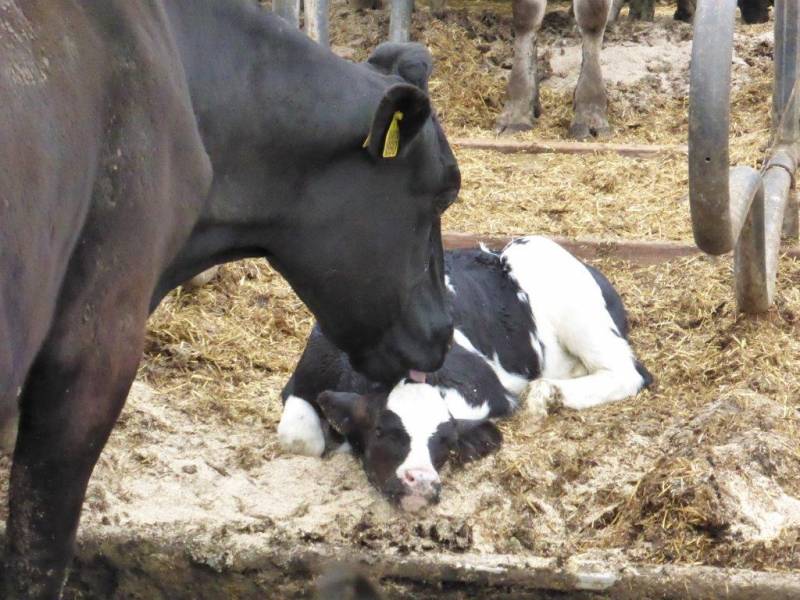
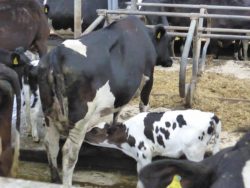
26.08.2014_NL_Cors_farm_Lunteren_calf_with_moms  (25)As part of our Dairy Project (“Giving Milk a Good Shake- looking at alternative options in producing dairy”) we visited another dairy farm today. This time an organic one located near Barneveld.
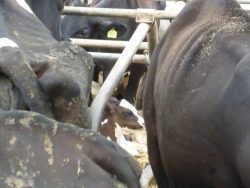
Several years ago the farmer decided to try a new idea on his farm – of keeping the calves longer with their mothers instead of separating them right after birth. He did not have to modify his building or parlour to do so, the new system works fine in what he already had. The first two days he sets the new-born calf with its mother in a separate pen so they have time to be quietly together and the calf can learn to recognize its correct mother. After, the mother and her 3-day old calf are placed with the rest of the herd. The male calves are separated after 2-weeks and sold. The females however stay for at least 5 weeks and often more with the mother in the herd. Thereafter the female calf is not weaned off the mother abruptly, but rather gradually in order to reduce the stress it causes. They are first placed in a large pen with straw right beside where the adults are. The calves can still see, touch and suckle on the mom, but no longer walk freely or sleep among the herd of adults. After a couple of weeks, the female calves are then placed in a pen further away where visual contact is still possible, but no longer physical. At this point the calf has learned to be more independent and the rumen is developed, so the stress is minimal.
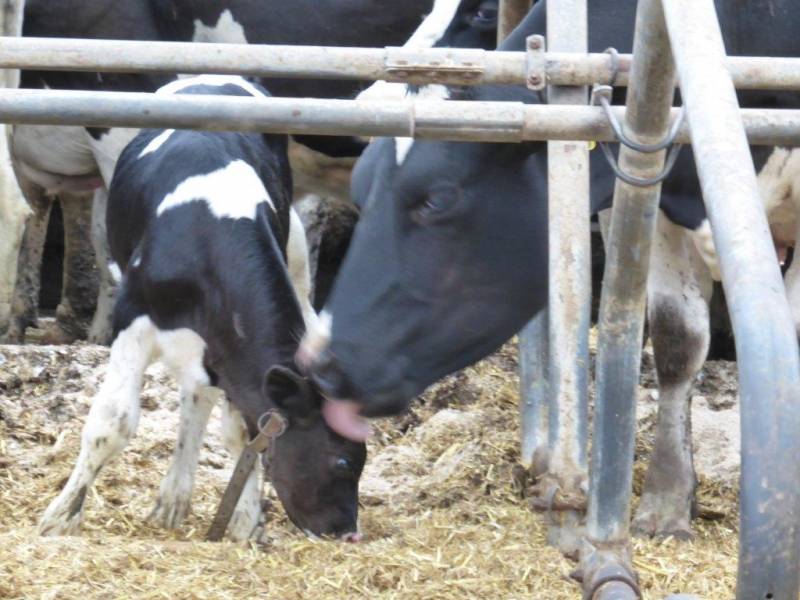
26.08.2014_NL_Cors_farm_Lunteren_calf_with_moms  (12)Reasons for keeping the calves longer by the mother? Scientific studies have shown that, if the farmer has a good eye on his animals and professional management skills, the welfare is greatly improved for all animals. No one can take such good care of a young calf as its own mother. Calves have less incidence of infections in the umbilical cord, and develop more healthily and are stronger. The calves get used to a social order among the herd, avoiding the stress that calves raised in isolation the first weeks feel when suddenly placed in a group and then re-grouped regularly thereafter. The cow gets off to a better start in lactation as well when left with her calf. The whole herd benefits, because they can express more natural behaviour- playing, nursing, protecting, social resting etc…
One concern remains however that the male calves are separated earlier.
We would like to thank the farmer for his welcoming attitude and for taking the time to explain the advantages and disadvantages of his system, and sharing his expert opinions with us. He and his farm made a very good impression on us and it is clear that a lot of passion and ethical thought is practiced on his farm.
26.08.2014_NL_Cors_farm_Lunteren_calf_with_moms (2)
26.08.2014_NL_Cors_farm_Lunteren_calf_with_moms (15)
  • share 
  • share 
  • share 
  • save 
  • email 

Filed Under: market, Our inspections Tagged With: diary farm

Primary Sidebar

Search

Featured

Regional slaughterhouses are disappearing — and animals are paying the price

Across the Netherlands, regional slaughterhouses are disappearing at an alarming pace. Not because … [Read More...] about Regional slaughterhouses are disappearing — and animals are paying the price

Featured

Injured sows at Lunteren assembly centre: NVWA investigation ruled inadequate

January 29, 2026

The Dutch Trade and Industry Appeals Tribunal (College van Beroep voor het Bedrijfsleven, CBb) has … [Read More...] about Injured sows at Lunteren assembly centre: NVWA investigation ruled inadequate

Our most recent newsletter

Dear friends,

After two years of waiting for our new permit from the newly elected officials to import captive bolt stunners into Ghana, the shipment of 10 brand new captive bolt stunners, maintenance kits and tens of thousands of cartridges finally arrived from Amsterdam in Accra on December 19, 2025!

Read more…

Subscribe to our newsletter

Subscribe

* indicates required

Eyes on Animals op Twitter

eyes_on_animals Eyes on Animals @eyes_on_animals ·
4h

🔥🐖 Ondertussen bij onze Zuiderburen: 200 dieren gestorven bij grote stalbrand in Geluwe, oorzaak nog niet bekend | VRT NWS Nieuws #stalbrand #varkens

Reply on Twitter 2033817847999131811 Retweet on Twitter 2033817847999131811 1 Like on Twitter 2033817847999131811 4 Twitter 2033817847999131811
eyes_on_animals Eyes on Animals @eyes_on_animals ·
4h

📌 Belangrijk: “In zijn betoog zit een duidelijke vorm van framing. Blaustein-Rejto redeneert vanuit een ecomodernistische benadering. Glyfosaat wordt niet vergeleken met een landbouw zonder herbiciden, maar met alternatieven zoals andere herbiciden of intensiever ploegen.”

Reply on Twitter 2033814048622432700 Retweet on Twitter 2033814048622432700 Like on Twitter 2033814048622432700 1 Twitter 2033814048622432700
melkveetweet Melkvee.nl @melkveetweet ·
16 Mar

Melkveehouder Gerjo Koskamp houdt kalveren drie maanden bij de koe en melkt één keer per dag. Met minder koeien en eigen kaasmakerij kiest hij bewust voor een ander model binnen de #melkveehouderij en het #kalfbijdekoe-systeem.

Reply on Twitter 2033480999229620424 Retweet on Twitter 2033480999229620424 1 Like on Twitter 2033480999229620424 5 Twitter 2033480999229620424
Load More...

ANBI

Latest news

Meat printer prints plant based meat

NOS-news: The meat printer

October 13, 2022

Veggie burger

Vox: Plant-based meat is better for the planet

November 18, 2021

All Future Vision news

Footer

Donate with Paypal

Paypal Eyes on Animals
One-time donation:
Monthly donation:

Reading Material

  • In the Media
  • Newsletters
  • Special EonA reports
  • Legislative texts
  • ANBI

Our Amsterdam Office

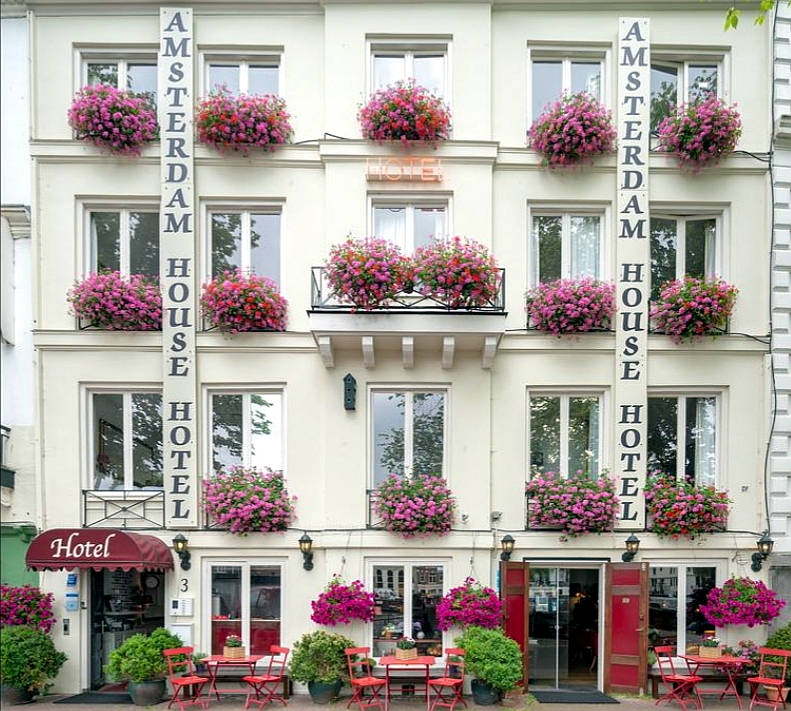
Amsterdam House Hotel
Eyes on Animals main office is in downtown Amsterdam, at the Amsterdam House Hotel. The generous and warm-hearted hotel owner donated to Eyes on Animals, free of charge, a beautiful room where our inspectors can work, hold meetings and store their material.

Copyright © 2026 · Eyes on Animals | Website by Webkompaan