Today Eyes on Animals tested the CASH Small Animal Tool together with MHS Consultancy and Dr. Bert Lambooij. This non-penetrating captive-bolt device is designed to kill small animals quickly and humanely.
Why this project?
Poultry farmers deal almost daily with birds that become sick or injured. Often, these birds are killed to prevent further suffering and the risk of spreading disease, although some farmers may move them to a separate sick pen first to see whether they recover on their own. Medicine is rarely administered to sick birds in the poultry industry because of the risk of drug residues in meat or eggs.
The most common on-farm killing method used is cervical dislocation (breaking or stretching the neck). Contrary to what many people believe, cervical dislocation does not cause immediate loss of consciousness and can cause considerable pain for several seconds and sometimes even minutes. Some poultry farmers also find the procedure physically or emotionally difficult to perform. As a result, birds can be put out of their misery too late or not at all, resulting in additional unnecessary suffering. In short, the way sick or injured birds are handled and killed on-farm urgently needs improvement.
We therefore launched a practical study testing out various devices to see which ones can humanely end the suffering of sick or injured birds. The aim is to develop and promote humane alternatives to painful cervical dislocation.
Today, following advice from scientific experts, we tested the Accles & Shelvoke “CASH Small Animal Tool”: a cartridge-powered, non-penetrating captive-bolt device with a mushroom-shaped bolt head. The test took place on a farm in Zeeland in the Netherlands, with a small flock of chickens. The birds were scheduled for slaughter because of declining egg production and deteriorating health. The farm staff were pleased that the birds could be killed using a captive-bolt device, as they had no humane alternative.
When assessing whether a device is humane and suitable, we use three criteria:
- Does the animal lose consciousness immediately and without pain?
- Is stress during restraint minimal or absent?
- Is the method practical (easy for a poultry farmer or worker to use without assistance)?
Because there is little or no practical experience with alternative killing methods for poultry among poultry farmers, we investigated these questions ourselves.
Testing different restraint methods
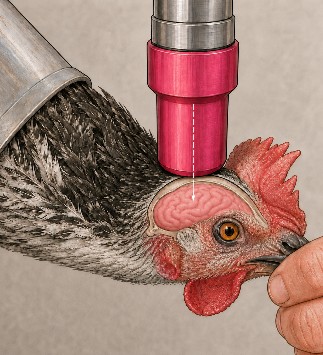
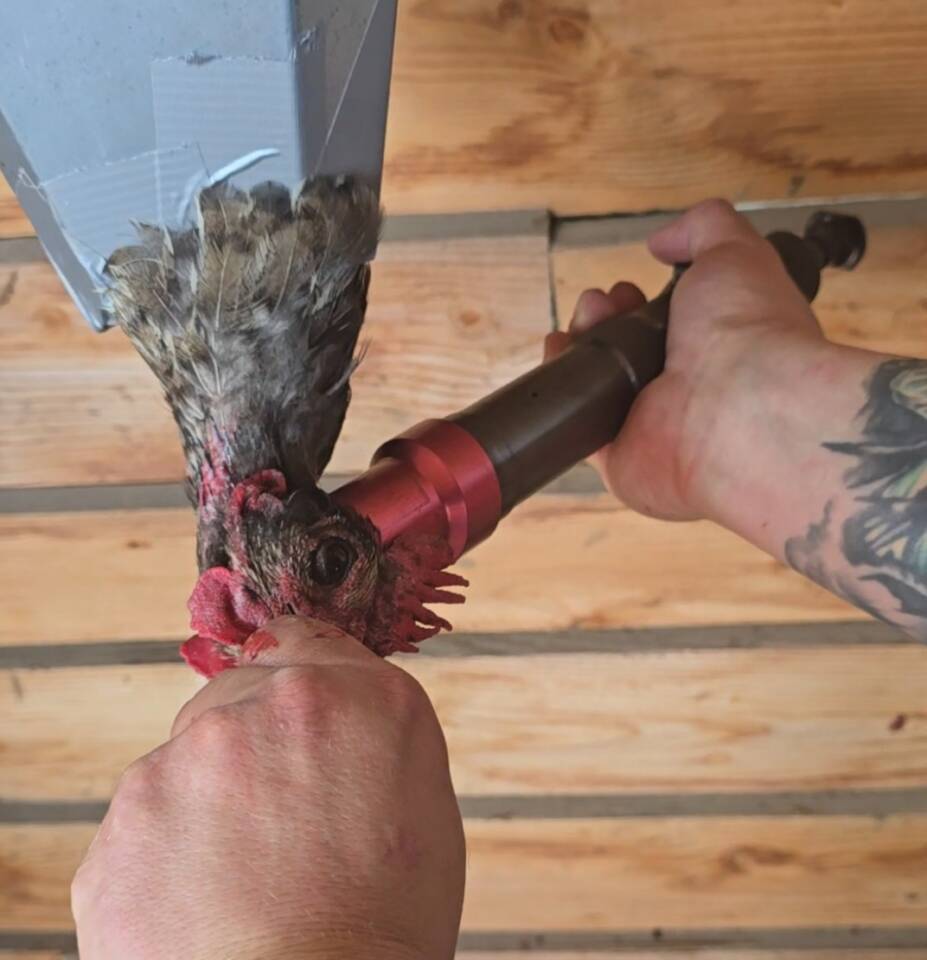
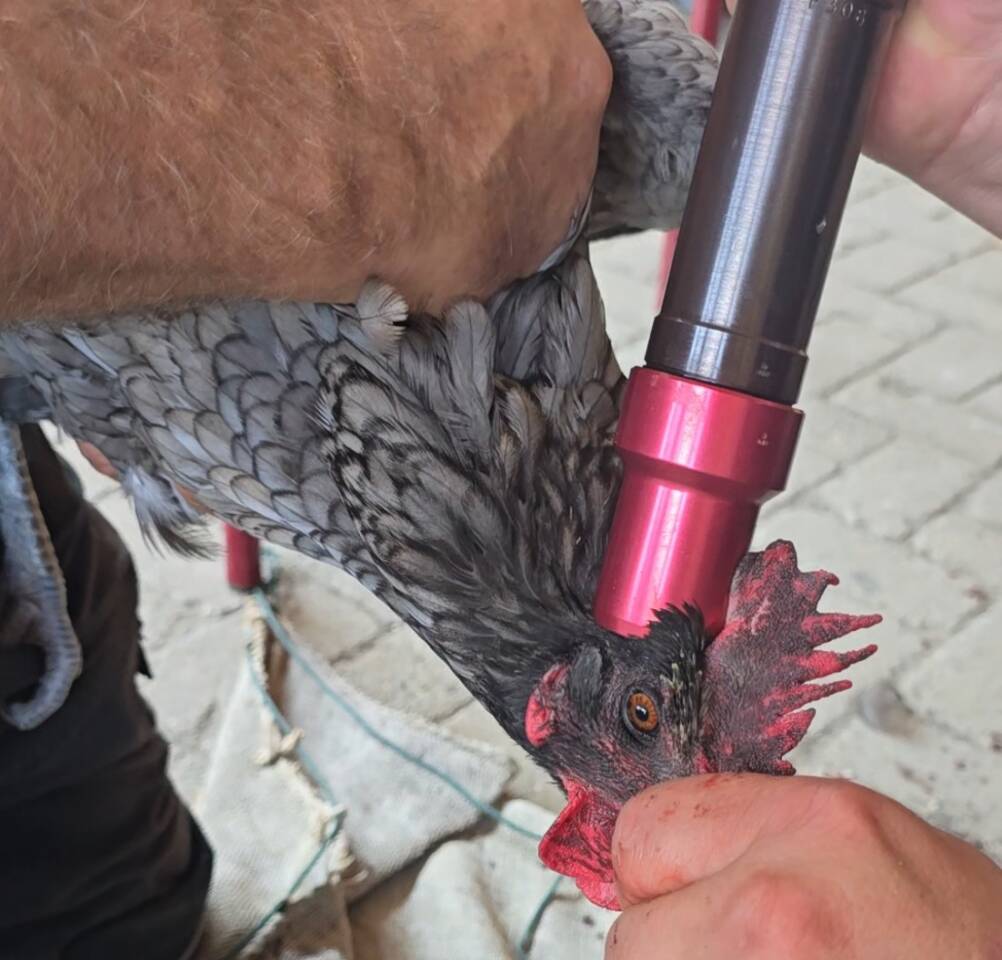
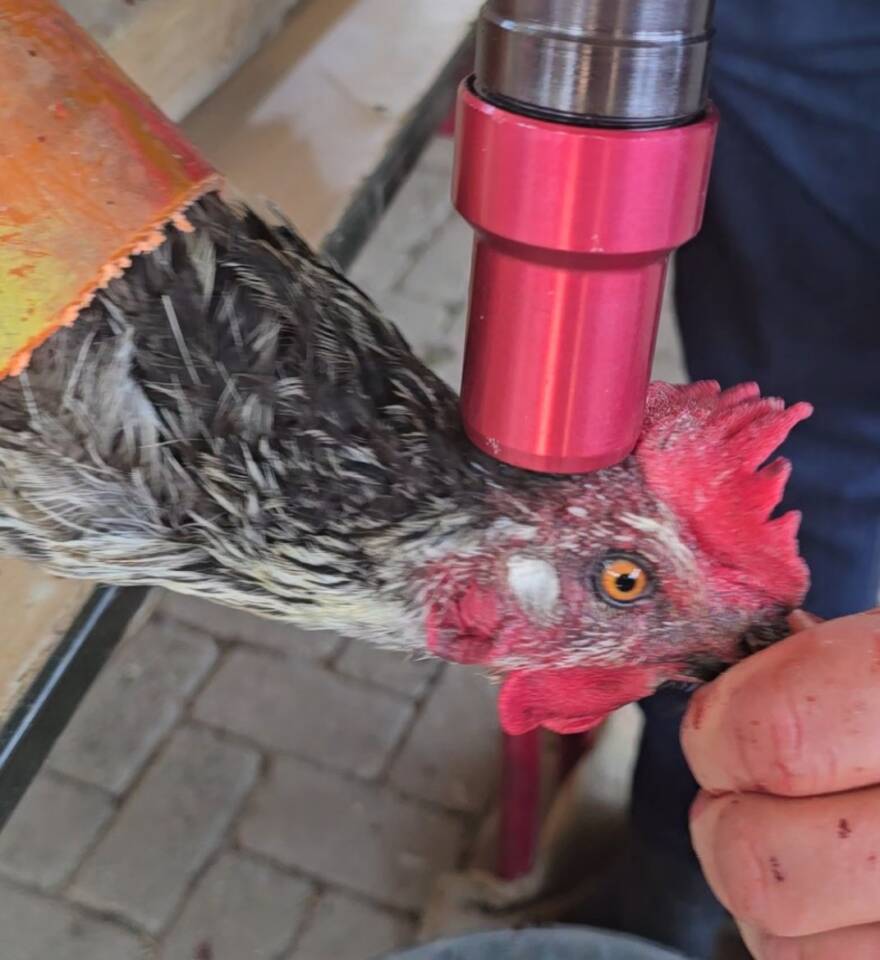
For immediate loss of consciousness, correct positioning of the captive-bolt device is essential. The device should be placed vertically on top of the head, with the bolt aimed towards the brain by targeting the area between the eyes and the ears, as shown below.
The following restraint methods were tested:
- Method 1: vertical cone (180°)
The chicken was placed upside down in a metal cone. Two of the four birds we tested held their beaks slightly open and were breathing rapidly, as shown by the fast rhythmic movements around the cloaca. These signs likely reflected the cumulative stress of being caught, handled and then placed upside down in the cone. Although the cone supports the bird’s body, being held upside down remains a vulnerable and uncomfortable position. It may also restrict breathing, as chickens do not have a diaphragm and their internal organs can put pressure on the lungs and air sacs.
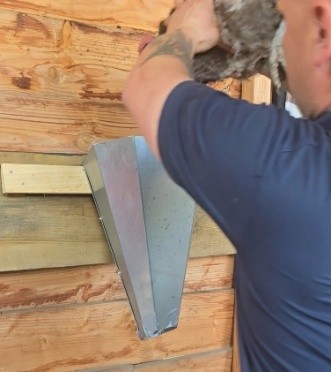
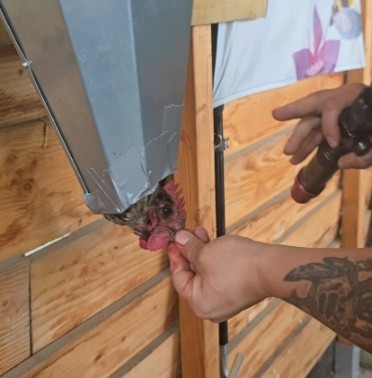
- Method 2: horizontal cone (~110°)
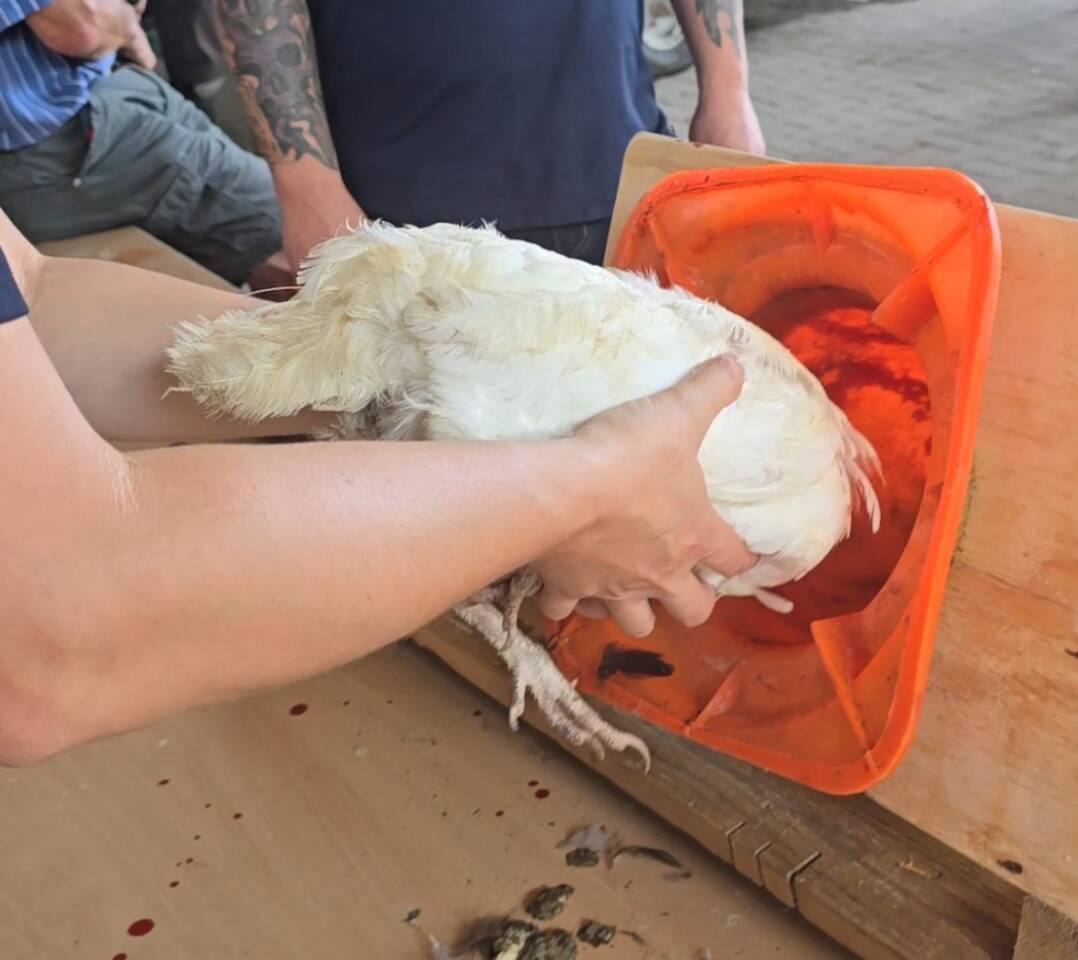
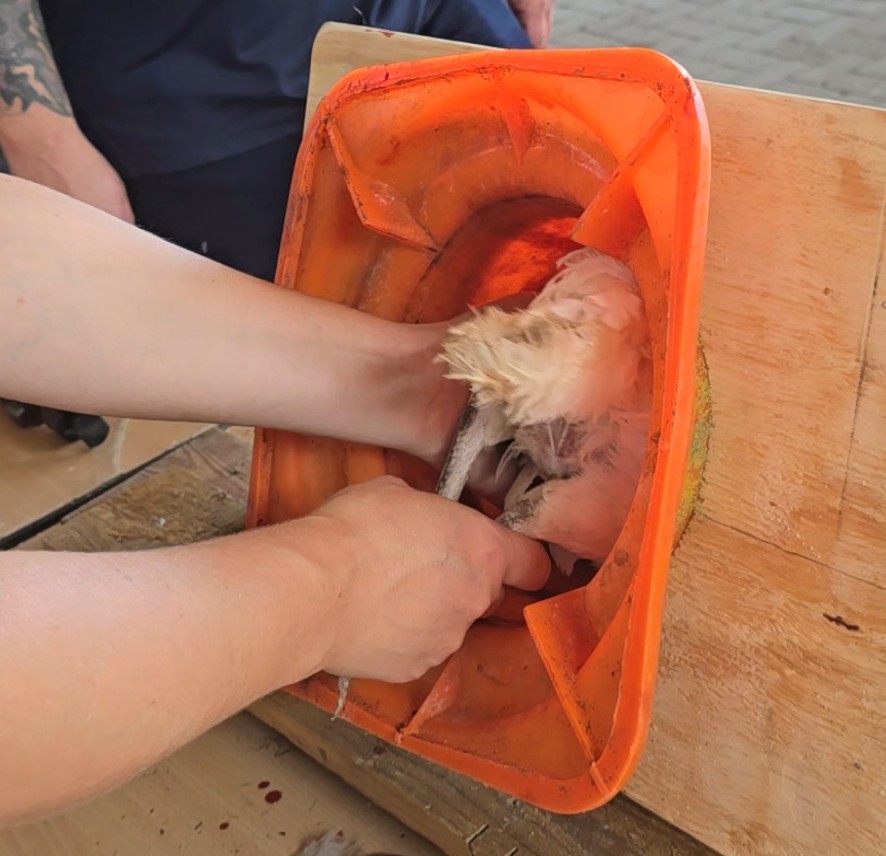
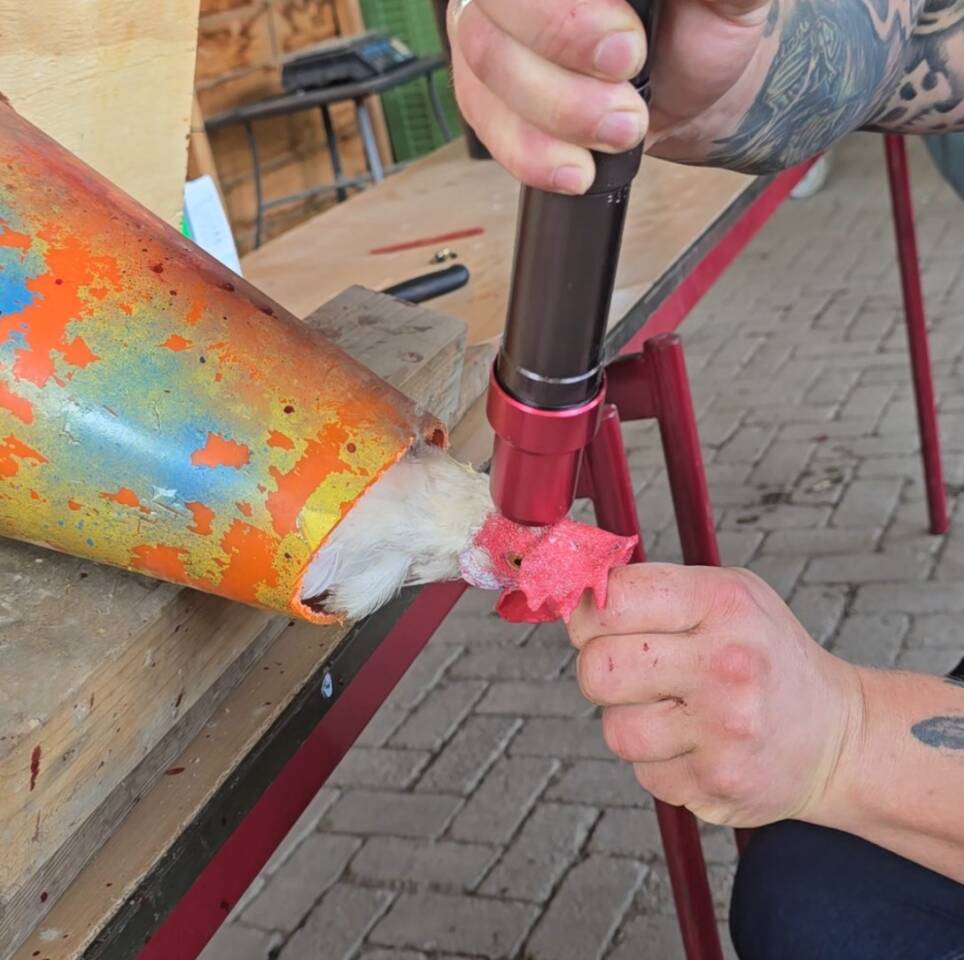
The chicken was placed in a horizontal cone, lying on her chest rather than upside down (inverted). The chickens remained securely in the cone and appeared calmer than when restrained upside down. We tested this method with five chickens.
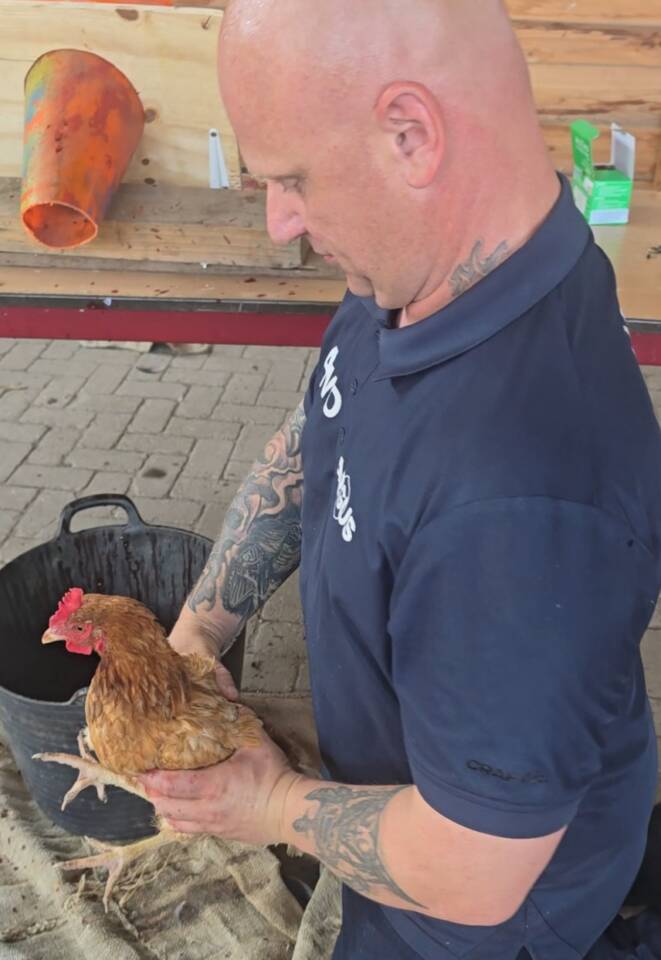
- Method 3: held manually in an upright position
The chicken was held upright, with one hand supporting the abdomen and the other at the base of the wings. This was how the staff member preferred to hold the chicken, but the bird can indeed also be held upright with both hands around the wings. A second person held the beak and positioned the device. We tested this method with one chicken, and it worked well.
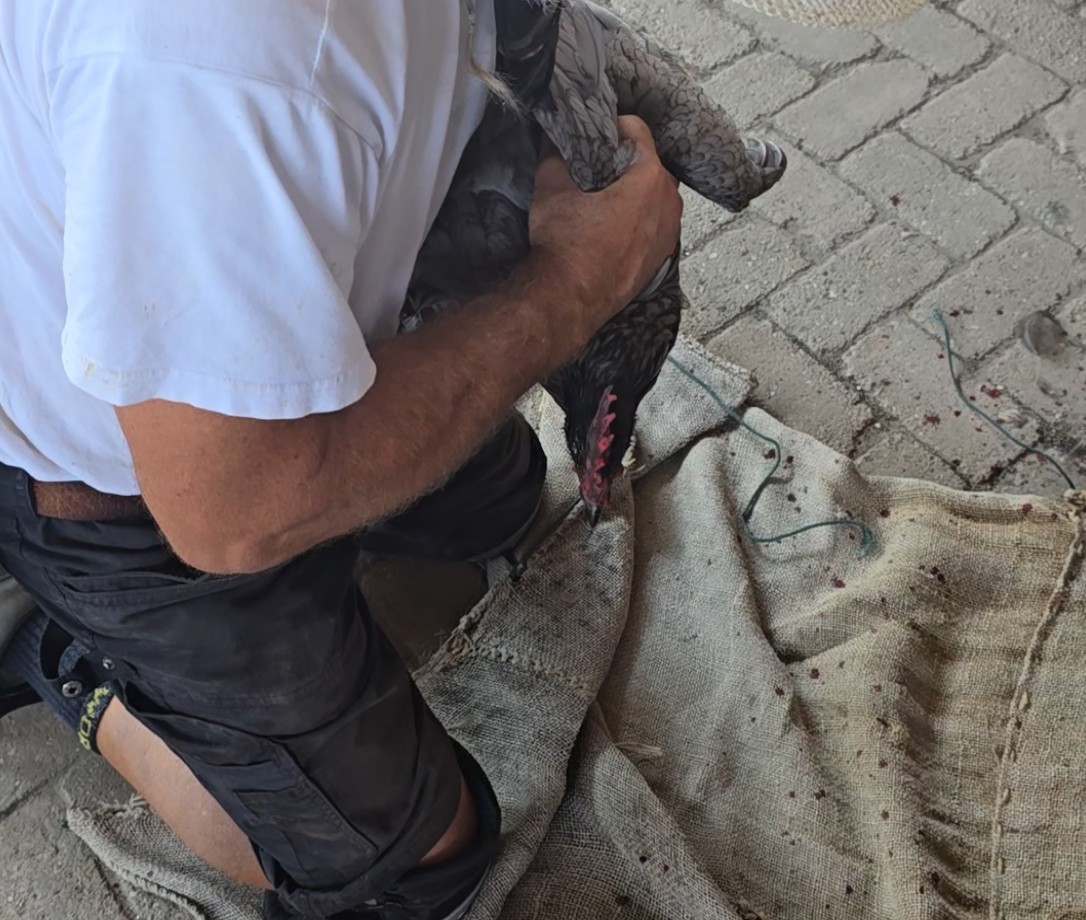
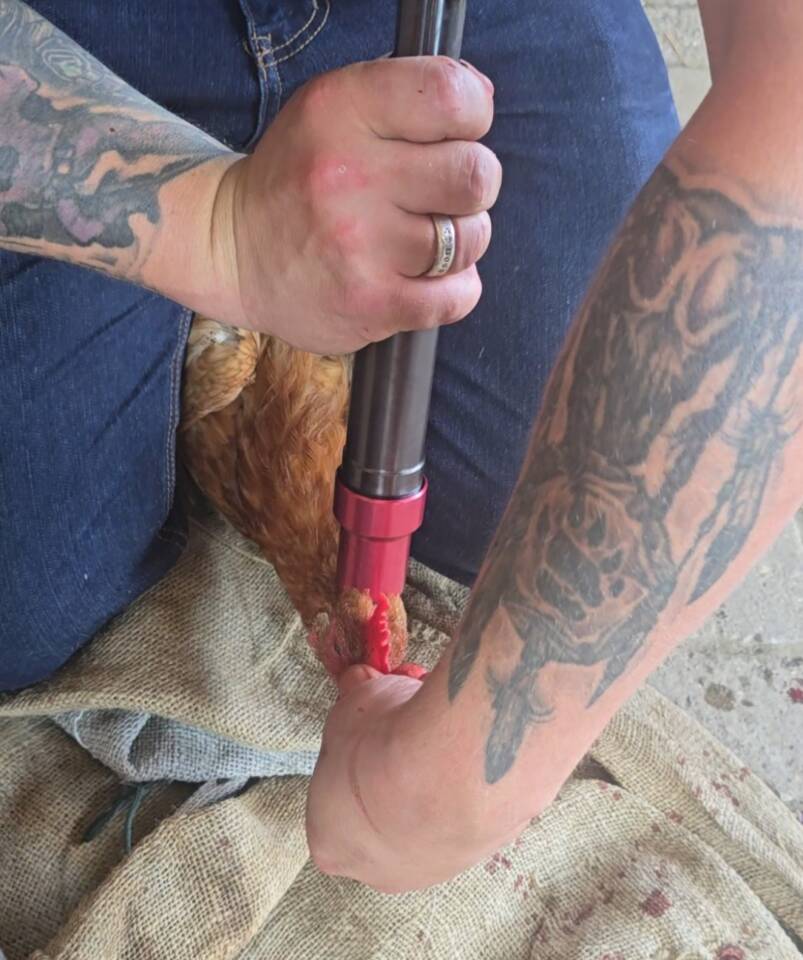
- Method 4: held manually on the ground
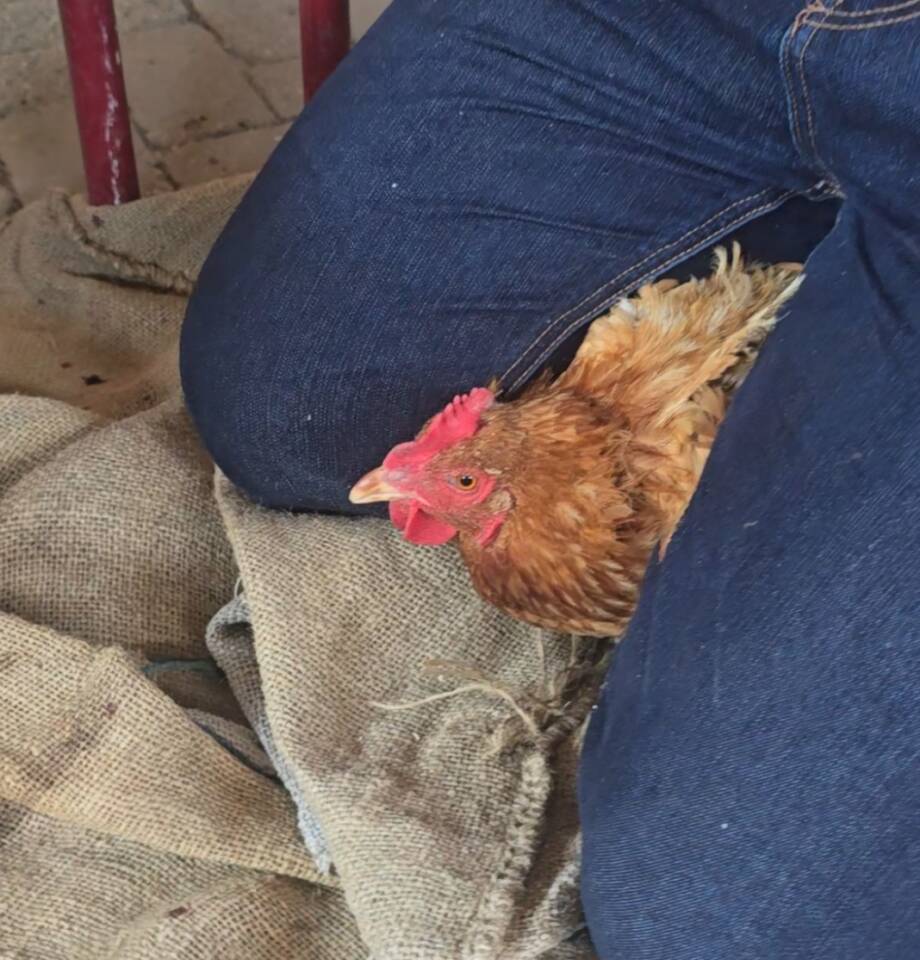
The chicken was gently placed on the ground and held between the operator’s knees. The beak was held with one hand while the device was operated with the other, meaning that the entire procedure was carried out by one person. We tested this method with one chicken, and it worked well.
Restraint: preliminary conclusions
Cone methods
During the test, the chickens appeared calmer in the horizontal cone (method 2, ~110°) than in the vertical cone in which they were suspended upside down (method 1, ~180°).
- If a cone is mounted too high, the operator’s view of the bird is restricted. This creates a risk that a wing or other body parts may unknowingly be placed in an uncomfortable position. This was another reason we preferred the horizontal setup (method 2, ~110°).
- The opening at the front of the cone must be large enough for the head to protrude fully while securely holding the body. The chicken should not have to be pulled by the beak, as this causes unnecessary stress. During the test, we made the opening considerably larger than initially expected to avoid having to pull the head out by the beak.
- It is important to handle the bird calmly at all times, keep her upright for as long as possible, support her beneath the breast when placing her in the cone, and keep her legs behind her body. If the legs end up beneath the body, the chicken can push against the cone and force herself out.
- Our shared preference was the horizontal cone setup (method 2, ~110°). The chicken appears less stressed than when inverted, and is easy to position and clearly visible, while both of the operator’s hands remain free to hold the beak and position the captive-bolt device correctly. The entire procedure can be carried out by one person. For frequent use, the setup would indeed need to be professionalized so that the cone is securely fixed in the correct position, can be cleaned properly, and be adjusted to the size of the chickens.
Upright handheld methods without a cone
- With the upright restraint methods (3 and 4), the birds were held directly by a person, which causes some degree of stress. In our test, the stress appeared mild, but its severity varies considerably among individual birds and depends partly on breed and previous experience with people. Like the cone methods (1 and 2), method 4 can be carried out by one person.
- We assessed stress based on behavior, but this approach has limitations. Some chickens may freeze in fear, making them appear calm when they are not.
- We believe that restraint always causes some degree of stress. It is therefore important to keep it as brief as possible—no more than a few seconds. The bird should be shot immediately after being restrained.
- Catching appeared to cause more stress than restraint, partly because the birds were difficult to reach among the perches. This could be reduced by catching them while they are asleep and by designing housing systems in which birds are more easy to reach.
Stunning and killing
The chickens were shot by Roy Melsert of MHS Consultancy (Melsert Humane Services). Immediately afterward, Dr. Bert Lambooij, a scientific expert in animal stunning, checked for any remaining signs of consciousness. The device was applied to the head between the eyes and ears and directed straight down toward the cerebrum and cerebellum (see the photo below). The beak was held gently while the device was fired. It must not be held firmly, as the head needs to be able to move freely upon impact. In some birds, the comb was in the way, so we gently pushed it aside.
Before the test, we were a bit concerned about the operator’s fingers being close to the device when holding the beak. In practice, the operator showed that the beak can be held safely while keeping the fingers clear of the device.
All 11 chickens in this test were rendered unconscious immediately and subsequently died.
Immediately after the shot, no eye reflexes were observed. The birds also showed no response to a painful stimulus (pinching the comb), no longer breathed, and made no attempts to lift their heads.
Convulsions did occur, including wing flapping, leg paddling, and, in some cases, swinging movements of the head. These are reflex movements and do not indicate that an animal is still conscious. One practical advantage of the cone is that it contains much of this reflex movement, preventing the bird from moving around and making the procedure less distressing for the operator to observe.
Afterward, the brain and neck were examined to assess the effect of the shot. In every case, there was severe brain damage and the neck was broken.
Conclusion
Based on our test, the Accles & Shelvoke “CASH Small Animal Tool”, a non-penetrating captive-bolt device, appears suitable for killing chickens with minimal stress. It is strongly preferable to cervical dislocation because it causes immediate and painless loss of consciousness.
The horizontal cone setup (method 2, ~110°) was our preferred restraint method. It keeps the bird horizontal and clearly visible, while both hands remain free to position the captive-bolt device correctly. The entire procedure can be carried out by one person, and the cone contains most of the convulsions. Cones could easily be installed at several locations inside the poultry house so that sick and injured birds can be killed immediately where they are found. Alternatively, the procedure could be carried out in a separate room next to the poultry house. The latter may be preferred by some farmers because firing the device can release some blood.
To minimize stress caused by restraint, the bird should be shot immediately after being placed in position. The beak must be held gently to allow accurate positioning of the device. Correct placement does, however, require some practice.
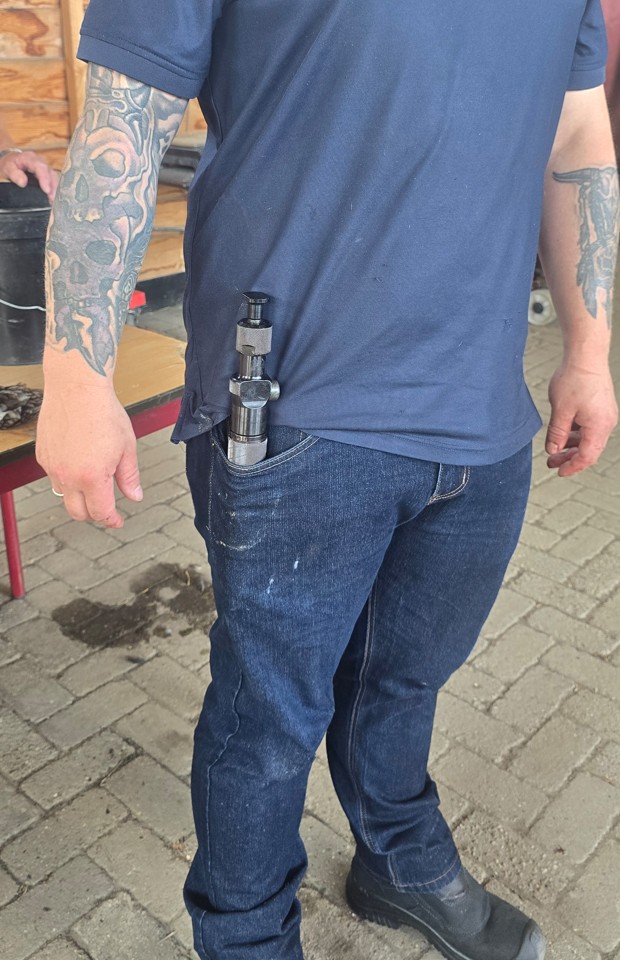
The “CASH Small Animal Tool” is compact and can easily be carried in a pocket when unloaded. It produces very little noise. During an earlier test in a large poultry house, the sound from the shot had no noticeable effect on the rest of the flock. The device uses blank cartridges, which require a firearms license in the Netherlands. Applying for this license through the police is relatively straightforward.
We would like to sincerely thank everyone who advised us during this project, including Miguel Arranz Carrero of the University of Bristol, Dr. Martin von Wenzlawowicz of BSI Schwarzenbek, and, of course, Dr. Bert Lambooij, formerly a researcher at Wageningen University & Research.