Heute besuchten wir den Schlachthof für Enten Tomassen in Ermelo (NL). Tomassen hat einige Veränderungen vorgenommen, die sie uns zeigen wollten. An der Decke und den Wänden des Stalles wurden Vernebelungsventilatoren angebracht. Tomassen erklärte uns, dass es dadurch in den Sommermonaten im Wartebereich deutlich kühler ist. Die Ventilatoren wurden installiert, nachdem die NVWA (die niederländische Lebensmittelbehörde) wiederholt Hitzestress bei den Enten beobachtet und EonA Tomassen Vorschläge zur Vermeidung von Hitzestress gegeben hatte. Wir möchten im Sommer wiederkommen, um festzustellen, ob die Vernebelungsventilatoren tatsächlich wirksam sind, aber bis jetzt sieht es vielversprechend aus.
Eine weitere Verbesserung wurde an der elektrischen Wasserbadbetäubungsanlage vorgenommen, die durch ein steileres Eintauchen der darüber liegenden Schäkelleine angepasst wurde. Die Enten werden nun tiefer ins Wasser getaucht, was das Risiko schmerzhafter Elektroschocks etwas verringert. Ein ernsthaftes Problem bei der Betäubung im Wasserbad ist, dass viele Enten ihren Kopf am Eintritt in das Wasser anheben, was dazu führt, dass ihr Hals oder ihre Brust zuerst auf das elektrifizierte Wasser trifft, bevor der Kopf vollständig eintaucht. Nur wenn der Kopf zuerst in das Wasserbad eintaucht, wird die Ente sofort betäubt. Wenn andere Körperteile zuerst das elektrische Wasser berühren, erhalten die Vögel schmerzhafte Elektroschocks. Obwohl wir im Vergleich zu unserem letzten Besuch weniger stress- und schmerzerfülltes Verhalten (Flattern und Zappeln) beobachten konnten, was positiv zu bewerten ist, berührten viele Enten das Wasserbad immer noch zuerst mit dem Hals. Wir sind daher der Meinung, dass weitere Verbesserungen notwendig sind.
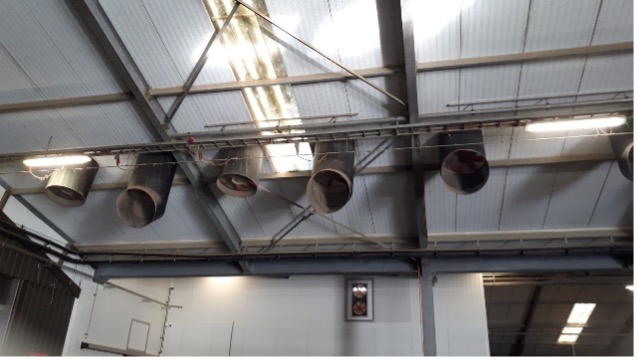
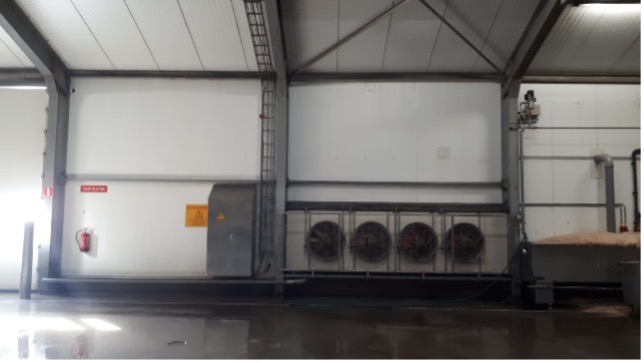
Today we advised Tomassen to reduce the sudden noises made during the unstacking of the container system with drawers. This process produced loud and sudden noises, causing stress amongst the ducks. Tomassen said they will install rubbers to prevent this. After our visit today Tomassen replaced the bearings in one of the fans, so it makes less noise. They have also purchased an electric forklift truck to further reduce noise levels.
Our concern about ducks being suspended by their feet whilst conscious remains valid. At the very least we recommended to provide support for the ducks breast so that their fragile feet and joints are not taking their full body weight whilst hung upside down. We further advised that placing a shutter gate above the drawers that the ducks are removed from could help prevent the ducks jumping out so easily and having to chase them, which in turn would also make the ducks feel safer. This way the metal plate (that is there to prevent escape) can also be removed so ducks don’t have to be dragged over it whilst hung upside down. It is also less tiring and stressful for the workers shackling the ducks.
We also recommended the purchase of a small captive bolt gun so that individual ducks that are not stunned sufficiently can be put out of their suffering immediately. This is far more humane than neck dislocation without stunning which is currently used.
We would like to embark on a joint venture with Tomassen and Van der Pol company, to achieve improvements in the catching and loading of ducks. Ducks are often herded in large numbers, caught by their necks and then thrown into the drawers of transport containers. We believe this can and must be done in a better way. Tomassen advised that such a venture cannot begin until the threat of bird flu has passed.
Finally, we had serious concerns about the cutting of the ducks; which is done with an automatically rotating knife. We saw several ducks being missed or only partially cut. This was corrected by an employee, but with such repetitive work, and ducks in such large numbers , there is a high chance that some ducks are being overlooked. Tomassen advised that on the day of our visit they were dealing with a technical problem which has since been fixed. However, documents obtained by NVWA via an FOI request, show that similar problems have been also observed in the past. So, this serious welfare issue in our opinion, must be taken seriously. The same documents also revealed that the NVWA, during the past years, found ducks had got jammed between the drawers and ducks lying on their backs due to rough loading at the farm (ducks are not able to upright themselves due to their heavy breast muscles and often die when they are not helped quickly). This stipulates the importance of improvements during catching and loading. The NVWA also documented ducks receiving painful electric shocks when entering the water bath (similar to what we saw).
We appreciate Tomassen (despite all the negative media attention) inviting us to their premises, and for making adjustments to help reduce some of the fear ducks experience and allowing us to take a few photos. We do however hope that their intentions are sincere; that they want our help to improve welfare and that it is not a green-washing exercise. Their efforts to improve welfare (based on our concerns and those of the NVWA), in the up and coming months, will hopefully prove this. We would like to give Tomassen the benefit of the doubt, but we reserve judgement until we witness serious improvements.