• Skip to primary navigation
  • Skip to main content
  • Skip to primary sidebar
  • Skip to footer
  • EYES ON ANIMALS – Watching out for their Welfare
  • English
  • Nederlands
  • Deutsch

Eyes on Animals

Watching out for their Welfare

  • Facebook
  • Instagram
  • Twitter
  • YouTube
DONATE
  • About us
    • What we do
    • Our team
    • Key Figures
    • Our Vision
    • Contact
  • News
    • Latest news
    • Good news
    • Bad news
    • Featured news
    • Subscribe to our newsletter
  • Inspections
    • Farms
    • Markets
    • Transports
    • Slaughterhouses
    • Special projects
    • Other
  • Training
    • Police
    • Truck drivers
    • Poultry-catchers
    • Slaughter personnel
    • Training Material
    • Request a training
  • Industry Tips
    • Animal transport
      • Cattle
      • Pigs
      • Poultry
    • Slaughterhouses
      • Cattle
      • Pigs
      • Poultry
      • Ritual slaughter
    • Educational videos
  • Publications
    • In the media
      • Print
      • Television
      • Radio
      • Videos
    • Newsletters
    • Special reports
    • Training Material
    • Annual reviews
  • Help us
Home » News » Bad news » Still no calf-friendly milk in supermarkets

Still no calf-friendly milk in supermarkets

October 30, 2015

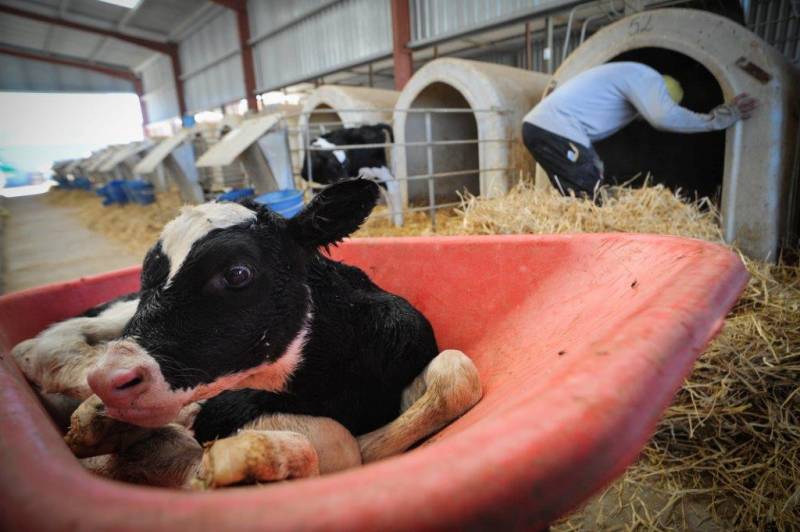
New born calf at dairy farm
photographer: Joanne McArthur

In order to obtain milk from a cow, a calf needs to be born. On dairy farms these calves are removed from their mother immediately after birth and put in a small wooden pen or in an igloo. Thus the milk we buy in supermarkets is produced by cows who have never been given an opportunity to take care of their calf. The calves are fed with powdered milk and drink out of a bucket. Powdered milk is cheaper than real milk.

In the Netherlands 30 farmers decided to change this habit. They leave newborn calves with their mother, the way nature meant it to be. This implies that the farmer has to share the milk with the calf, but the reward is that both cow and calf are happier and healthier. Calves fed by their mothers do not suffer from diarrhea half as much as calves that have been separated from their mothers, because suckling has a positive effect on the esophagus-guiding-reflex. This reflex makes the milk take the correct path into the right stomach, where the milk is properly digested. The esophagus reflex doesn’t function well in calves that drink from a bucket, and thus develop diarrhea. Moreover the brain produces soothing and painkilling hormones when cows and calve spend time with each other suckling, grooming and resting. Calves that get the opportunity to regularly drink from the mothers´ udder are less prone to illnesses, they drink and grow better. They also show better social behaviour and are emotionally more balanced.

Cows also benefit from taking care of their calves. They do not suffer from udder infections as frequently because the calf empties the udder of all milk. They also do not develop womb infections easily, because suckling causes the production of oxytocine, a chemical that cleans the womb and makes it contract.

Unfortunately the milk produced by the 30 farmers is thrown into the same container that holds the milk of their 18.000 colleagues that do take away the calves from their mothers. Even organic milk and milk from Demeter is often produced by dairy farms that separate cow and calf. Since the winter of 2015 Eyes on Animals has been trying to get supermarkets and dairy companies to make a label for milk produced by farmers who leave the calves with their mothers, so customers can be aware of what they buy. Many phone calls were made and many letters sent. Sadly enough no supermarket or restaurant up until now has taken up the courage to take on this initiative. We won´t give up and hope to report good news soon, keep checking our website for updates.

  • share 
  • share 
  • share 
  • save 
  • email 

Filed Under: Bad news, News Tagged With: calves, diary farm

Primary Sidebar

Search

Featured

Export checks of young piglets for slaughter fall short: serious violations documented on transports from the Netherlands to Croatia

This summer, Eyes on Animals documented two long-distance transports of Dutch piglets to … [Read More...] about Export checks of young piglets for slaughter fall short: serious violations documented on transports from the Netherlands to Croatia

Featured

First International Conference on Poultry Catching and Loading

October 23, 2025

Today, Eyes on Animals hosted the first international conference dedicated to poultry catching and … [Read More...] about First International Conference on Poultry Catching and Loading

Our most recent newsletter

Dear friends,

Thanks to your generous donations, we were able to follow two transports of piglets from the Netherlands to a slaughterhouse in Croatia.

Read more…

Subscribe to our newsletter

Subscribe

* indicates required

Eyes on Animals op Twitter

eyes_on_animals Eyes on Animals @eyes_on_animals ·
4 Dec

This morning Eyes on Animals was interviewed by foreign TV about the welfare issues in a Dutch sector that still drags behind and does not offer a good life to its "factory-farmed" animals.
Details will be availabe once it is broadcasted.

Reply on Twitter 1996608735888683080 Retweet on Twitter 1996608735888683080 1 Like on Twitter 1996608735888683080 4 Twitter 1996608735888683080
nunl NU.nl @nunl ·
4 Dec

Gezondheidsraad adviseert om meer peulvruchten en minder vlees te eten

Reply on Twitter 1996541672872685889 Retweet on Twitter 1996541672872685889 21 Like on Twitter 1996541672872685889 75 Twitter 1996541672872685889
dierbescherming Dierenbescherming @dierbescherming ·
4 Dec

Dierenwelzijn verdient meer aandacht in de formatie. We zijn blij met de 'Inhoudelijke en ambitieuze agenda' van D66 en CDA, maar één cruciale pijler blijft onderbelicht: dierwaardigheid. Een integrale aanpak is nodig voor een duurzame landbouwtransitie: https://bit.ly/48Qga8L

Reply on Twitter 1996534217790910565 Retweet on Twitter 1996534217790910565 6 Like on Twitter 1996534217790910565 8 Twitter 1996534217790910565
Load More...

ANBI

Latest news

Meat printer prints plant based meat

NOS-news: The meat printer

October 13, 2022

Veggie burger

Vox: Plant-based meat is better for the planet

November 18, 2021

All Future Vision news

Footer

Donate with Paypal

Paypal Eyes on Animals
One-time donation:
Monthly donation:

Reading Material

  • In the Media
  • Newsletters
  • Special EonA reports
  • Legislative texts
  • ANBI

Our Amsterdam Office

Amsterdam House Hotel
Eyes on Animals main office is in downtown Amsterdam, at the Amsterdam House Hotel. The generous and warm-hearted hotel owner donated to Eyes on Animals, free of charge, a beautiful room where our inspectors can work, hold meetings and store their material.

Copyright © 2025 · Eyes on Animals | Website by Webkompaan