• Skip to primary navigation
  • Skip to main content
  • Skip to primary sidebar
  • Skip to footer
  • EYES ON ANIMALS – Watching out for their Welfare
  • English
  • Nederlands
  • Deutsch

Eyes on Animals

Watching out for their Welfare

  • Facebook
  • Instagram
  • Twitter
  • YouTube
DONATE
  • About us
    • What we do
    • Our team
    • Key Figures
    • Our Vision
    • Contact
  • News
    • Latest news
    • Good news
    • Bad news
    • Featured news
    • Newsletter
  • Inspections
    • Farms
    • Markets
    • Transports
    • Slaughterhouses
    • Special projects
    • Other
  • Training
    • Police
    • Truck drivers
    • Poultry-catchers
    • Slaughter personnel
    • Training Material
    • Request a training
  • Industry Tips
    • Animal transport
      • Cattle
      • Pigs
      • Poultry
    • Slaughterhouses
      • Cattle
      • Pigs
      • Poultry
      • Ritual slaughter
    • Educational videos
  • Publications
    • In the media
      • Print
      • Television
      • Radio
      • Videos
    • Newsletters
    • Special reports
    • Training Material
    • Annual reviews
  • Help us
Home » Our inspections » Inspection of the piglet transport from Pali

Inspection of the piglet transport from Pali

July 16, 2018

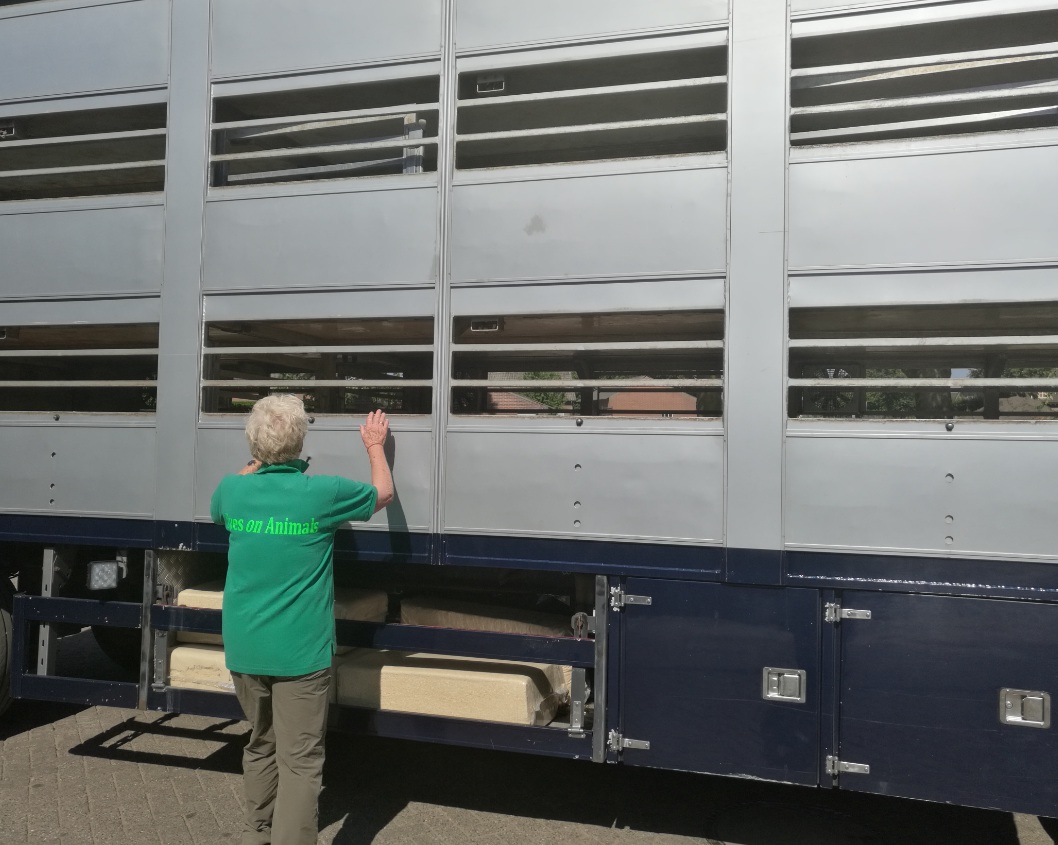
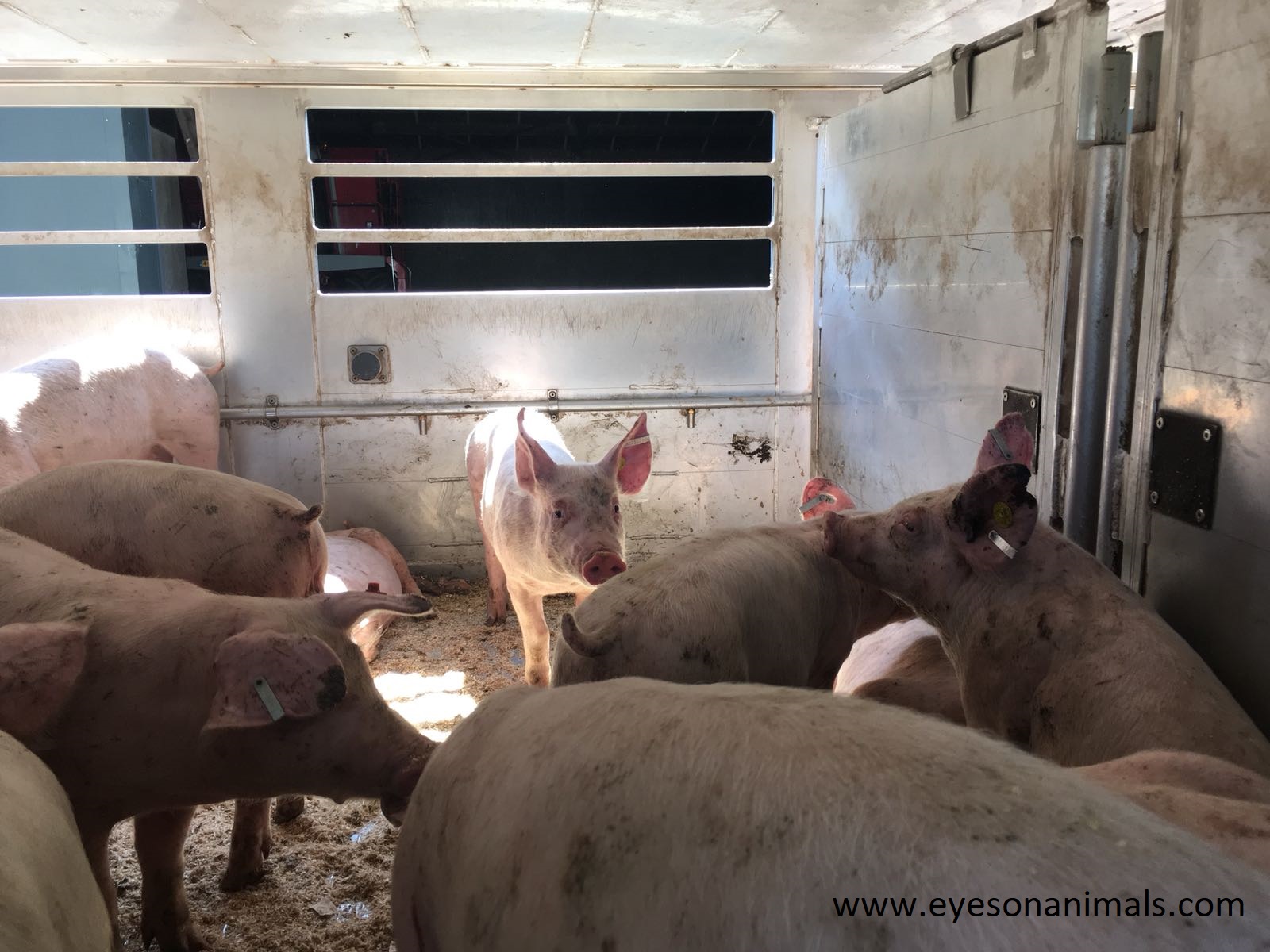
Today our team found a parked drag unit from Pali in the south of the Netherlands loaded with young piglets. The consignments were of  so-called “residual piglets”. These are piglets that go to slaughter because of (minor) disorders, such as an umbilical hernia or bitten ears, and are therefore not fattened up. The unit was parked in direct sunlight. The driver picked up the drag unit about an  hour later and attached it to his trailer. There were more piglets and three sows in the trailer. The sows had visible problems because of the heat. The outside temperature in the morning was around 29 degrees (in the sun).

We decided to follow the truck; because of the low loading density, it was quite likely that more piglets would be collected. This was indeed the case. The truck went to two more sites in Hapert where more piglets and sows were collected. When the second site was visited, the drag unit was again parked in direct sunlight. 

At the second site we received permission to view the loading. This went quietly. We measured the temperature (at 13:00) and it was around 33 degrees. Such temperatures are a great risk for the pigs because they cannot adequately dissipate their heat. These high temperatures are especially a problem for sows.

The transport was followed to the export assembly point (EVP) Van den Boogaard in Veghel. Unfortunately, we were only allowed to watch the EVP from a distance and only briefly spoke with the manager. We were asked to make an appointment if we wanted to see more. We will do this in the near future.
Inspection of transporter
Piglets
  • share 
  • share 
  • share 
  • save 
  • email 

Filed Under: Our inspections, transport Tagged With: animal transport, animal welfare inspection, live animal transports, pigs

Primary Sidebar

Search

Featured

Regional slaughterhouses are disappearing — and animals are paying the price

Across the Netherlands, regional slaughterhouses are disappearing at an alarming pace. Not because … [Read More...] about Regional slaughterhouses are disappearing — and animals are paying the price

Featured

Injured sows at Lunteren assembly centre: NVWA investigation ruled inadequate

January 29, 2026

The Dutch Trade and Industry Appeals Tribunal (College van Beroep voor het Bedrijfsleven, CBb) has … [Read More...] about Injured sows at Lunteren assembly centre: NVWA investigation ruled inadequate

Our most recent newsletter

Dear friends,

Last night, just before bed, my phone beeped with this message from a Dutch dairy farmer: “We immediately started keeping the calves with the cows after returning from your conference!”

Read more…

Subscribe to our newsletter

Subscribe

* indicates required

Eyes on Animals op X

kmcsween Kevin McSweeney @kmcsween ·
27 Apr

Since we leave the calves with their mothers to nurse, they don’t associate us with food and can get a little feral. I prevent this by sorting the young calves every day into a smaller pen and smothering them with human attention. It’s not too hard to find volunteers for this

Reply on Twitter 2048563021057057125 Retweet on Twitter 2048563021057057125 40 Like on Twitter 2048563021057057125 522 Twitter 2048563021057057125
eyes_on_animals Eyes on Animals @eyes_on_animals ·
26 Apr

RT @dierencoalitie: In 2024 stierven 16.713 dieren op een verzamelplaats, blijkt uit onderzoek door @WakkerDier. 10 van de 66 verzamelplaat…

Reply on Twitter 2048378792998060251 Retweet on Twitter 2048378792998060251 3 Like on Twitter 2048378792998060251 Twitter 2048378792998060251
eyes_on_animals Eyes on Animals @eyes_on_animals ·
26 Apr

Waar blijft het wederhoor bij de dieren? via @nporadio1

Reply on Twitter 2048378610382164407 Retweet on Twitter 2048378610382164407 7 Like on Twitter 2048378610382164407 15 Twitter 2048378610382164407
Load More...

ANBI

Latest news

Meat printer prints plant based meat

NOS-news: The meat printer

October 13, 2022

Veggie burger

Vox: Plant-based meat is better for the planet

November 18, 2021

All Future Vision news

Footer

Donate with Paypal

Paypal Eyes on Animals
One-time donation:
Monthly donation:

Reading Material

  • In the Media
  • Newsletters
  • Special EonA reports
  • Legislative texts
  • ANBI

Our Amsterdam Office

Amsterdam House Hotel
Eyes on Animals main office is in downtown Amsterdam, at the Amsterdam House Hotel. The generous and warm-hearted hotel owner donated to Eyes on Animals, free of charge, a beautiful room where our inspectors can work, hold meetings and store their material.

Copyright © 2026 · Eyes on Animals | Website by Webkompaan