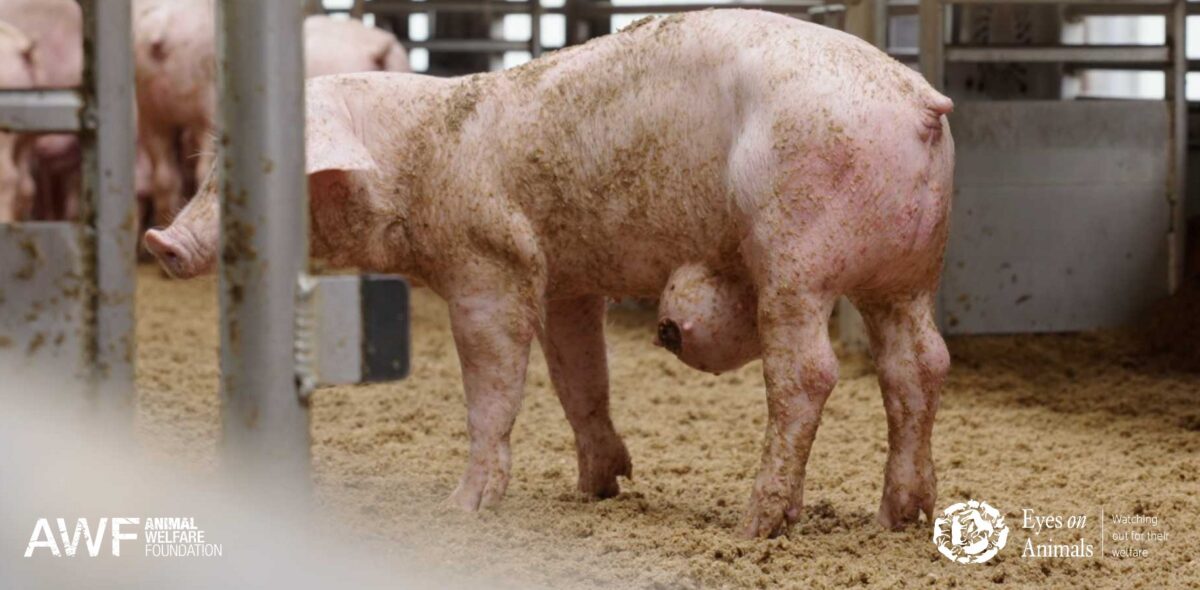
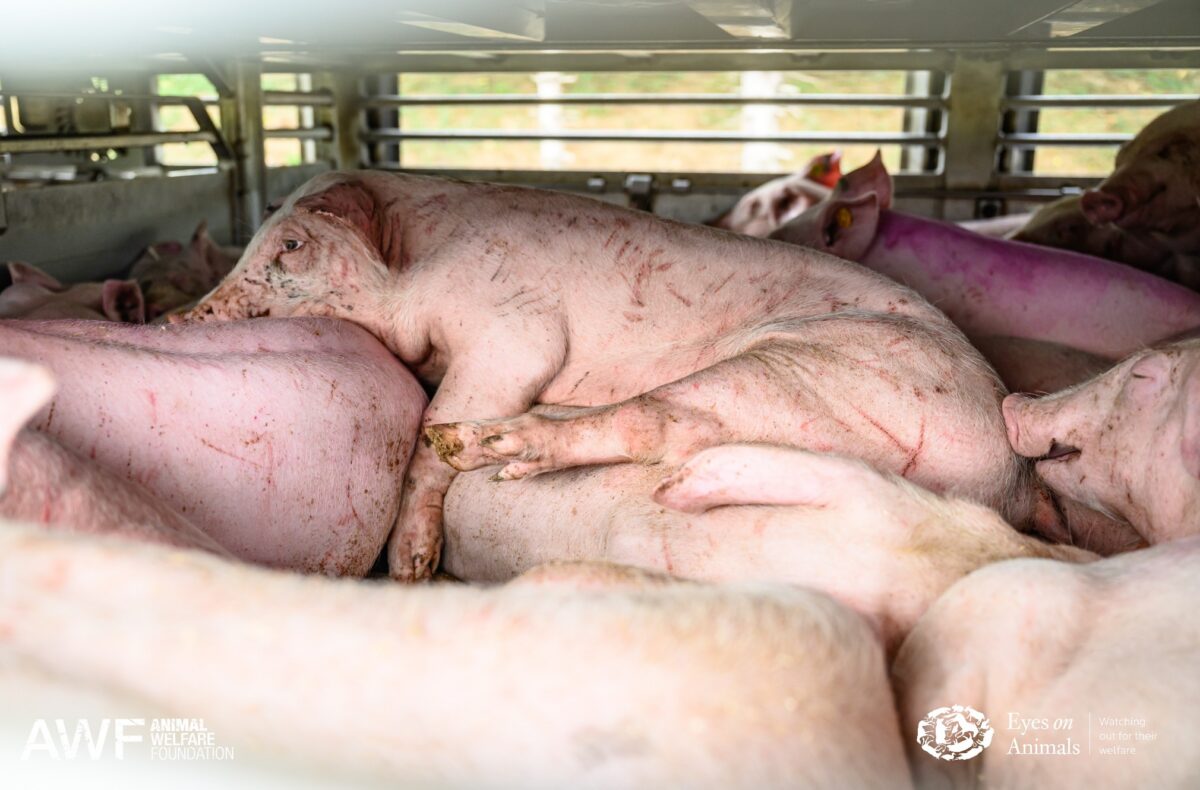
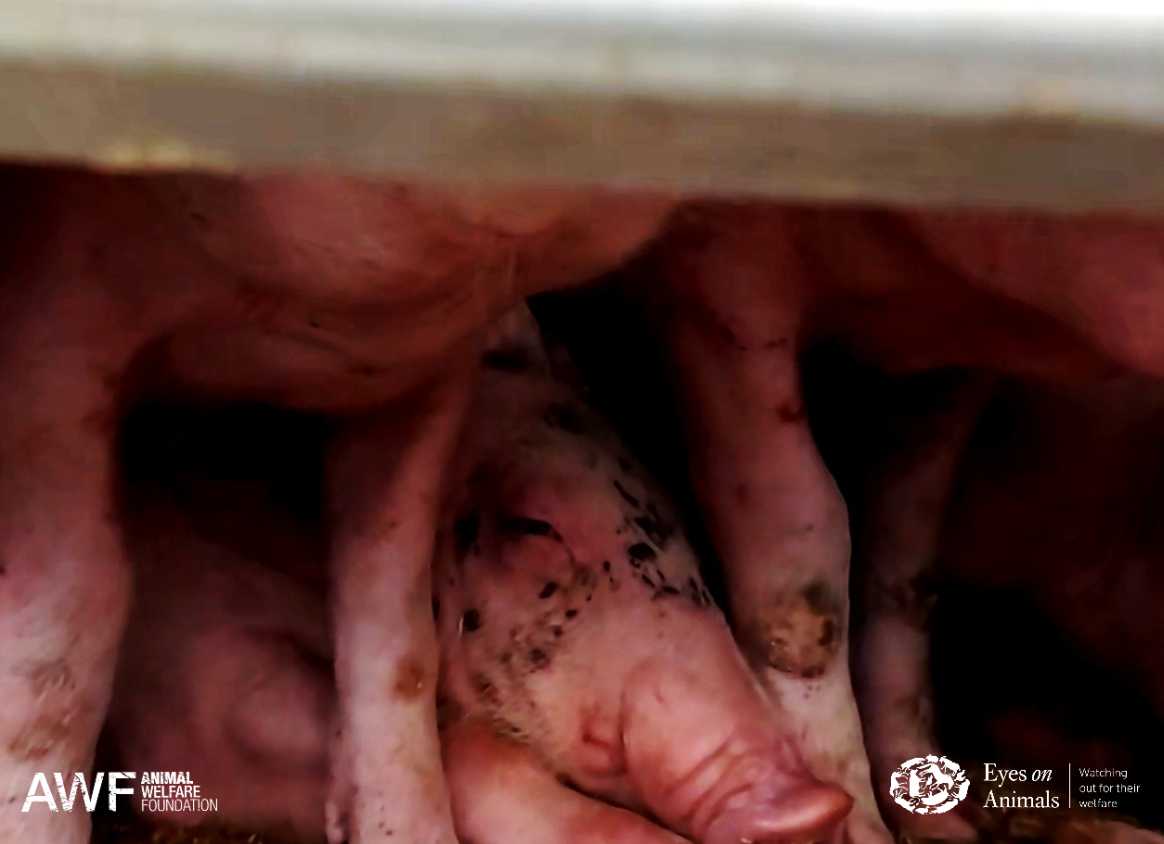
This summer, Eyes on Animals documented two long-distance transports of Dutch piglets to slaughterhouses in Croatia. Our findings show that export checks at Dutch assembly centres are far too superficial. We observed dead piglets upon arrival, overcrowded conditions on board, uneven loading between compartments, piglets in poor physical condition, and drinking-water systems that were not working.
👉 Read our detailed report here >>
Eyes on Animals has requested the Dutch authorities (NVWA) to take enforcement action against one of the transports — the one from the Lunteren assembly centre, where at least five piglets arrived dead. We also filed a formal request to tighten export inspections by:
- setting clear maximum loading densities for slaughter piglets, ensuring that all animals can lie down at the same time without being on top of each other, and that all piglets can reach the water nipples, in line with EU Regulation 1/2005;
- physically checking the loading density of each compartment of the truck to make sure the piglets are evenly distributed with enough space;
- verifying more carefully that the drinking-water systems are functional and switched on; and
- applying stricter criteria regarding the health condition of the piglets before they are approved for such long-distance export journeys.
It is unacceptable that piglets with large umbilical hernias — sometimes with open wounds — are allowed on trucks for transport. These animals are far too vulnerable: the hernias that protrude can easily be stepped on and rupture, especially under the extreme stocking densities currently tolerated.