Today, we visited a large broiler slaughterhouse in the Dutch province of North Holland. Due to the hot weather, we wanted to see what measures the slaughterhouse had taken to prevent heat stress as much as possible.
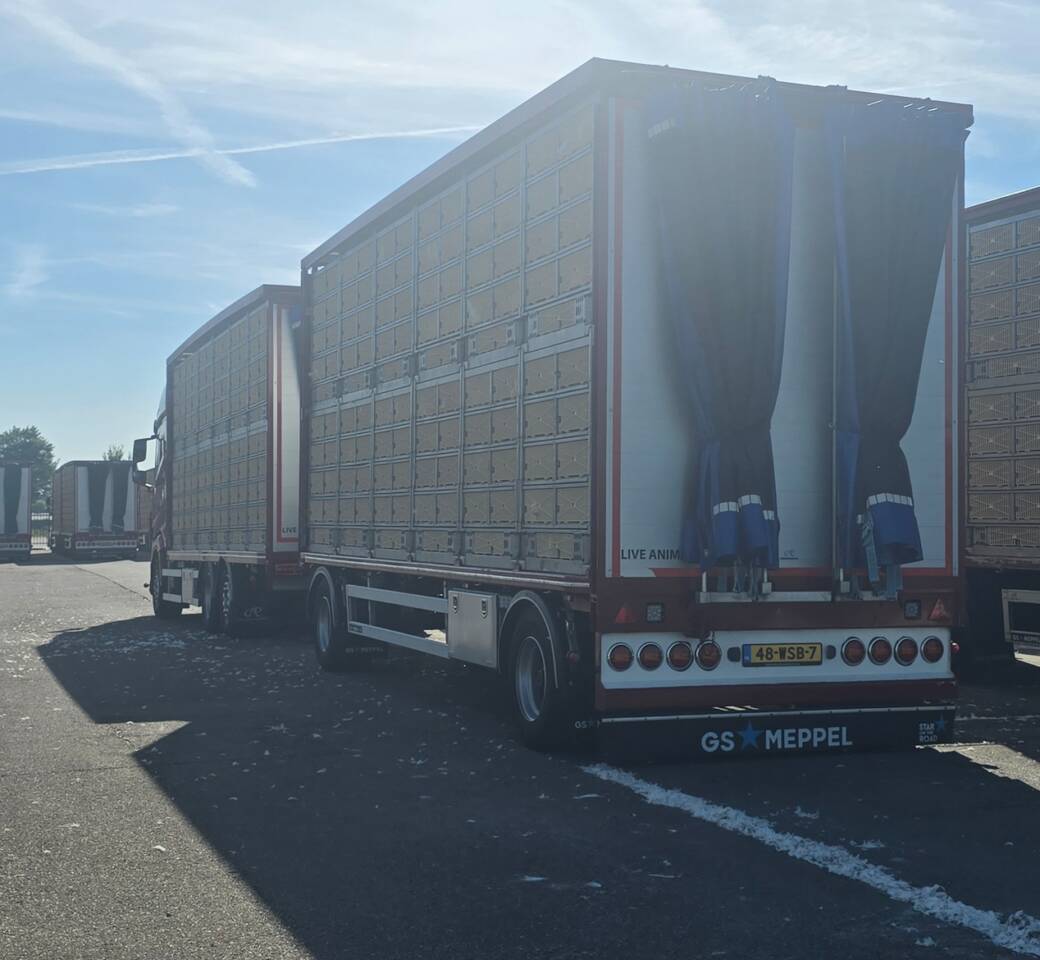
One truck parked in the sun outside the canopy
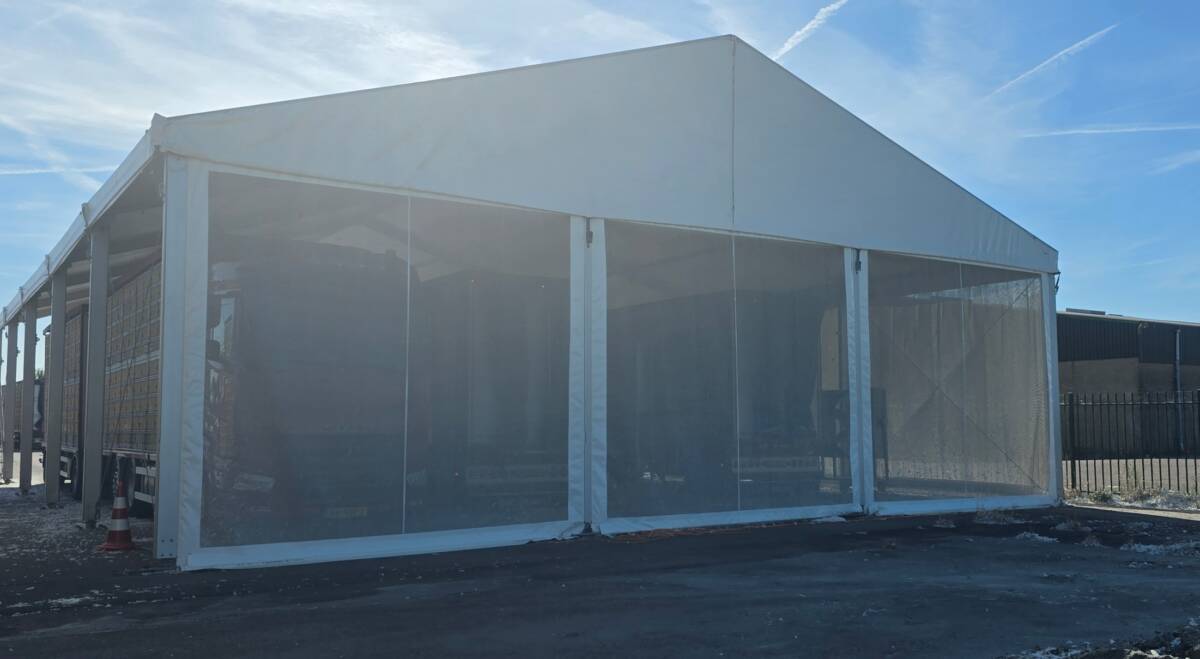
We first drove to a parking area a few kilometres from the slaughterhouse, where poultry truck drivers have to wait until space becomes available at the slaughterhouse. Three trucks were parked beneath a white canopy, with large fans blowing air between them.
While we were there, a fourth poultry truck arrived. As the canopy was full, the driver parked his truck beside it, in the sun. Fortunately, after approximately ten minutes, he moved it beneath the canopy when a space became available.
We decided to call the slaughterhouse to discuss the measures taken to prevent heat stress. Staff made time for us almost immediately, and the manager allowed us to see the waiting facilities and the animals firsthand.
The manager explained that trucks are not supposed to be parked beside the canopy. He asked us for the truck’s license plate number and said he would find out why it had been parked there.
Limited lairage capacity at the slaughterhouse
The indoor lairage at the slaughterhouse had space for only one truck. Due to the limited space, we were unable to enter it for safety reasons. However, we were able to inspect the waiting facility on the slaughterhouse premises. This also consisted of a white canopy with large fans. At the time of our visit, two trucks were parked beneath it, which was the maximum capacity. The fans were powerful and sufficiently large.
Several degrees cooler beneath the canopy
We took temperature measurements at several locations. Outside the canopy on the slaughterhouse premises, the temperature in the sun was approximately 36 °C. Official temperatures, including those reported by the Royal Netherlands Meteorological Institute (KNMI), are measured in the shade and would therefore have been several degrees lower.
Depending on the exact location, it was approximately 3 to 5 °C cooler beneath the canopy due to the shade and ventilation. The humidity was several percentage points higher. The canopy and fans therefore made a difference, but temperatures nevertheless remained high.
Good fans, but correct positioning is crucial
At the waiting area a few kilometres from the slaughterhouse, we also measured a difference of a few degrees between the temperature beneath the canopy and outside it. At the time of our measurements, two trucks were parked there, one of which had a flat tyre. As a result, this truck was not positioned correctly in front of the fans.
The effect was immediately visible. The chickens further away from the fans – in one stack of containers – showed signs of heat stress, including open beaks, extended necks and more rapid breathing. The chickens in the other containers, which were positioned directly in front of the fans, were much calmer. As soon as the driver was able to move the truck, he positioned it more directly in front of the fans. The affected chickens then became visibly calmer. This clearly demonstrated the importance of both effective ventilation and the correct positioning of trucks.
In our view, most of the fans were very powerful and tall enough to direct air towards all levels of the trucks. However, a few fans along the side of the canopy were smaller and lower. We recommend replacing these with larger, taller models so that the chickens in the top drawers also receive sufficient ventilation.
H2H Euthanizer
The manager told us that the slaughterhouse has an H2H device (backup-stunner) to put sick or injured chickens out of their misery. During our visit, we saw a chicken being removed from a drawer to be stunned and killed using this device. We consider it positive that the slaughterhouse has such a device, so that chickens are not left to suffer any longer than necessary.
Other measures to prevent heat stress
The manager told us that fewer chickens would be slaughtered that day because of the heat, meaning that slaughter operations would finish earlier, at around 3:30 p.m. We could also see that the number of chickens per drawer was considerably lower than usual.
Positive development: new cooled lairage planned
Although shade and good fans were provided, we did not consider the situation we encountered ideal. A considerable number of trucks could be held beneath the canopies while waiting, whereas in hot weather, animals should ideally be moved directly into a cooled lairage at the slaughterhouse.
The manager told us that the slaughterhouse had been working for a long time to obtain a permit for a larger indoor lairage. The necessary permit was finally granted only recently, following a lengthy and difficult process. The slaughterhouse will now build a large, cooled lairage. This should significantly improve the situation by next summer. We are pleased with this news and understand that local authorities do not always make this process easy for companies.
The slaughterhouse also tries to schedule most trucks to arrive during the cooler morning hours. However, this does result in longer waiting times in the morning.
We thank the slaughterhouse for its openness, for making time for us and for its commitment to building a large, cooled lairage to reduce the risk of heat stress.