• Skip to primary navigation
  • Skip to main content
  • Skip to primary sidebar
  • Skip to footer
  • EYES ON ANIMALS – Watching out for their Welfare
  • Englisch
  • Holländisch
  • Deutsch

Eyes on Animals

Watching out for their Welfare

  • Facebook
  • Instagram
  • Twitter
  • YouTube
SPENDEN ABONNIEREN NEWSLETTER
  • Über uns
    • Was wir tun
    • Unser Team
    • Kennzahlen
    • Kontakt
  • Neuigkeiten
    • Letzte Neuigkeiten
    • Gute Nachrichten
    • Schlechte Nachrichten
    • Abonnieren Sie unseren Newsletter
  • Inspektionen
    • Landwirtschaftliche Betriebe
    • Märkte und Sammelstationen
    • Transporte
    • Schlachthäuser
    • Projekte
    • Veterinärinspektoren
    • Sonstige
  • Schulungen
    • Polizei
    • LKW-Fahrer
    • Schlachthofmitarbeiter
    • Geflügelfänger
    • Trainingsmaterial
    • Schulungsanfrage
  • Industrietips
    • Transport
      • Rinder
      • Schweine
      • Geflügel
    • Schlachtung
      • Rinder
      • Schweine
      • Geflügel
      • Rituelle Schlachtung
    • Schulungsfilme
  • Publikationen
    • In den Medien
      • Presse
      • Fernsehen
      • Radio
      • Videos
    • Newsletters (Englisch)
    • Spezialberichte
    • Trainingsmaterial
    • Geschäftsberichte
  • Helfen
Home » Mitteilung » Debunking the myth: milk during transit does not cause diarrhea in calves

Debunking the myth: milk during transit does not cause diarrhea in calves

22. Mai 2025

In the northern Netherlands, we teamed up with veterinarian and calf feeding expert Dr. Ronald Rongen to tackle a persistent myth in the cattle sector: that feeding milk to calves in transit causes diarrhea. Most Dutch calf traders and farmers think that giving milk to unweaned calves in transit causes diarrhea, and thus withhold milk for very long periods. Together we visited different assembly centers, to open up dialogue and debunk this myth.

24 hours without milk
Transport of calves from Dutch dairy-farms to Dutch veal-farms often takes a long time, as small groups of calves are collected by truck from multiple dairy farms and then, after hours on the road, are unloaded at assembly centers, where they often stay for many hours before they continue their journey to the fattening farm. In total, transit can easily last up to 24 hours, before the calves arrive at their final destination and sometimes even more if calves hop from one assembly center to the other. During this time, the unweaned calves are only offered electrolytes, but are not given milk due to the unfounded fear of causing diarrhea. But denying unweaned calves milk for such an extended period is both unreasonable and unacceptable. It leads to serious health and welfare problems.

The problem isn’t the milk — it’s the speed of feeding 
Milk doesn’t cause diarrhea in mammals. The real issue is that calves fed from buckets or rubber teats often drink far too quickly and it is this that causes diarrhea. For comparison: a calf suckling from his/her mother drinks max. 200 ml of milk per minute. From a rubber teat, that jumps to 500 ml per minute, and from a bucket up to 1 liter — so over 2.5 to 5 times faster!

If milk is given via a bucket or rubber teat with large hole opening, calves don’t suckle properly—they end up gulping down milk. As a result, they have very little time to first produce saliva, which is essential for proper digestion because saliva contains important digestive enzymes. Without these enzymes to digest the milk properly, the lining of their stomach and intestines becomes irritated leading to diarrhea.

Instead of withholding milk, the industry should focus on improving feeding methods:

  • Use teats with tiny holes that mimic natural, slow suckling
  • Provide warm, hygienic, good-quality milk
  • Allow calves enough time to finish drinking and properly digest their milk

Feeding milk during transit pays off
A recent Wageningen study confirms the benefits: calves fed milk during transit showed improved early growth. Feeding not only reduces hunger—it also improves animal health and economic outcomes.

We hope that by sharing knowledge and encouraging dialogue, we can help improve the welfare of unweaned calves in transit. Every week in the Netherlands, 20,000 unweaned calves are traded — and thus exposed to long periods without milk. The owners of the assembly centers were open to dialogue and showed interest in our expertise. We hope that one of them will take the lead in implementing milk feeding protocols at their center.
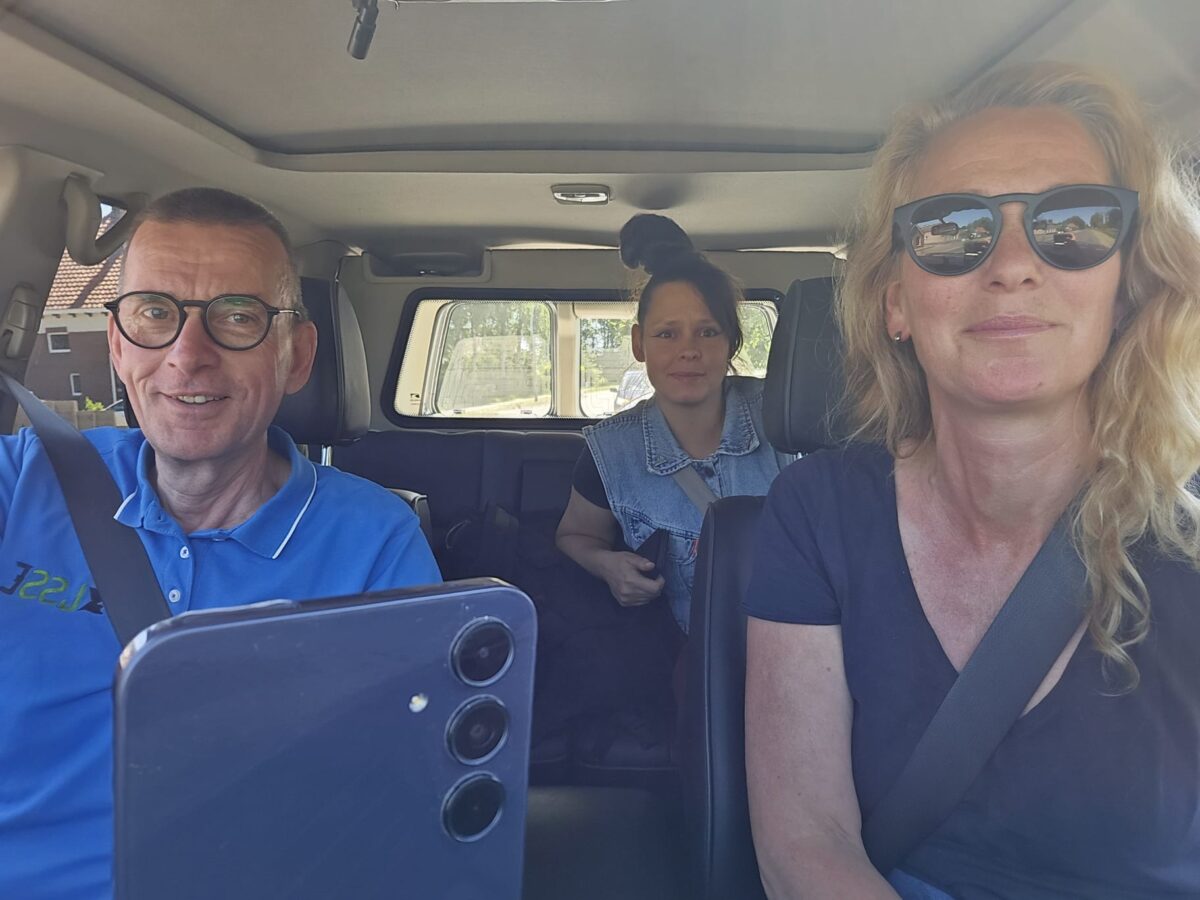

Dr. Ronald Rongen is the founder of Low Stress Stockmanship Europe. Learn more about his approach and experience here >>

Filed Under: Inspektionen, Märkte und Sammelstationen Tagged With: animal transport, live animal transports, unweaned calves

Primary Sidebar

Search

Featured

Improving broiler catching and loading: Eyes on Animals presents to the Better Chicken Business Network

Weeks of good stockmanship can be undone in just a few hours of rough catching and loading. Catching … [Read More...] about Improving broiler catching and loading: Eyes on Animals presents to the Better Chicken Business Network

Featured

Our 2025 Annual Review is now available

1. Juli 2026

Read about how your support enabled Eyes on Animals' teams to work in the field throughout 2025. Our … [Read More...] about Our 2025 Annual Review is now available

Unser neuste Newsletter

Dear friends,

After years of our fieldwork and our enforcement requests, the NVWA (the Dutch government inspection authority) is finally taking action.

The NVWA has made it clear to the entire calf export-import industry between Ireland and the Netherlands: transporting unweaned calves for more than 30 hours without milk will no longer be tolerated.

Read more…

Erhalten Sie unseren englischen Newsletter

Subscribe

* indicates required

Eyes on Animals op X

foodlog_nl

foodlog.nl

@foodlog_nl ·
23 Okt.

Een spin vangen met een glas en buiten zetten lijkt een diervriendelijke oplossing, maar voor de meeste huisspinnen is dat fataal. #spin

Auf Twitter antworten 2113563336239390943 Retweet auf Twitter 2113563336239390943 2 Auf Twitter liken 2113563336239390943 1 Twitter 2113563336239390943
vakbladvarkens

Varkens

@vakbladvarkens ·
21 Okt.

Varkenshouders kunnen niet-levensvatbare biggen en zieke of wrakke varkens op een humane manier doden. Nieuwe methodes zoals stikstofschuim, een CO₂-box en een elektrotang maken dit mogelijk. Verbloeden is vaak niet meer nodig. #dierenwelzijn

Auf Twitter antworten 2112862245340537161 Retweet auf Twitter 2112862245340537161 1 Auf Twitter liken 2112862245340537161 Twitter 2112862245340537161
dierbescherming

Dierenbescherming

@dierbescherming ·
19 Okt.

"Ik geloof er hartstochtelijk in dat de belangen van dieren een vaste en vanzelfsprekende plaats moeten krijgen bij de keuzen die wij als samenleving maken voor de inrichting van ons land en het vormgeven van onze toekomst."

Auf Twitter antworten 2112122839654420796 Retweet auf Twitter 2112122839654420796 20 Auf Twitter liken 2112122839654420796 122 Twitter 2112122839654420796

Footer

Donate with Paypal

Paypal Eyes on Animals
Beträge (einmalig):

Beträge (monatliche Spenden):

Lesestoff

  • In den Medien
  • Newsletters
  • Gesetzestexte
  • Spezialberichte
  • ANBI

ANBI

Our Amsterdam Office

Amsterdam House Hotel
Das Büro von Eyes on Animals befindet sich im Amsterdam House Hotel direkt im Zentrum von Amsterdam. Die großzügige und warmherzige Hotelbetreiberin hat Eyes on Animals kostenfrei ein Zimmer zur Verfügung gestellt, in dem unsere Inspektoren arbeiten, Unterlagen unterbringen und Meetings abhalten können.

Copyright © 2026 · Eyes on Animals | Website by Webkompaan