• Skip to primary navigation
  • Skip to main content
  • Skip to primary sidebar
  • Skip to footer
  • EYES ON ANIMALS – Watching out for their Welfare
  • English
  • Dutch
  • German

Eyes on Animals

Watching out for their Welfare

  • Facebook
  • Instagram
  • Twitter
  • YouTube
DONATE
  • About us
    • What we do
    • Our team
    • Key Figures
    • Our Vision
    • Contact
  • News
    • Latest news
    • Good news
    • Bad news
    • Featured news
    • Newsletter
  • Inspections
    • Farms
    • Markets
    • Transports
    • Slaughterhouses
    • Special projects
    • Other
  • Training
    • Police
    • Truck drivers
    • Poultry-catchers
    • Slaughter personnel
    • Training Material
    • Request a training
  • Industry Tips
    • Animal transport
      • Cattle
      • Pigs
      • Poultry
    • Slaughterhouses
      • Cattle
      • Pigs
      • Poultry
      • Ritual slaughter
    • Educational videos
  • Publications
    • In the media
      • Print
      • Television
      • Radio
      • Videos
    • Newsletters
    • Special reports
    • Training Material
    • Annual reviews
  • Help us
Home » Our inspections » Loading piglets at Van Rooi: reflecting together on how to reduce stress

Loading piglets at Van Rooi: reflecting together on how to reduce stress

June 16, 2025

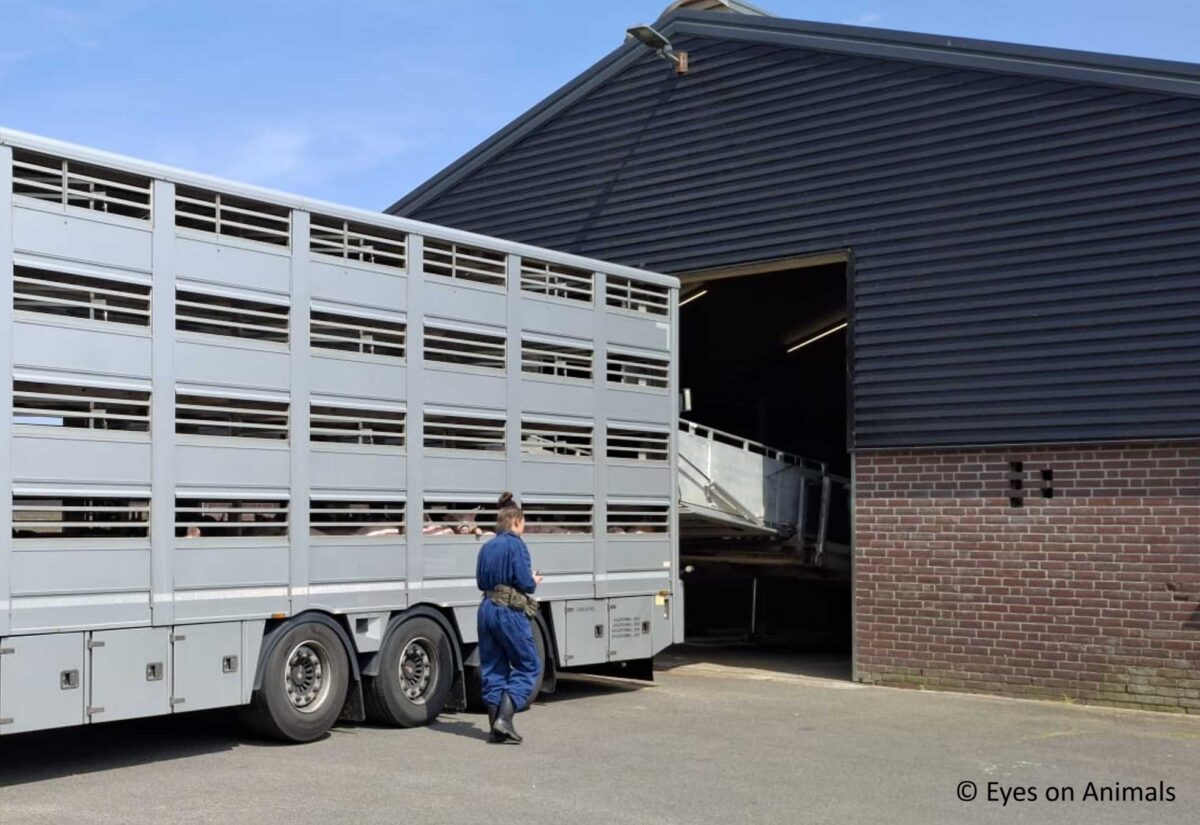
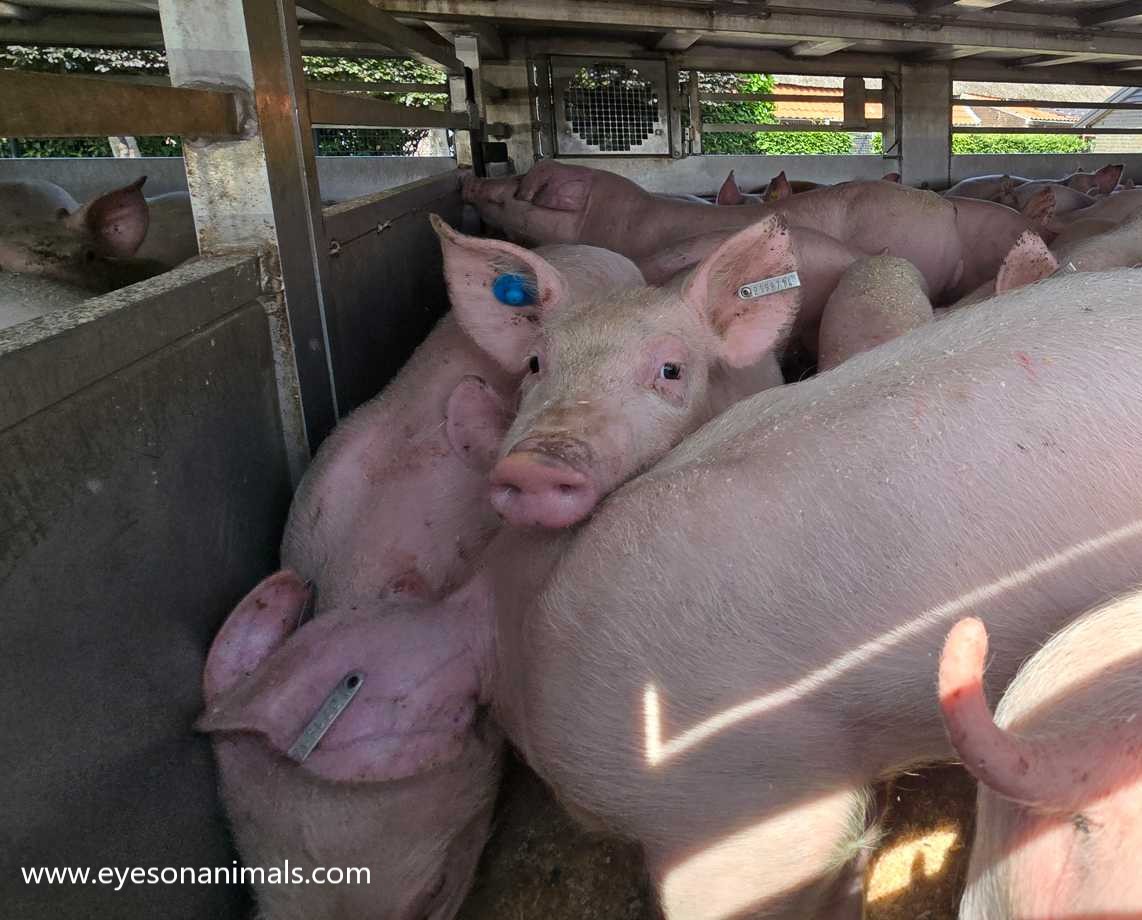
Today we observed the loading of piglets at the Van Rooi assembly centre in Lieshout. The piglets being loaded were surplus animals, selected for slaughter in Croatia due to issues such as bitten ears or umbilical hernias. Our aim was to gain insight into how ‘fitness for transport’ is assessed, and to explore ways to reduce stress during loading.

Herding and loading – a solid foundation, but room for improvement
The walking route from pen to truck was well designed: there were no sharp turns or dead ends, and all raceways had high, solid walls to prevent the animals from being startled. Sawdust had been spread along the entire route from pen to truck – a smart way to soften contrasts in the flooring, which piglets are particularly sensitive to due to their limited vision. Also positive: the animals were barely touched during handling.

Still, we observed areas where things could be improved. New groups of piglets were being moved forward while the previous group was still being loaded. As a result, the incoming piglets were exposed to a busy loading ramp full of people and noisy handling tools. They hesitated or turned back, and extra noise was needed to move them forward again.

We suggested testing the following adjustments:

  • Start herding the next group only once the ramp is empty and the previous group has been secured in their compartment
  • Avoid using rattlers or other loud handling tools , as they significantly increase stress levels.

We expect these changes to improve the flow and reduce stress – both for the animals and the staff. We also recommended installing a canopy over the loading area so that trucks can always be loaded in the shade.

We also advised installing a high, solid wall behind which the NVWA veterinarian can remain out of sight. This would allow the vet to assess the animals without being seen, helping to reduce stress. Several slaughterhouses already use this method successfully. Finally, we found that the distribution of piglets across the compartments was not optimal: two compartments were very full, while others offered sufficient space. In our view, this should be monitored more closely.

Long journeys for young, vulnerable animals
The official inspectors from the Dutch Food and Consumer Product Safety Authority (NVWA) now use the EURCAW guidelines to assess whether animals are fit for transport. We welcome this development, as it provides greater clarity about what is and isn’t acceptable. At the same time, we believe that vulnerable animals – such as surplus piglets, who are young and have (small) physical issues – should ideally be slaughtered locally, rather than being sent on long journeys for slaughter alone. We are also concerned that the continued closure of small abattoirs, partly due to the higher inspection costs imposed by the NVWA, will lead to even more animals being transported across borders for slaughter.

Working together on practical improvements
Although Eyes on Animals and the livestock industry do not always agree, we believe that by sharing knowledge and experiences, we can make meaningful progress in improving animal welfare. We look forward to jointly testing which changes truly make a difference in reducing stress during loading.

We thank Van Rooi and all staff present for their openness and their willingness to exchange ideas on improving animal welfare during the loading process.
Filed Under: Our inspections, transport Tagged With: animal transport, animal welfare improvements, live animal transports

Primary Sidebar

Search

Featured

Our 2025 Annual Review is now available

Read about how your support enabled Eyes on Animals' teams to work in the field throughout 2025. Our … [Read More...] about Our 2025 Annual Review is now available

Featured

Supporting “Eyes on Happy Pigs” — A New Educational Centre for Better Pig Welfare in the Netherlands

June 1, 2026

Eyes on Animals is pleased to support a promising new initiative in the Netherlands that aims to … [Read More...] about Supporting “Eyes on Happy Pigs” — A New Educational Centre for Better Pig Welfare in the Netherlands

Our most recent newsletter

Dear friends,

Normally, we don’t send newsletters this frequently, but we have just received breaking news, and we simply had to share it with you right away.

Read more…

Subscribe to our newsletter

Subscribe

* indicates required

Eyes on Animals op X

eyes_on_animals Eyes on Animals @eyes_on_animals ·
12h

RT @brig_dm: "C'est une triste chose de songer que la nature nous parle, et que le genre humain n'écoute pas".
(Victor Hugo) https://x.com/drjorts…

Reply on Twitter 2081477492070597019 Retweet on Twitter 2081477492070597019 5 Like on Twitter 2081477492070597019 Twitter 2081477492070597019
nah_gon Nahuel González López @nah_gon ·
24 Jul

Las primeras víctimas siempre son los animales.

Se debería de aprobar un pacto de estado contra el fuego, por la prevención y de compromisos contra el cambio climático.

📸 : Juan Navarro.

Reply on Twitter 2080705200193417576 Retweet on Twitter 2080705200193417576 355 Like on Twitter 2080705200193417576 1013 Twitter 2080705200193417576
eyes_on_animals Eyes on Animals @eyes_on_animals ·
17h

RT @brig_dm: Incendies en France ! Plus que les milliers d'animaux domestiques et sauvages tués et blessés par les flammes dans le Sud de l…

Reply on Twitter 2081412542362968443 Retweet on Twitter 2081412542362968443 4 Like on Twitter 2081412542362968443 Twitter 2081412542362968443
Load More...

ANBI

Latest news

Meat printer prints plant based meat

NOS-news: The meat printer

October 13, 2022

Veggie burger

Vox: Plant-based meat is better for the planet

November 18, 2021

All Future Vision news

Footer

Donate with Paypal

Paypal Eyes on Animals
One-time donation:
Monthly donation:

Reading Material

  • In the Media
  • Newsletters
  • Special EonA reports
  • Legislative texts
  • ANBI

Our Amsterdam Office

Amsterdam House Hotel
Eyes on Animals main office is in downtown Amsterdam, at the Amsterdam House Hotel. The generous and warm-hearted hotel owner donated to Eyes on Animals, free of charge, a beautiful room where our inspectors can work, hold meetings and store their material.

Copyright © 2026 · Eyes on Animals | Website by Webkompaan