• Skip to primary navigation
  • Skip to main content
  • Skip to primary sidebar
  • Skip to footer
  • EYES ON ANIMALS – Watching out for their Welfare
  • English
  • Nederlands
  • Deutsch

Eyes on Animals

Watching out for their Welfare

  • Facebook
  • Instagram
  • Twitter
  • YouTube
DONATE
  • About us
    • What we do
    • Our team
    • Key Figures
    • Our Vision
    • Contact
  • News
    • Latest news
    • Good news
    • Bad news
    • Featured news
    • Newsletter
  • Inspections
    • Farms
    • Markets
    • Transports
    • Slaughterhouses
    • Special projects
    • Other
  • Training
    • Police
    • Truck drivers
    • Poultry-catchers
    • Slaughter personnel
    • Training Material
    • Request a training
  • Industry Tips
    • Animal transport
      • Cattle
      • Pigs
      • Poultry
    • Slaughterhouses
      • Cattle
      • Pigs
      • Poultry
      • Ritual slaughter
    • Educational videos
  • Publications
    • In the media
      • Print
      • Television
      • Radio
      • Videos
    • Newsletters
    • Special reports
    • Training Material
    • Annual reviews
  • Help us
Home » Our inspections » transport » An Inspection of Poultry Loading

An Inspection of Poultry Loading

August 14, 2012

kippen_nov_11
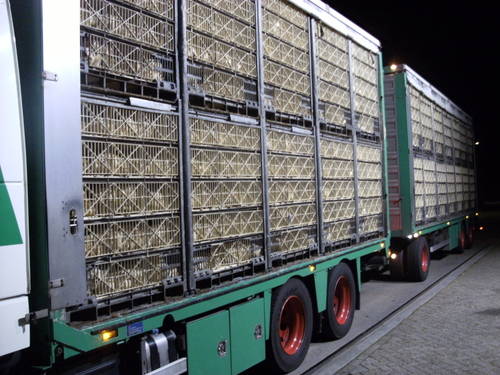
Last night, an Eyes on Animals team inspected the loading of poultry in
transport crates. This event usually occurs at night as the animals are easier to tackle in the dark.

We followed two empty transport trucks which finally stopped at a large chicken barn in the south of the country. The owner was kind enough to allow us to observe the catching of chickens. No photographing was permitted.

This particular company had 100,000 broilers in four sheds. On this night, all of the chicks were collected to go to the slaughterhouse. After a week, there would be a further 100,000 newborn chicks to be fattened for consumption within 6 weeks. 10,000 chicks per hour were caught and put in crates. Catching the chicken was done manually by a company which specializes in this field. The chicks are caught in the dark when they are restful and thus easier to catch. This is likewise in part as they have difficulty standing on their feet, due to their heavy weight. It was just light enough to observe that the catchers gathered 2-3 chicks in each hand by their feet and then crammed them into crates. This was not a gentle process, yet neither were the chicks really harmed. Even so, this must be an extremely painful and stressful experience for these animals. Some chicks seized the moment to escape, but could only get as far as the middle of the barn itself and could not run away. Unfortunately, we were not allowed to take photos. It was a sad sight to see these chicks of 6 weeks old, knowing that after their brief, joyless life in captivity, they would be slaughtered the next morning.


  • share 
  • share 
  • share 
  • save 
  • email 

Filed Under: transport

Primary Sidebar

Search

Featured

Regional slaughterhouses are disappearing — and animals are paying the price

Across the Netherlands, regional slaughterhouses are disappearing at an alarming pace. Not because … [Read More...] about Regional slaughterhouses are disappearing — and animals are paying the price

Featured

Injured sows at Lunteren assembly centre: NVWA investigation ruled inadequate

January 29, 2026

The Dutch Trade and Industry Appeals Tribunal (College van Beroep voor het Bedrijfsleven, CBb) has … [Read More...] about Injured sows at Lunteren assembly centre: NVWA investigation ruled inadequate

Our most recent newsletter

Dear friends,

A couple of years ago, while I was giving a talk at an animal welfare conference in the UK, an anthropologist from the University of Cambridge approached me. She conducts research in Mongolia and asked whether — if she could secure funding — we would be willing to help animals there. Where there is a will, there is a way, so I said yes to Liz!

Read more…

Subscribe to our newsletter

Subscribe

* indicates required

Eyes on Animals op X

plant_treaty Plant Based Treaty @plant_treaty ·
10 May

When disasters strike the planet, humans are not the only victims. Animals trapped in animal agriculture are often left behind to die.⁠
⁠A plant-based diet uses less resources and has fewer emissions. ⁠
⁠Switch to a plant-based diet to reduce your impact on the Earth. 🌎️🌱

Reply on Twitter 2053458280932917491 Retweet on Twitter 2053458280932917491 88 Like on Twitter 2053458280932917491 155 Twitter 2053458280932917491
eyes_on_animals Eyes on Animals @eyes_on_animals ·
11 May

📌 Nieuw op onze website: Eyes on Animals geeft presentatie op Indonesische/Maleisische conferentie. #slacht

Reply on Twitter 2053747329023250632 Retweet on Twitter 2053747329023250632 Like on Twitter 2053747329023250632 Twitter 2053747329023250632
eyes_on_animals Eyes on Animals @eyes_on_animals ·
10 May

💚🐄 Moederdag: wij gingen op bezoek en brachten een bloemetje! #moederdag #kalfbijkoe

Reply on Twitter 2053565423526814183 Retweet on Twitter 2053565423526814183 Like on Twitter 2053565423526814183 8 Twitter 2053565423526814183
Load More...

ANBI

Latest news

Meat printer prints plant based meat

NOS-news: The meat printer

October 13, 2022

Veggie burger

Vox: Plant-based meat is better for the planet

November 18, 2021

All Future Vision news

Footer

Donate with Paypal

Paypal Eyes on Animals
One-time donation:
Monthly donation:

Reading Material

  • In the Media
  • Newsletters
  • Special EonA reports
  • Legislative texts
  • ANBI

Our Amsterdam Office

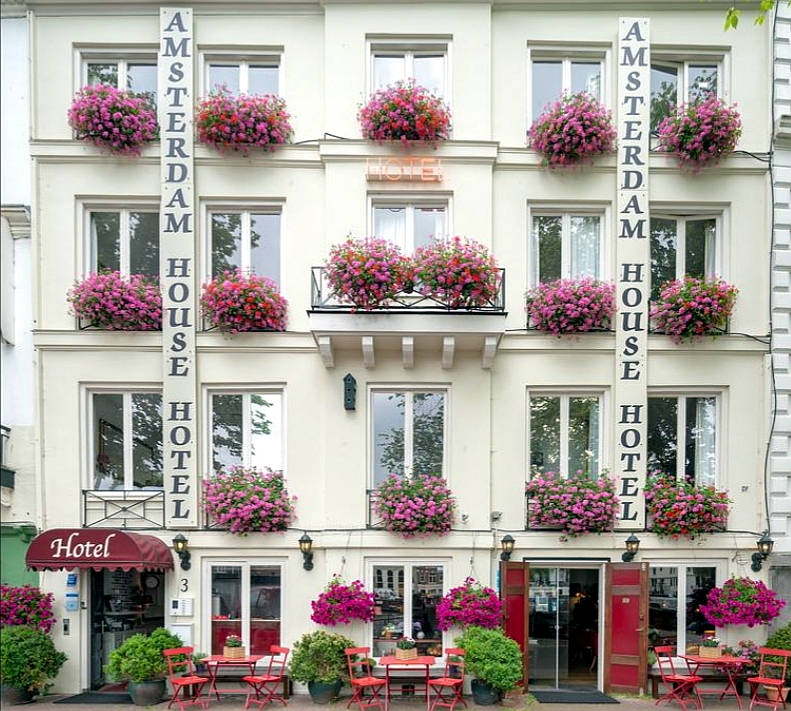
Amsterdam House Hotel
Eyes on Animals main office is in downtown Amsterdam, at the Amsterdam House Hotel. The generous and warm-hearted hotel owner donated to Eyes on Animals, free of charge, a beautiful room where our inspectors can work, hold meetings and store their material.

Copyright © 2026 · Eyes on Animals | Website by Webkompaan