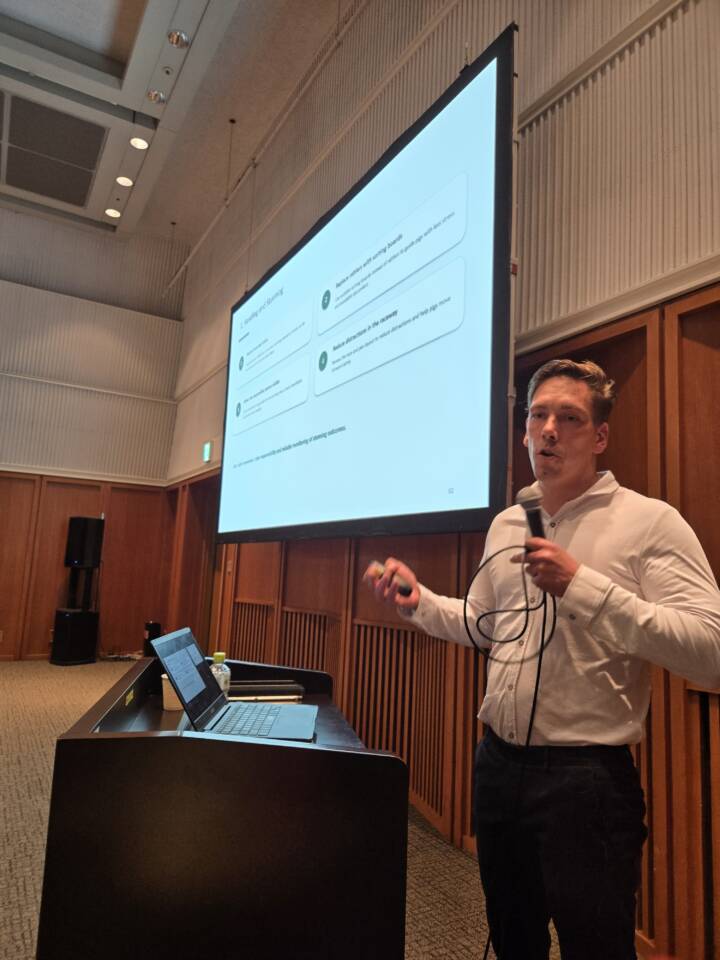
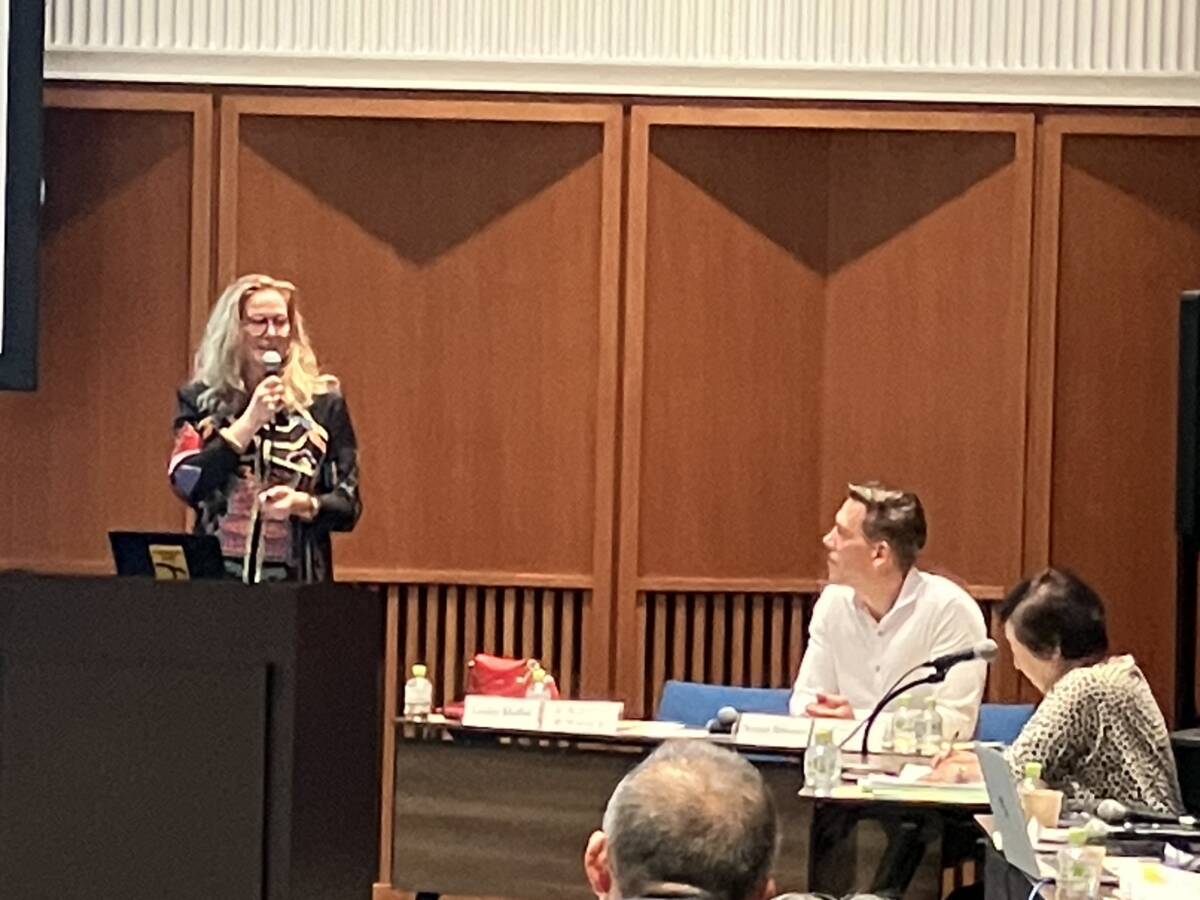
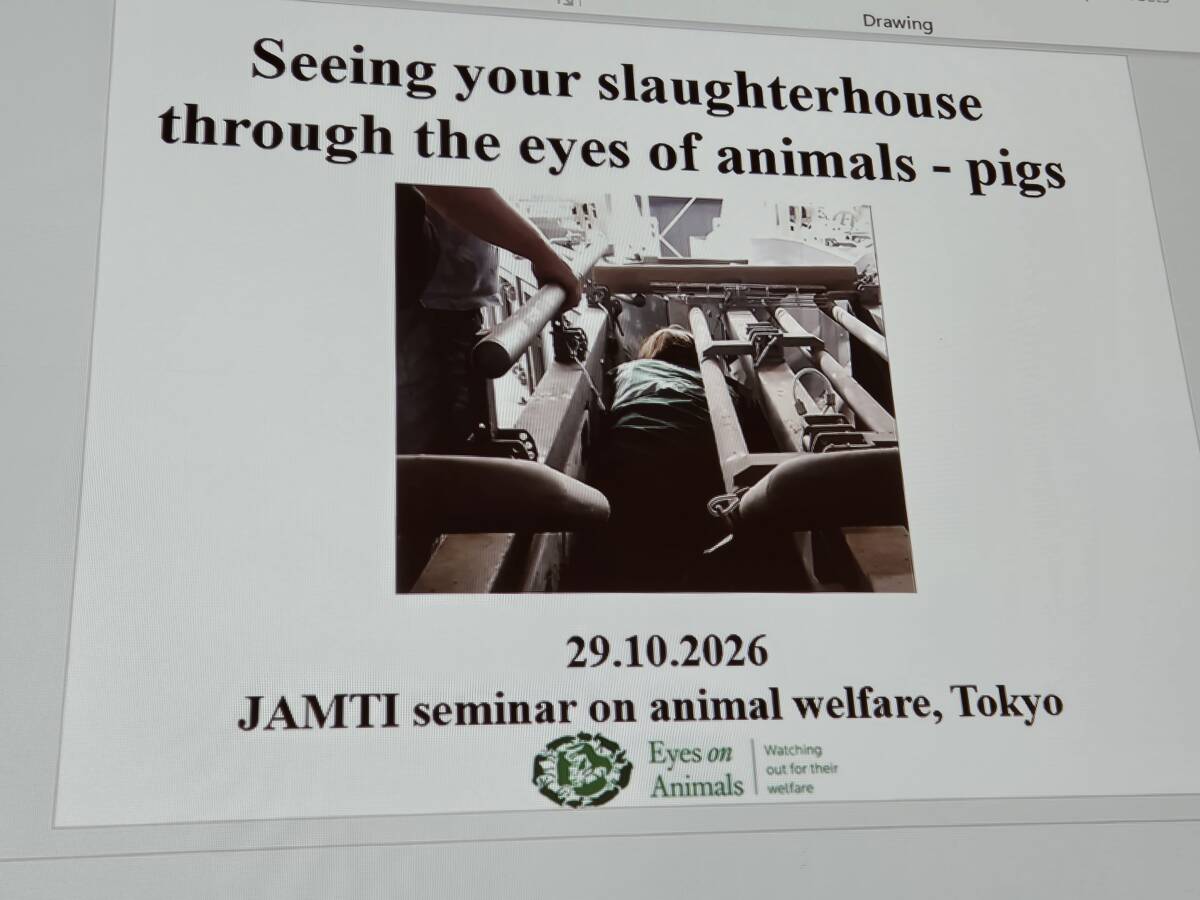
Lesley (EonA) and Dennis (animal welfare officer at the Dutch pig slaughterhouse EonA works closely with to bring out the full potential of electric stunning) spoke at a big animal-welfare seminar in Tokyo today. Hosted by JAMTI (the umbrella organization representing 200 Japanese slaughterhouses and that hired us to come), it brought together around 100 professionals from the slaughter industry, including representatives from the Ministries of Agriculture and Health.

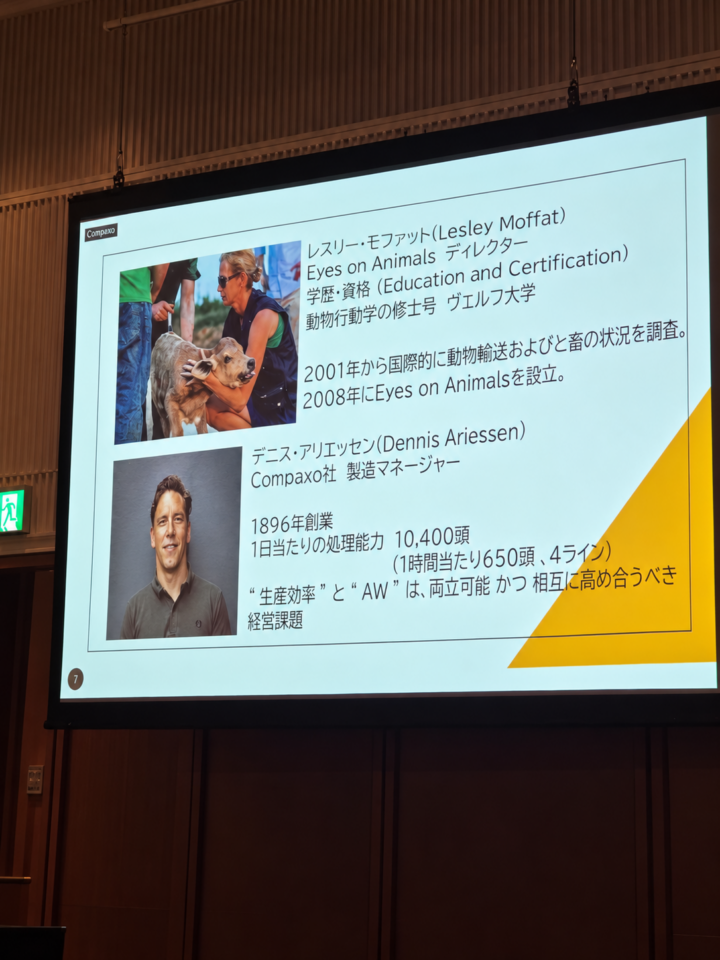
The seminar was a summary of our visits that week: what we thought was good and where improvements could make a real difference. We were commissioned to advise on plant improvements, animal behaviour and design, legislation, worker protocols and learning material.
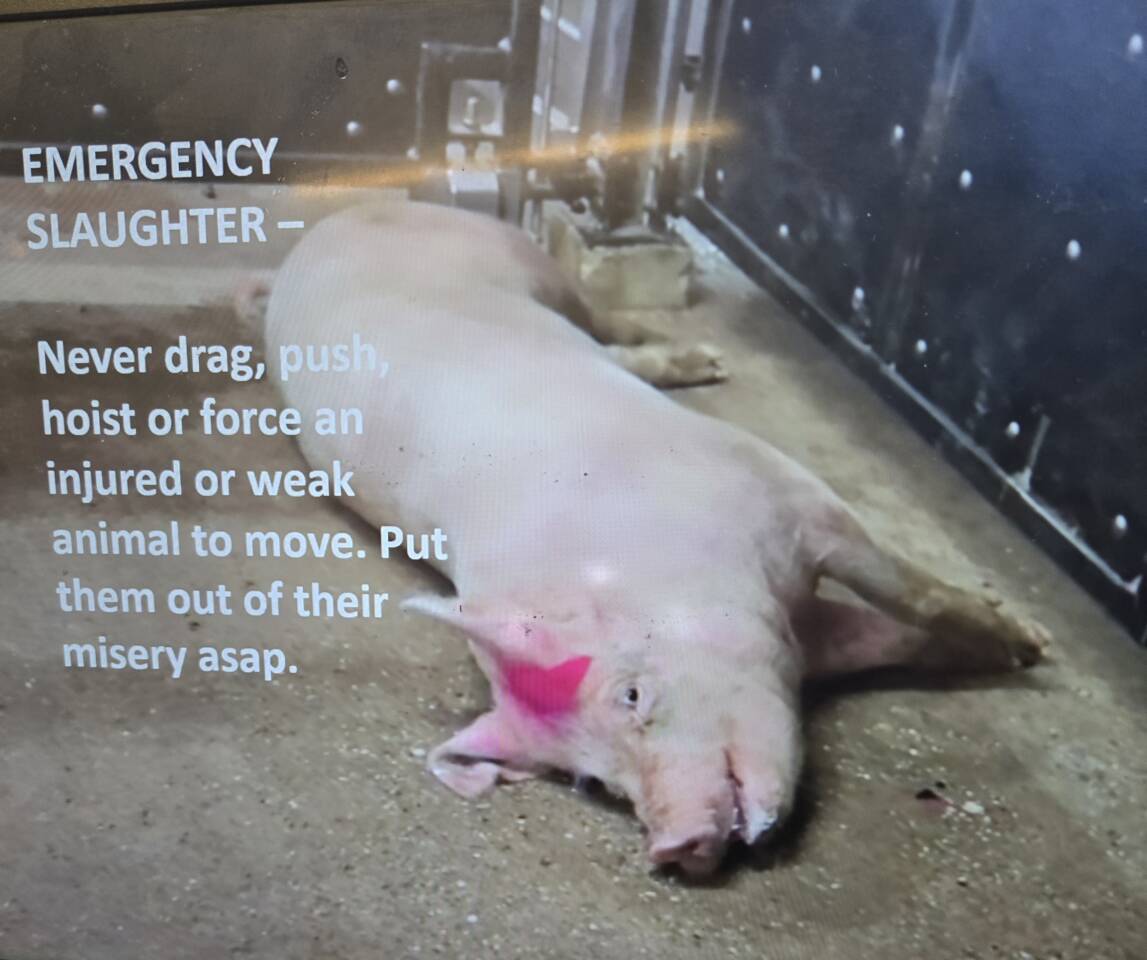
We explained that the plants we visited were without hectic high throughput lines, with a manageable pace of work. Design was very good as were the conditions of the unloading ramps and lairages. But our top priority was a crucial gap: the treatment of animals arriving weak, injured or unable to walk without pain or distress. These animals must no longer be forced to move. Using photos and footage, including examples from the Dutch plant, we explained how to recognize these cases and how to intervene by performing emergency slaughter with a mobile electric stunner or captive bolt stunner. This means the animal is rendered first unconsciousness, followed by killing, without making the animal get up or walk.
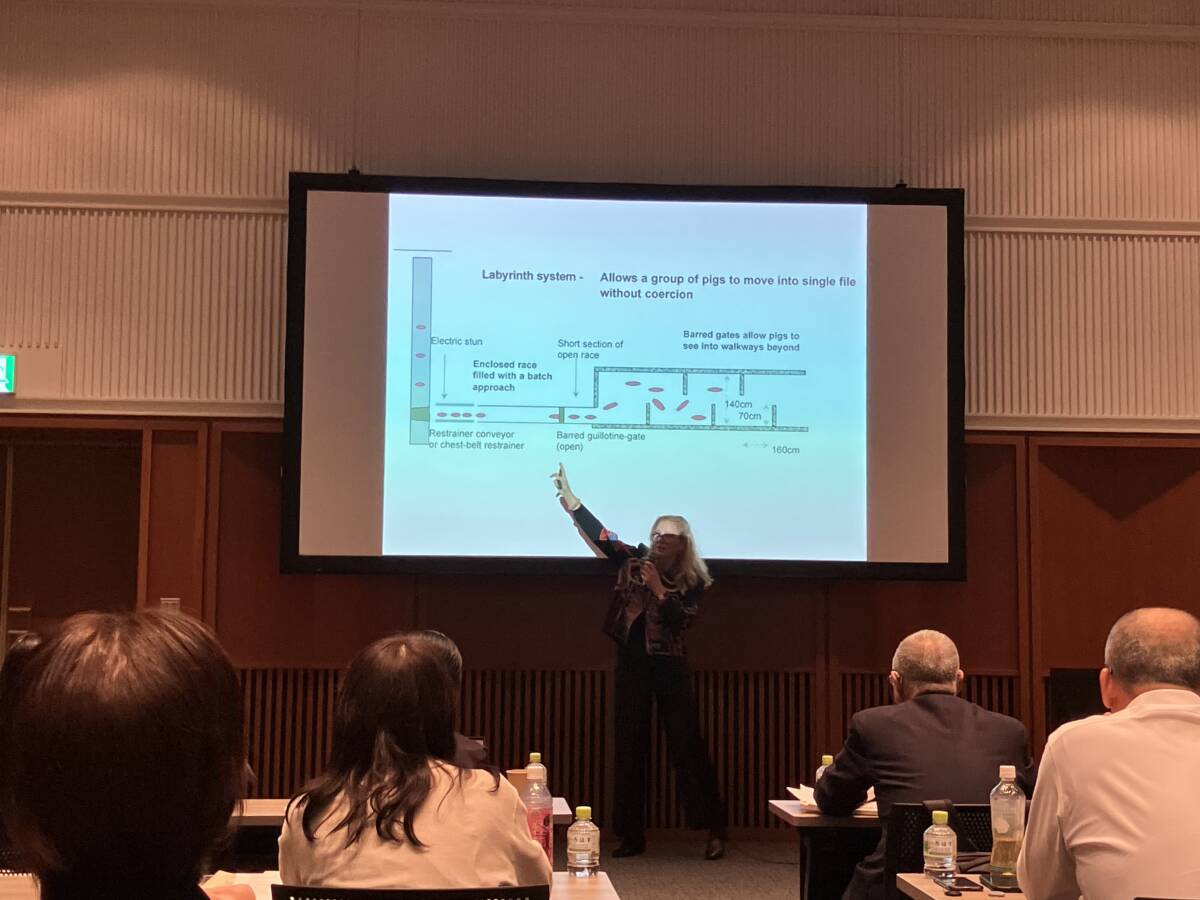
We also recommended testing the labyrinth design in pig plants with a single raceway and no space for additional raceways or stunners. This design shows promise for guiding groups of pigs naturally into single file, without force. Thank you to Bristol University for this information.
It was a great experience and an encouraging example of how, by working together and sharing practical knowledge, concrete improvements for animals can be attained. Thanks Dennis, thanks JAMTI, thanks to all participants.